All powertrains from Mercedes-Benz are based on a modular principle with a high degree of component commonality. This enables technological diversity, accelerates further development and supports cost-effective development and production.
When it comes to combustion engines, Mercedes-Benz applies modular design and high scalability. The petrol and diesel hybrids in the FAME range (Family of Modular Engines) combine low fuel consumption enabled by ISG 2.0 with increased power for a wide range of vehicles – from the GLA to the S-Class. Common features include an all-aluminium crankcase with NANOSLIDE® technology, a cylinder head with a partially integrated manifold, a turbocharger with a segmented turbine and switchable bypass connection, a compact intercooler system and the exhaust system located close to the engine. A standardised MB.OS architecture creates synergies in the powertrain software.
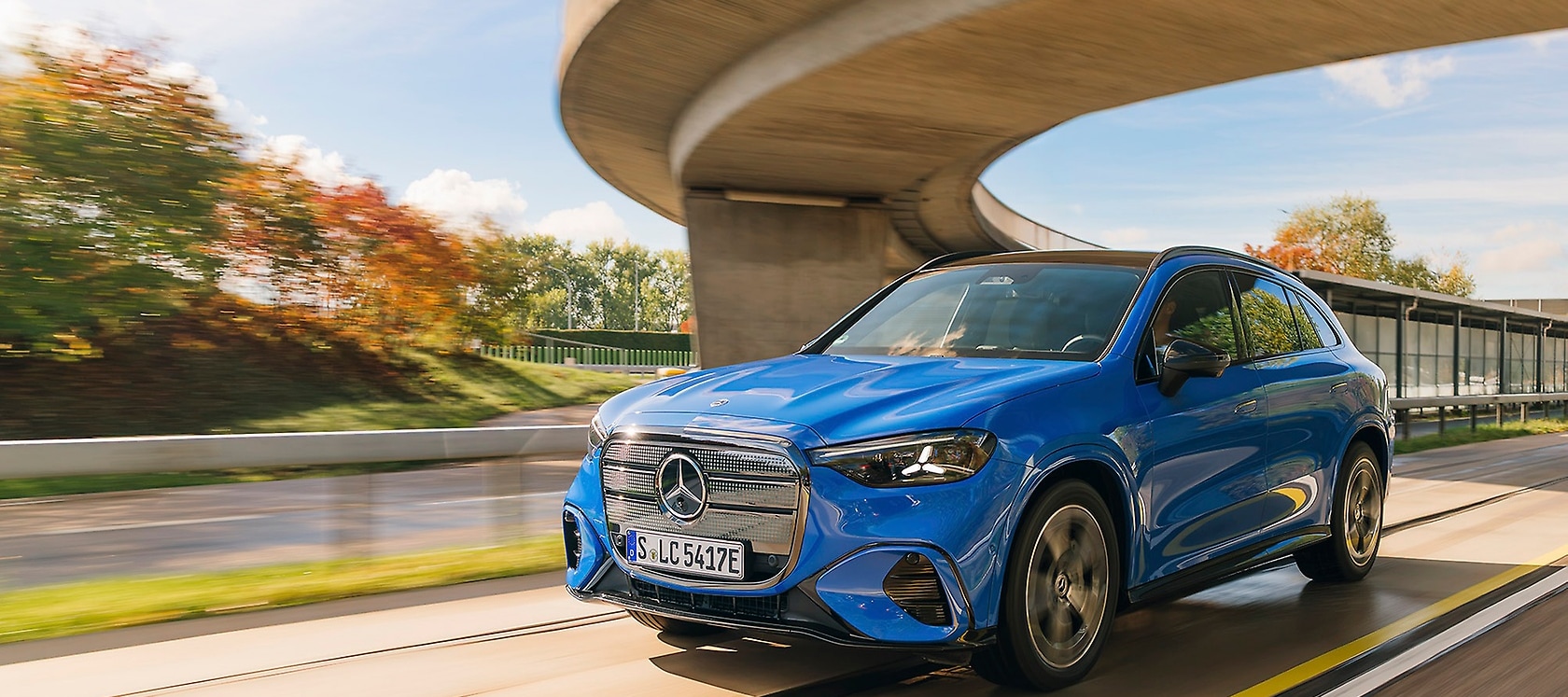
For fully electric models, Mercedes-Benz has also developed a modular powertrain architecture derived from the groundbreaking VISION EQXX technology programme. This can be scaled across all model ranges and segments. In the CLA, CLA Shooting Brake, GLB and GLA, as well as the GLC and C Class, it combines outstanding suitability for everyday use and long-distance travel with the driving experience typical of Mercedes – tailored in each case to the different customer needs and usage profiles. As a next step, Mercedes Benz is scaling up this 800-volt architecture for larger model ranges, including the E Class and S Class.
Customers experience the interplay of all the components. In a fully electric powertrain, the high-voltage battery, electric drive unit (EDU), thermal management, charging system and software all work together as a single system. The aim is to minimise energy losses from cell to wheel.