Mercedes-Benz S-Class 2026.

Mercedes-Benz Group AG: Solid cash generation and shareholder returns

Results 2025.

2025 2024 2023 2022 2021 more

February 12, 2026 – Mercedes-Benz Group delivered annual results within guidance, supported by sales of Top-End Vehicles and rigorous cost discipline, driving cash generation and enabling the company to navigate a complex and dynamic global landscape in 2025.

Top‑End cars reached 15% of overall sales for Mercedes-Benz Cars in 2025. Leveraging this solid foundation, 140 years after Carl Benz registered his patent for the first motor car, Mercedes-Benz is accelerating the rollout of new products to drive future growth.

Recordings of the event as well as presentations for download can be found further down on this page.

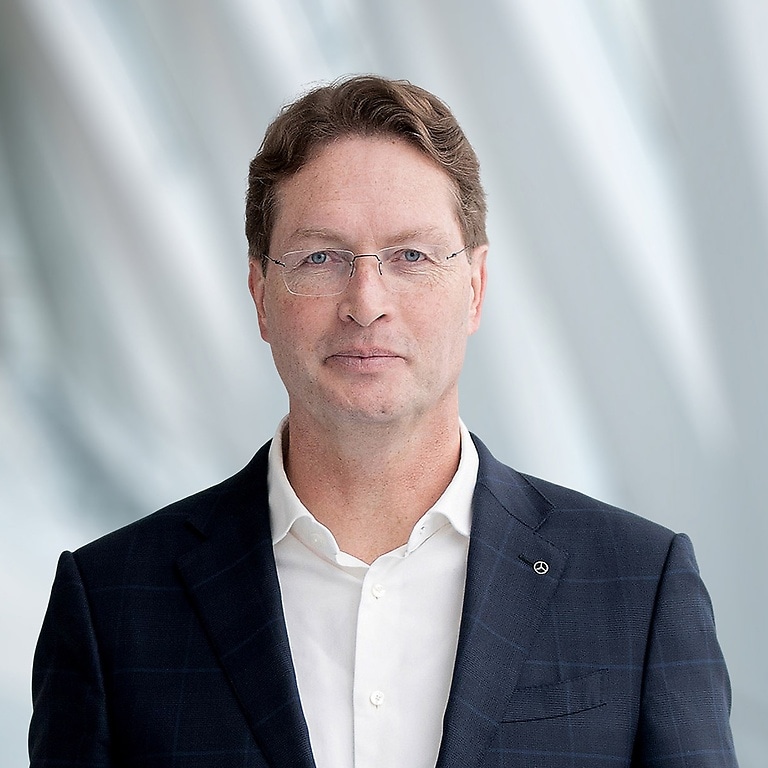
Ola Källenius.

The Mercedes-Benz Team did an outstanding job in 2025 as we successfully kicked off our biggest-ever product and tech launch programme. We debuted class-leading innovations such as the MB.OS operating system, our new point-to-point assisted driving system and unveiled a new level of electric performance with the Concept AMG GT XX. Amid a dynamic market environment, our financial results remained within our guidance, thanks to our sharp focus on efficiency, speed, and flexibility. Now we are all set for 2026: The launch of more than 40 new models over only three years continues at an even higher pace. Strong demand for our new CLA, GLC or S-Class proves that our customers are excited about our new models. We are moving forward with a clear game plan and a very competitive product portfolio.

Ola Kaellenius
Chief Executive Officer of Mercedes-Benz Group AG
Ola Källenius.

Mercedes‑Benz successfully kicked off 2025 with the all‑new CLA and closed the year with the presentation of the all‑new GLB — both entry points into the Mercedes‑Benz brand — as well as the all‑new GLC, a key core segment vehicle. The all-new CLA’s recognition as Europe’s “Car of the Year 2026” and the award of Euro NCAP’s “Best Performer” among vehicles tested in 2025 underlines its competitive strength. All three vehicles set the pace in their respective segments as part of a campaign to introduce more than 40 new models by 2027. All models have received exceptional market feedback, with order books filled well into the second half of 2026 and production running on three shifts to meet high demand, which helped drive a strong sequential uplift in quarterly BEV volumes.

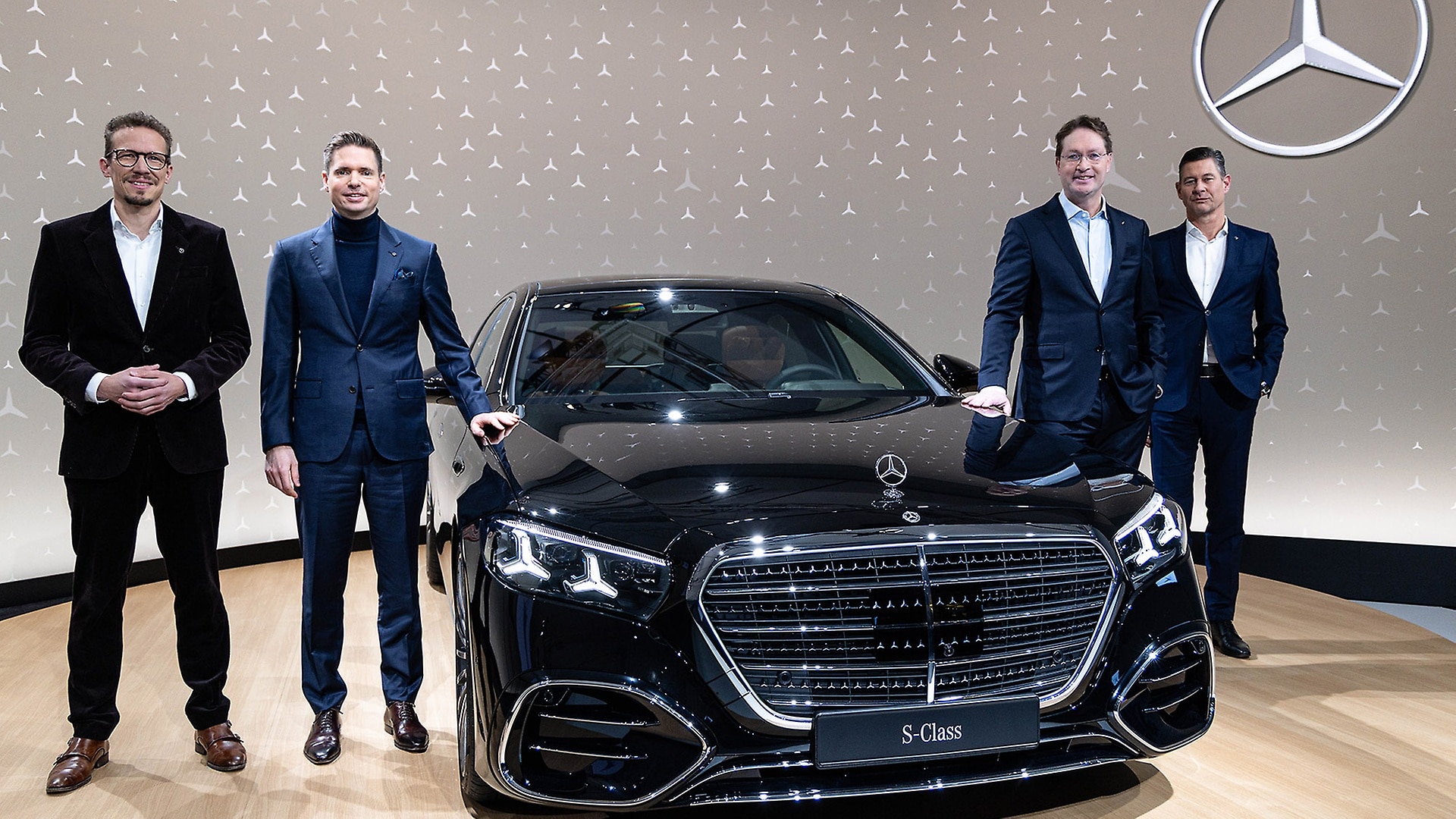
Mercedes-Benz Annual Results Conference (from left): Mathias Geisen, Oliver Thöne, Ola Källenius and Harald Wilhelm.

Mercedes-Benz also unveiled a significant upgrade to its flagship S-Class, including a comprehensive powertrain update with a new V8 and the Mercedes-Benz Operating System (MB.OS), extending the technology rollout further into Mercedes-Benz’s Top-End vehicles and ICE segments. For elevated intelligence, the new S-Class features an updateable MB.OS Supercomputer and fourth-generation MBUX and MB.DRIVE ASSIST PRO point‑to‑point assisted driving, first in China, followed by the U.S. later in 2026.

2025 results

Mercedes-Benz Group delivered adjusted earnings before interest and taxes (EBIT) of €8.2 billion (2024: €13.7 billion). Group revenues came in at €132.2 billion (2024: €145.6 billion). The free cash flow of the industrial business reached €5.4 billion (2024: €9.2 billion), mainly due to positive effects from lighter inventories and negative effects from net investments in property, plant & equipment and intangible assets. The net liquidity of the industrial business stood at €32.2 billion (end of 2024: €31.4 billion).

Divisional results

Mercedes-Benz Cars Close

The adjusted EBIT at Mercedes-Benz Cars reached €4.8 billion (2024: €8.7 billion) as efficiency measures helped to mitigate the impact of lower volumes, particularly in China, negative net pricing, tariffs and foreign exchange headwinds. The adjusted Return on Sales in 2025 was 5.0% (2024: 8.1%), or 6.1% excluding tariffs, remaining within the guidance range. Research and Development costs, focused on investments into future architectures and technologies, particularly for MB.OS, decreased year-over-year. Investments in PP&E rose in line with the above-mentioned product launches and start of production. Cost efficiencies related to Next Level Performance, including material cost savings and efficiencies in production as well as Selling, General and Administrative Expenses (SGA), resulted in a positive EBIT contribution of more than €3.5 billion in 2025.

Mercedes-Benz Vans Close

Mercedes-Benz Vans continued to deliver a double-digit adjusted Return on Sales in 2025 for the fourth year in a row, with 10.2% (2024: 14.6%), slightly above full-year guidance, keeping profitability at a healthy level even in a competitive market environment. Full-year EBIT adjusted reached €1.75 billion (2024: €2.8 billion) while heavily investing into the new Van Architecture and worldwide production footprint, thus laying the foundation for the future success of Mercedes-Benz Vans. Lower unit sales were offset by a favourable product mix, supported by improved product substance. Mercedes-Benz Vans sold 359,136 units in 2025, with eVans up by 46% in the full year, leading to a global EV share of 8% and of 11% in Europe.

Mercedes-Benz Financial Services Close

In 2025, Mercedes-Benz Mobility delivered an adjusted return on equity (RoE) of 9.7%, exceeding guidance. Adjusted EBIT rose to €1,267 million year-on-year (2024: €1,134 million). The increase was driven by a higher portfolio margin, supported by continued strong new business margins and by efficiency measures. These effects were partly offset by higher credit risk costs amid a softer global economic environment.

Mercedes-Benz Financial Services’ total portfolio stood at €128.8 billion (2024: €138.1 billion), reflecting exchange-rate effects and the sales trends across the automotive segments. New business reached €55.9 billion (2024: €59.5 billion).

To create a seamless customer experience, Mercedes-Benz consolidated customer-oriented activities from vehicle sales and financial services into an integrated organisation, with Mercedes-Benz Mobility AG successfully merging into Mercedes-Benz AG as planned, effective 31 December 2025.

Margin ambition and China

Margin Ambition Close

Mercedes-Benz Cars seeks to sell approximately 2 million vehicles, including a more than 15% increase in Top-End Vehicle sales and a doubling of the xEV share in the medium term. Mercedes-Benz expects to achieve an 8–10% adjusted Return on Sales (RoS) for Mercedes-Benz Cars in the medium term through a combination of strong product momentum from the launch programme and relentless cost discipline .

The full benefits of Next Level Performance, which include fixed and variable cost reductions and lower investments, will support cash conversion and generation.

Production is being made leaner and more efficient, with global production capacity being adjusted to around 2.2 million units by 2028. Assembly of Mercedes-Benz vehicles at the COMPAS Joint Venture plant in Aguascalientes will end in 2026. Production capacity in Germany will be at 900,000 units, while Kecskemét in Hungary will be able to produce up to 400,000 vehicles.

In addition, production efficiency is set to be improved through lower energy costs, higher equipment utilisation, higher automation, the use of Artificial Intelligence, and the reduction of logistics costs by optimised transport routes and outsourcing. With these measures, Mercedes-Benz aims to reduce production costs per unit by a total of 10% from 2027 onwards compared to 2024 levels.

Mercedes-Benz has implemented significant fixed-cost reductions in 2025. Additionally, Mercedes-Benz launched a personnel cost reduction programme in 2025, which will further increase efficiency levels in 2026 and 2027 to support a fixed cost reduction by 10% between 2024 and 2027.

Efficiency measures further include a reduction of management positions, outsourcing of non-core activities, the initiated sale of company-owned retail in Germany and the consolidation of customer-oriented activities from the Sales & Customer unit and Financial Services into an integrated organisation.

Material cost savings are expected to reach approximately 8% until 2027, rising to 10% beyond this date, thanks to a strengthening of our local-for-local approach, leveraging sourcing from best-cost countries, as well as through radical cost engineering and close cooperation between R&D, purchasing and supplier teams and further standardisation of components and modules.

Capex and R&D investments peaked in 2025 and will start to decline in 2026. Investments allocated to Top-End Vehicles and Core segment vehicles will amount to 70%–80% of platform investments. A technology stack, including MB.OS and MB.DRIVE (ADAS) will be scaled across the entire product portfolio, including ICE and BEV architectures in every segment.

China Close

Mercedes‑Benz is strengthening its position in China with a focused plan that expands local R&D partnerships and accelerates next‑level localisation across the supply chain, innovating in China for China.

Building on a strong 7 million customer base, direct customer insight continues to shape China-specific models, which include top-tier intelligence and technologies across both ICE and BEV portfolios.

A unique ecosystem of leading partnerships, including Momenta and ByteDance, accelerates innovation for customers in China and beyond.

Further elevating the Chinafit technology roadmap, L2 Urban/Highway Navigation defines safety engineering in ADAS for a true Mercedes Benz experience, codeveloped with Momenta.

By 2027, Mercedes-Benz and its local Joint Venture target a streamlined, highly efficient value chain and operations, achieving −10% local material costs, −20% variable production costs, and −20% fixed costs versus 2024 levels, as well as continuous network optimisation and efficiency measures.

Dividend

At the Annual General Meeting on April 16, 2026, the Board of Management and the Supervisory Board will propose a dividend of €3.50 per share (2024: €4.30).

Capital allocation and buyback policy

In November 2025, Mercedes-Benz initiated a share buyback programme of up to €2 billion (not including incidental costs) on the stock exchange over a period of up to 12 months. By the end of 2025, Mercedes-Benz bought back approximately €300 million worth of shares, leaving up to €1.7 billion still to come in 2026. This buyback is based on and in line with the existing capital allocation and buyback policy, which states that any future free cash flow of the industrial business (as available post potential M&A) shall be used to fund dividend payments and share buybacks.

Rebroadcasting Speeches

English German Chinese

Conference language: English with simultaneous translation into German and Chinese.

Rebroadcasting capital market presentations

English German Chinese

Conference language: English with simultaneous translation into German and Chinese.

Rebroadcasting analyst and media call

English German Chinese

Conference language analyst call: English with simultaneous translation into German and Chinese / Conference language media call: German with simultaneous translation into English and Chinese.

Downloads

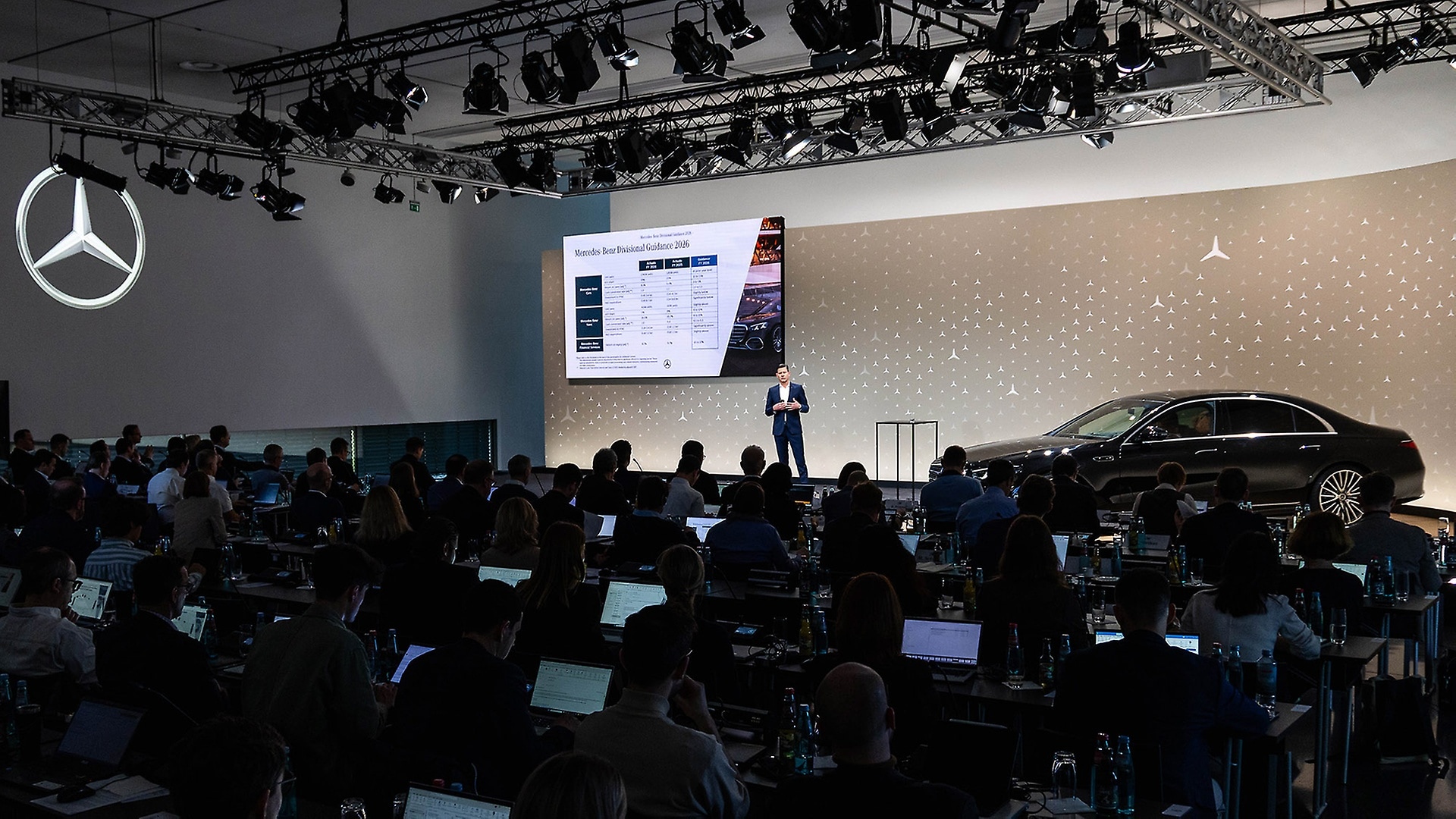
Mercedes-Benz Annual Results Conference, Stuttgart 2026.

The figures in this article are preliminary and have neither been approved yet by the Supervisory Board nor audited by the external auditor.

Outlook.

Outlook on the further business development of the Mercedes-Benz Group.

Key figures.

Group, divisions, downloadable tables.