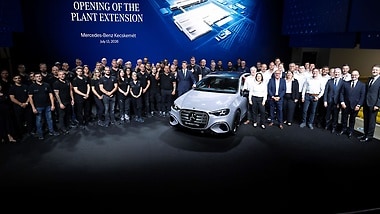
July 13, 2026 – The transformation of the global production network is being consistently continued, and the flexible production of models in the core and compact segments is being expanded at the Hungarian site in Kecskemét.
,xPosition=0,yPosition=0)
Kecskemét plant
Mercedes-Benz AG
Mercedesstraße 120
70372 Stuttgart
Germany
Phone: +49 7 11 17-0
E-Mail: dialog@mercedes-benz.com
Please send queries about content on this website to any contact. You can address your concerns to us in English and your respective national language.
Represented by the Board of Management:
Ola Källenius, Chairman; Jörg Burzer, Mathias Geisen, Olaf Schick, Michael Schiebe, Britta Seeger, Oliver Thöne, Harald Wilhelm
Chairman of the Supervisory Board: Martin Brudermüller
Court of Registry: Stuttgart; commercial register no. 762873
VAT ID: DE 32 12 81 763
All information about our products can be found on your country-specific Mercedes-Benz product page.
Kecskemét plant
July 13, 2026 – The transformation of the global production network is being consistently continued, and the flexible production of models in the core and compact segments is being expanded at the Hungarian site in Kecskemét.
With two completely new halls for bodywork and assembly lines, Mercedes-Benz is laying the foundations for the further implementation of the largest product offensive in the company’s history. In addition, a second press shop, a new state-of-the-art paint shop and a battery assembly facility have been built at the site.
With the official opening of the new halls, the plant’s footprint has grown from 200 to 440 hectares. This means that Kecskemét will, in future, be the largest automotive production site in Hungary and one of the largest in Mercedes-Benz’s global production network. With investments totalling around one billion euros as part of the Mercedes-Benz Business Plan 2022–2026, the company is underlining its commitment to sustainably strengthening the competitiveness, efficiency and future viability of its entire production network.
With the plant extension in Kecskemét, we are increasing the resilience and flexibility of our global production network. This site defines the future of our manufacturing: intelligent, connected, digital and consistently focused on efficiency, quality and sustainability. This enables us to competitively produce models such as the GLB and the new electric C-Class while at the same time strengthening the entire production network. I would like to express my sincere thanks to the team on site for their exceptional and passionate commitment.
Michael Schiebe
Member of the Board of Management of Mercedes-Benz Group AG, Production, Quality and Supply Chain Management
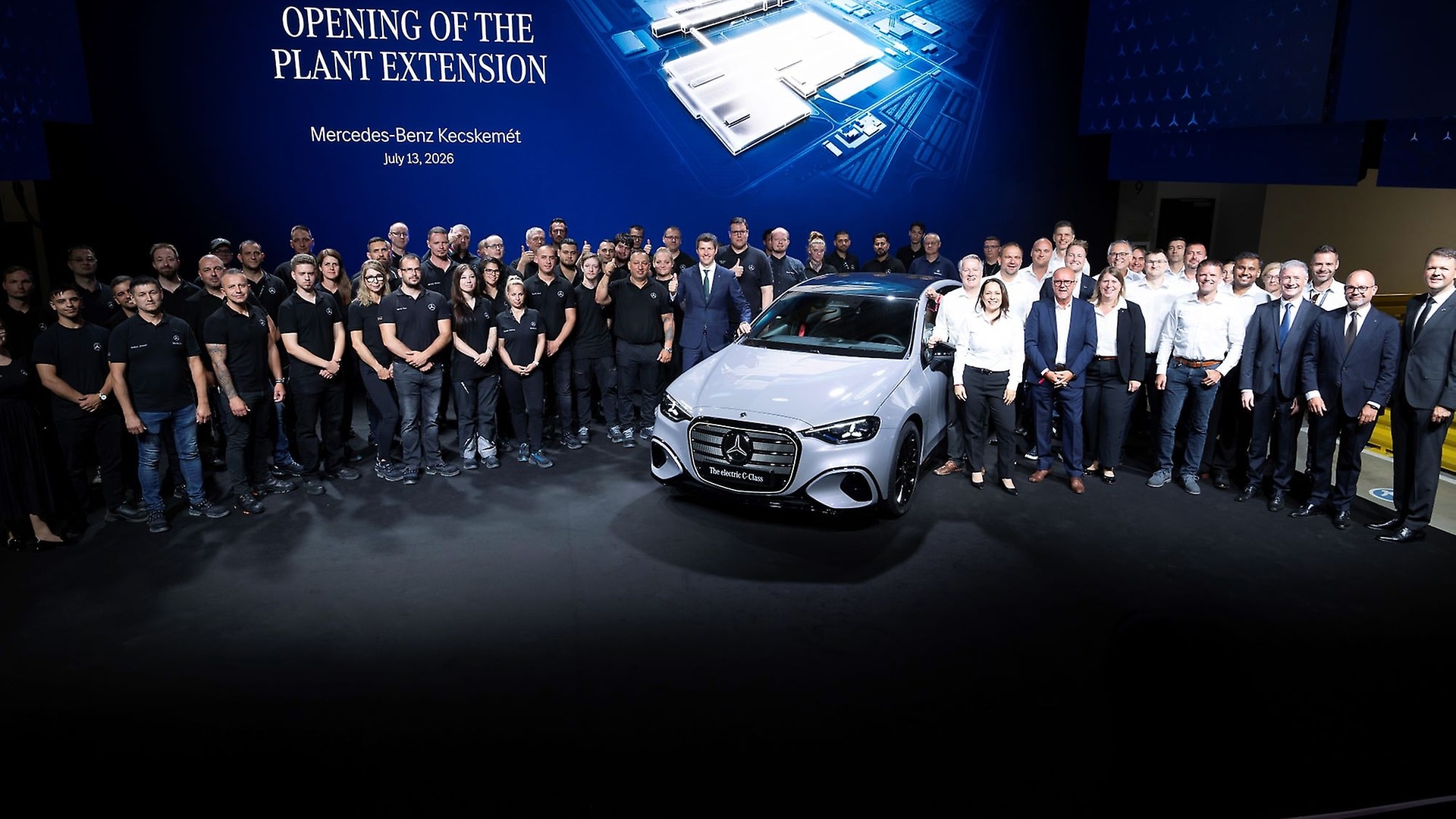
With the symbolic start of production of the new all-electric C-Class, Kecskemét is manufacturing a battery electric core model for the first time and taking another important step in the company’s electrification strategy. In doing so, the implementation of the ‘local-for-local’ strategy is being consistently pursued. Key components – including body parts and high-quality drive batteries for the GLB and C-Class electric vehicles manufactured at the facility – are produced directly on site. Thanks to shorter supply chains, production is becoming more flexible and resilient in a market environment characterised by volatility. Production in Kecskemét follows a dual approach: while vehicles with internal combustion engines and battery-electric models are produced flexibly on a single line in the existing hall, the newly built hall is efficiently geared towards the production of fully electric vehicles. This allows production volumes to be adapted quickly and flexibly to market demand. As with the Rastatt site in southern Germany, which already operates as part of a European MMA production network alongside the Kecskemét plant, flexible production links between Hungary and other German plants will be implemented. In the future, for example, the electric GLC will be able to be produced at the Bremen and Kecskemét plants according to demand. The close integration within the global Mercedes-Benz production network increases flexibility and efficiency while further strengthening our responsiveness to market demands and external influences. At the same time, the upcoming more compact version of the G-Class will be manufactured exclusively in Kecskemét in future, thereby reinforcing the strategic importance of the site.
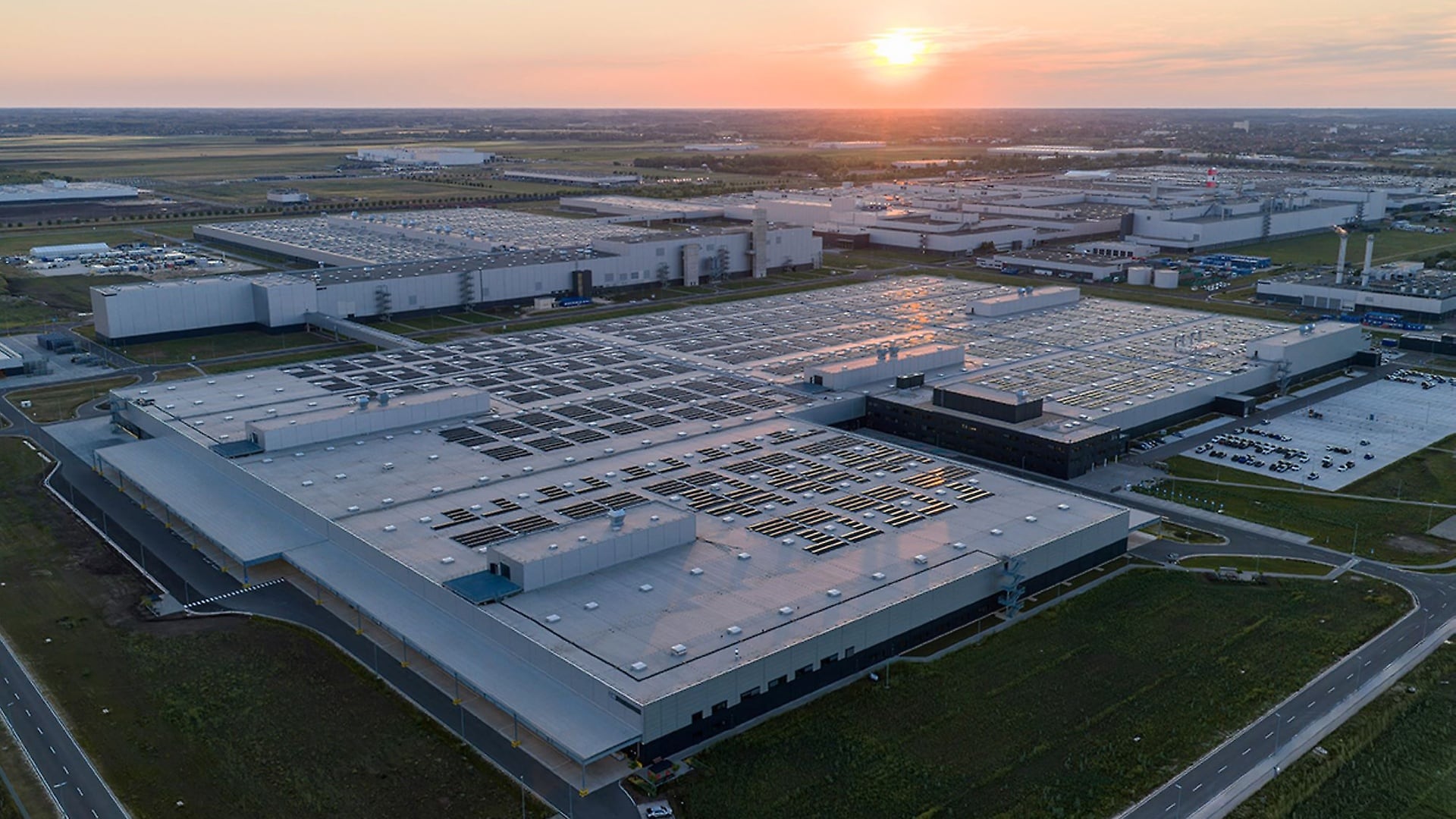
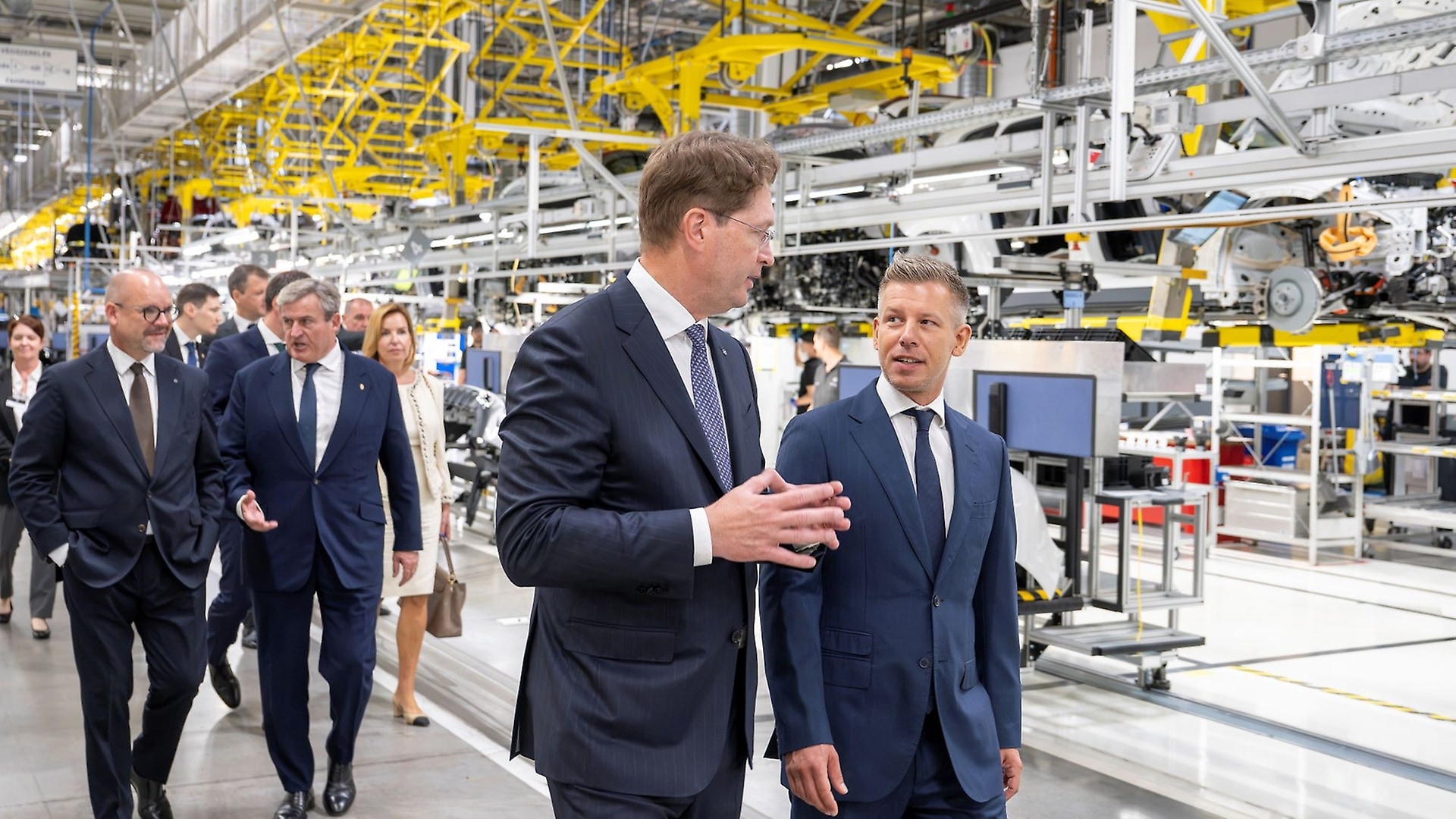
Kecskemét is now one of the most modern production sites in the global Mercedes-Benz production network. The new production halls feature highly flexible manufacturing structures. Digital production technologies, ergonomically designed workstations and AI-supported applications work seamlessly together here, enabling modern and efficient production.
The foundation is provided by the Mercedes-Benz Cars Operations 360 digital production ecosystem, or MO360 for short. Via the MO360 data platform, production, quality and supply chain data are linked across sites and made transparently accessible to every employee worldwide. Another key component of digital production is the ‘Digital Factory Twin’. in Kecskemét, Mercedes-Benz has, for the first time, created a complete digital replica of an entire assembly hall within the NVIDIA Omniverse. The Digital Factory Twin allows production processes to be virtually experienced and controlled. Equipment can be operated in the digital space, individual production steps can be simulated, and process flows can be transparently tracked throughout the entire manufacturing process of the new electric C-Class. This allows product and production scenarios to be planned, validated and optimised even before they are implemented in real-world manufacturing. This improves the quality of planning, reduces risks during the start-up phase and creates additional flexibility when integrating new models and technologies.
In addition, AI-supported functions enhance quality and efficiency in the production process. The MO360 Vision System supports quality control with camera-based applications and can detect defects on the vehicle in real time. At the same time, AI-based assistance and analysis functions make it easier for staff to evaluate complex production data. With MB.OS, Mercedes-Benz is also laying the technological foundation for linking production systems, vehicle software and digital applications even more closely.
The current plant extension is also consistently aligned with Mercedes-Benz’s sustainability goals. Photovoltaic systems are a key component of the site’s energy supply: to the west of the plant, an open-space solar park has been installed on an area of 240,000 square metres and with a capacity of 27.4 MWp. Together with the photovoltaic systems on the roofs of the new battery assembly, body-in-white and final assembly halls, the plant achieves a total capacity of 42.3 MWp. This covers around 25 percent of the annual energy requirement. At the Kecskemét site, the company is also consistently focusing on energy-efficient manufacturing technologies. In the new paint shop, optimised processes reduce energy consumption by around 20 percent compared with the existing facility and cut CO₂-emissions by around 80 percent. Additional investments in water efficiency and waste prevention help to conserve resources throughout the entire production process.
With currently more than 5,000 employees, the Kecskemét site is already the largest and most attractive employer in the region. Mercedes-Benz Manufacturing Hungary Kft. is making targeted investments in the training and qualification of skilled workers, as well as in establishing strong local roots. These include the Mercedes-Benz Academy Kecskemét, the Mercedes-Benz School, a collaboration with Neumann János University, and initiatives to support the work-life balance, including the company’s own childcare facilities.
,xPosition=0.5,yPosition=0)
,xPosition=0.5,yPosition=0)