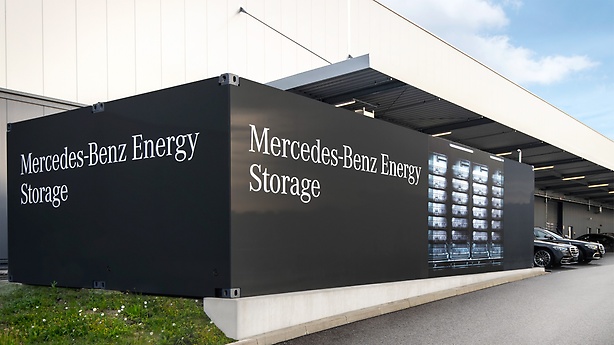
The Battery Energy Storage System (BESS) can be customised as an in-house solution or in a containerised format to meet various site requirements.
The Battery Energy Storage System (BESS) combines safety, scalability, and flexibility for use in industry and commerce. It consists of standardized and tested components manufactured to the highest industry standards and realized with proven technologies. The highly scalable modular approach – from the battery to the power electronics and grid integration – allows the system to be flexibly adapted to a wide range of performance and capacity requirements. This means that the BESS can be optimally tailored to the specific needs of the respective area of application.
Components of the Battery Energy Storage System
The Battery Energy Storage System consists of three key components: the DC/AC system (battery), power electronics and the cooling system.
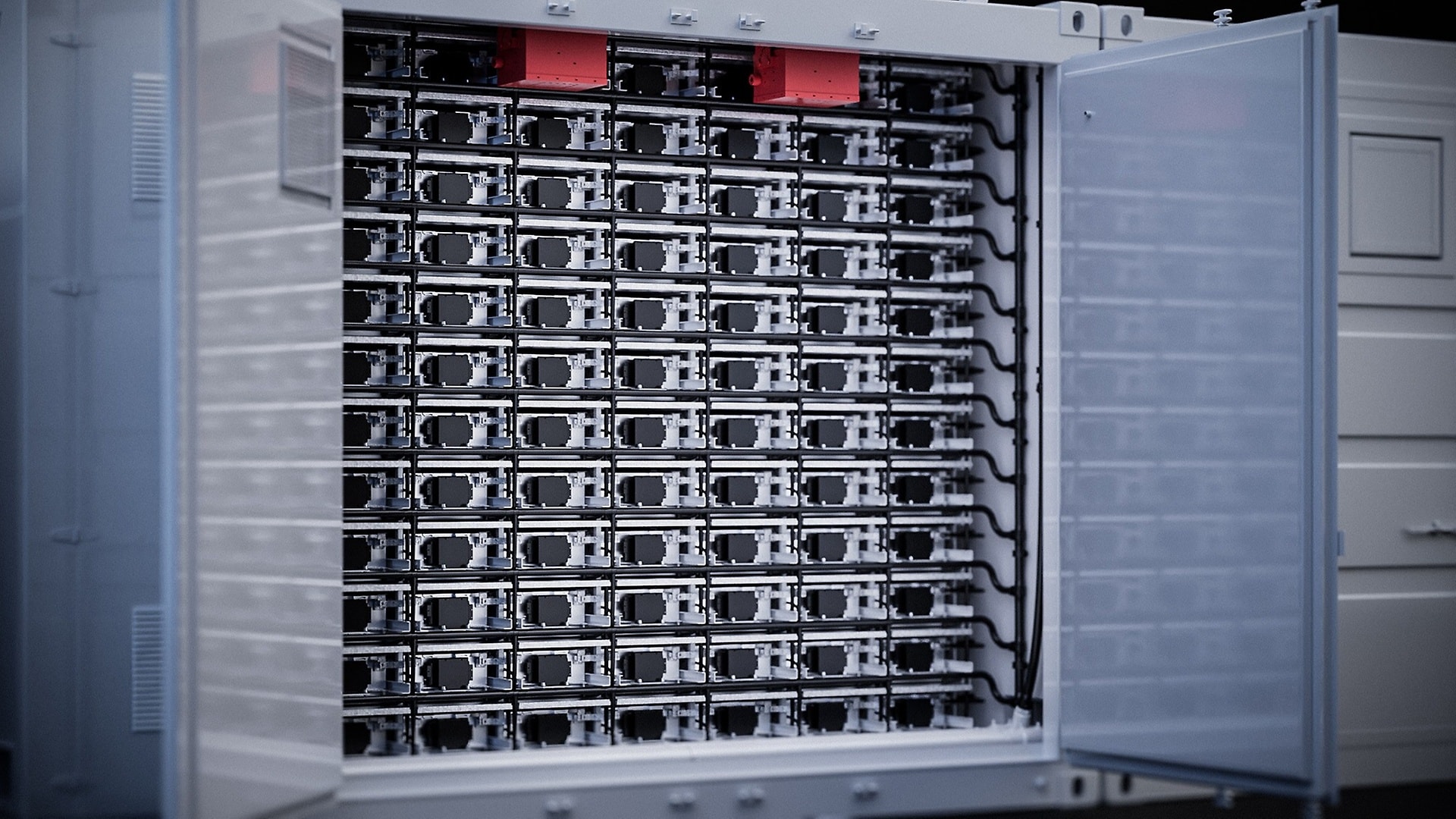
The BESS utilizes high-quality battery modules from the automotive sector for the efficient storage of electrical energy. The fully integrated system comes in 13 feet containers and can be scaled flexibly. It integrates the battery unit (DC) and the power electronics (AC). It can be adjusted from 600 kW or 1,200 kW or AC power and comes with approximately 1.6 MWh of capacity to allow flexible solutions for various areas of application.
Footprint
- 13-foot high-cube ISO container + application-specific battery cooling.
- Optional: In-house installations based on customer request.
Capacity
- 1.56 MWh nominal in the 13-foot container
- Scalable from 1.56 MWh to 6.24 MWh (+100 MWh possible with multiple systems)
- C-rate (Charge / Discharge) up to 0.94
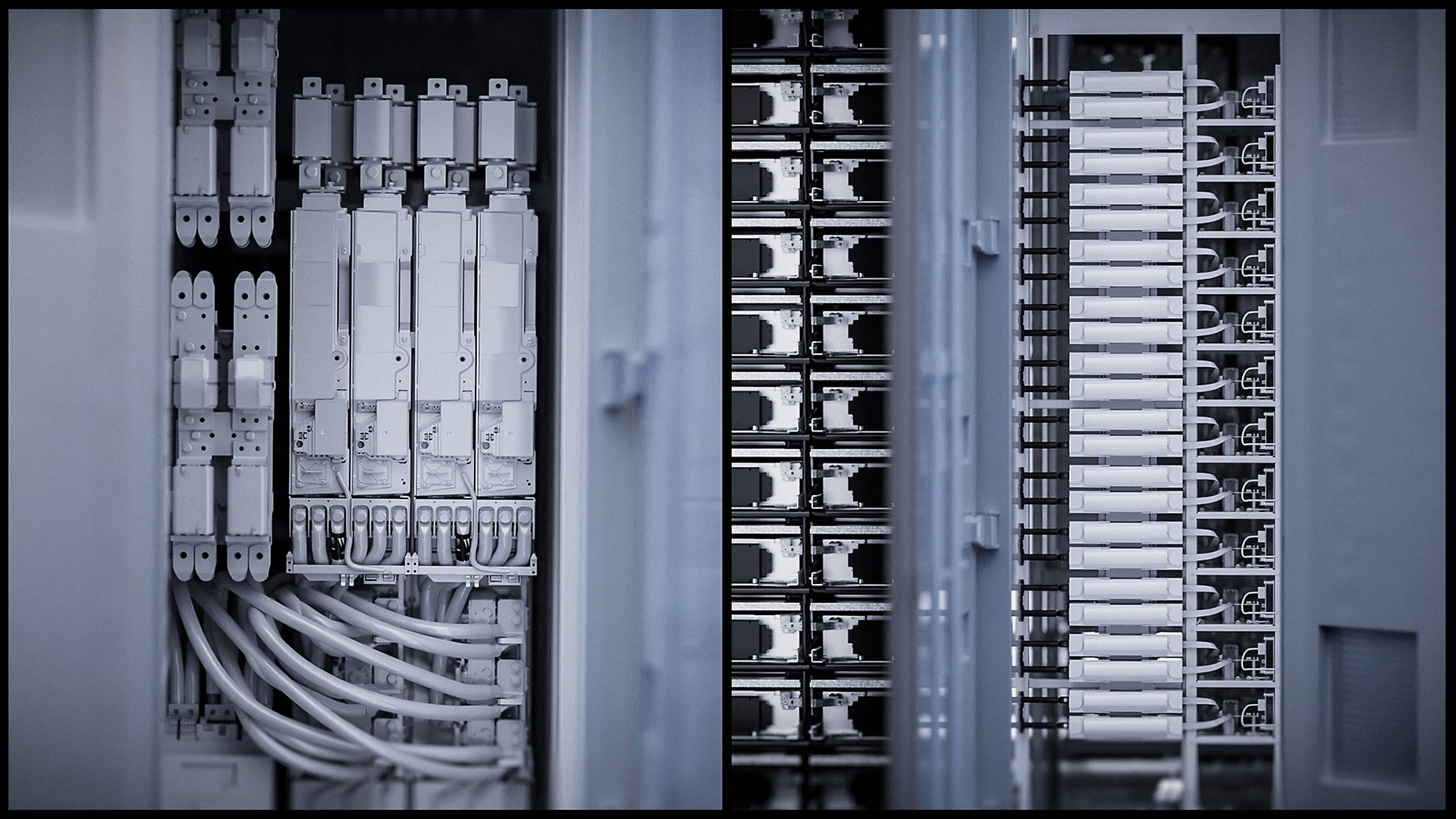
The power electronics convert direct current (DC) into alternating current (AC) and enable connection to the power grid. Proven industrial inverters and an advanced software validation system are used for this purpose.
General
- Latest generation of high-quality industrial inverters with IC7 technology (Danfoss)
- SiC technology for very high efficiency (RTE)
- High-efficiency software development and validation process
Footprint
- Fully integrated into the DC/AC system container
Topology
- Up to four separately controllable AC/DC strings with a maximum power of 600 / 1200 kW each
- Ready for a 1200V DC input voltage
- Includes DC and AC contactors, fuses, and connection terminals
- Includes a combined PLC control system and interfaces
- Includes a local data logger and an optional cloud interface
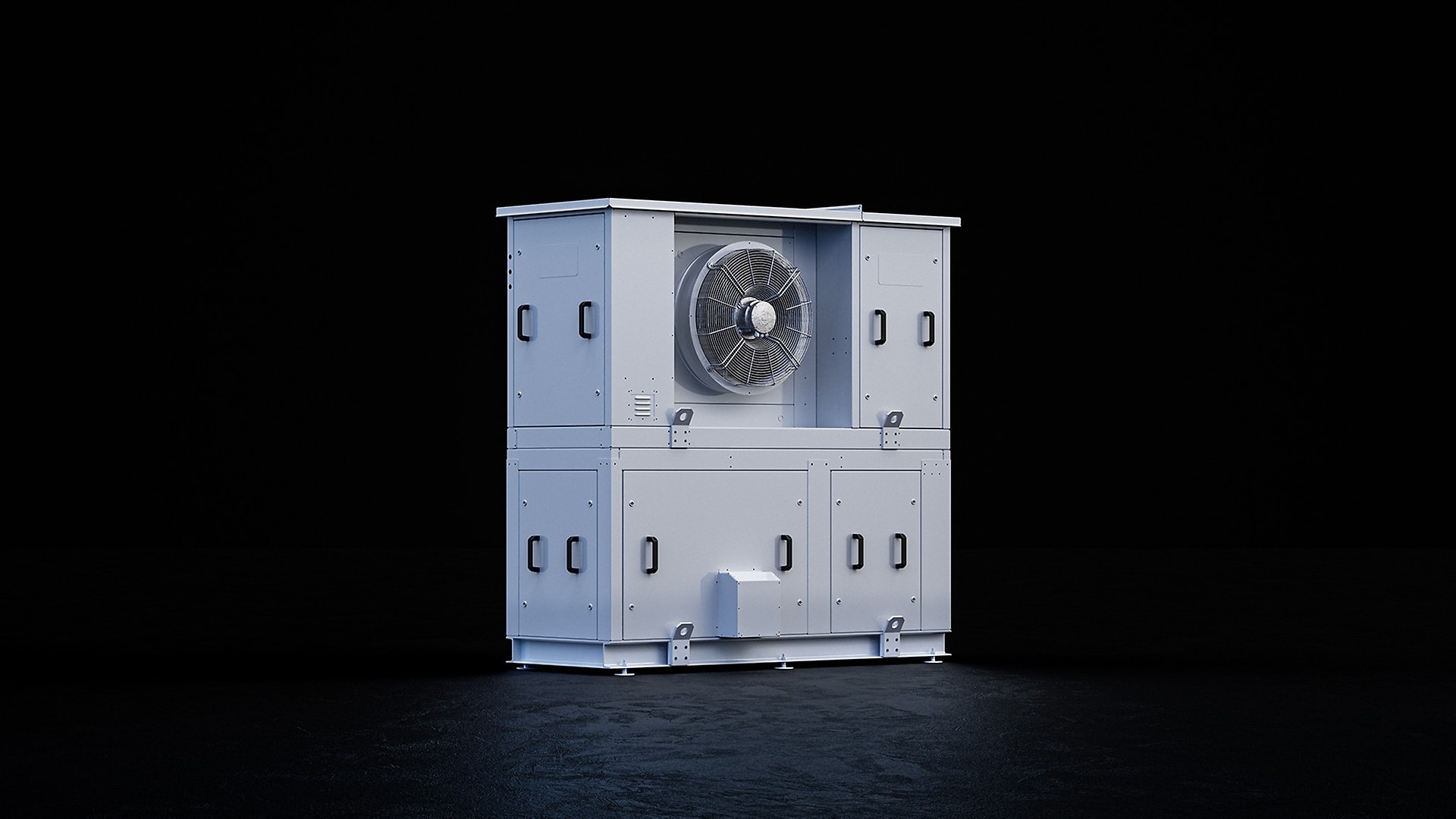
A liquid cooling system ensures evenly temperature distribution in the DC system and thus contributes to extending the battery service life. The cooling can also be adapted to specific load profiles to further optimize efficiency.
Cooling
- Liquid cooling to extend battery life and reduce degradation
- Optional: Adaptation of cooling to customer-specific load profiles
- Two separate cooling circuits for batteries and PCS in one housing
- Free-cooling system as standard, utilizing ambient air for cooling when operating and environmental conditions permit
- Natural refrigerant R290 (propane) is used as an environmental feature
Benefits of the Battery Energy Storage System
The BESS also features a comprehensive safety concept, setting standards in terms of specifically developed and extensively tested fire protection measures. Key features include a functionally safe, self-developed battery management system, high-performance NMC battery modules and an integrated liquid-cooling system. The comprehensive fire prevention measures have been tested according to the latest IEC/EN 62619 requirements.
Thanks to its modular design, the Battery Energy Storage System (BESS) can be adapted to a wide range of requirements, with storage capacities ranging from 1.56 MWh to 6.24 MWh and exceeding 100 MWh through the use of multiple systems. Whether as a container solution, an in-house system, or a customized configuration, the storage system can be flexibly designed and supports grid stability functions such as black start and grid forming, which are relevant for electricity systems with an increasing share of renewable energy sources.
Whether as a container solution, in-house system or individually optimized: The storage system can be designed flexibly and makes an important contribution to the energy transition by supporting grid stability services such as black start and grid forming.
The Battery Energy Storage System (BESS) enables particularly low total cost of ownership over its entire lifecycle. Planned maintenance intervals, live software updates, and uniform, low material ageing ensure high availability and economic efficiency. A predictive monitoring system extends the lifespan of the storage system while simultaneously reducing operating costs.
When designing the Battery Energy Storage System, Mercedes-Benz Energy considers environmental aspects in addition to technical performance. These include the use of refrigerant R290, SF6-free insulation gas and the repurposing of batteries, providing an additional use phase before recycling.
BESS is built on extensive expertise that has evolved since the pioneering days of stationary battery storage technology. With years of experience and continuous development, cutting-edge solutions are created to meet both today’s demands and tomorrow’s challenges. Close collaboration with scientific institutes drives the development of innovative technologies.
,xPosition=0.5,yPosition=0)
,xPosition=0.45,yPosition=0)
,xPosition=0.5,yPosition=0)
,xPosition=0.5,yPosition=0)
,xPosition=0.5,yPosition=0)
,xPosition=0.5,yPosition=0)