Compass.

Interview with Martin von Broock

The ethics pilot.

February 20, 2026 – As a member of the Advisory Board for Integrity and Sustainability at Mercedes-Benz, Dr. Martin von Broock brings together diverse perspectives. In the interview, the business ethicist explains why constructive dialogue is essential, how companies can provide orientation, and why sustainable action is more than a moral obligation.

Dr. von Broock, you’ve advised companies, associations, and ministries in the field of business ethics. Which skills and experiences are most valuable to you in your work on the Advisory Board for Integrity and Sustainability?

Martin von Broock: For me, the ability to switch perspectives is the most important skill. In my consultancy work, I’ve collaborated with people from very different sectors — from the energy industry to the finance sector. This differentiated perspective is often very helpful in my work on the Advisory Board. During our discussions I ask myself how policymakers would see this, or an industry association, or an NGO. Lawyers approach issues in a different way than climate scientists. Keeping this diversity of perspectives in mind is the foundation of good advisory board work.

You’ve led the Wittenberg Center for Global Ethics since 2014. What is its mission?

Martin von Broock: In short: the Wittenberg Center is a think tank focusing on practical business and leadership ethics that can be applied in everyday life.

Why “practical”?

Martin von Broock: Because we build bridges between research and practice. We’re driven by the question of how to fill concepts like respect, trust, and cooperation with real substance — beyond buzzwords and empty phrases. It’s important that companies and their leaders can really work with these insights and can cope with them well.

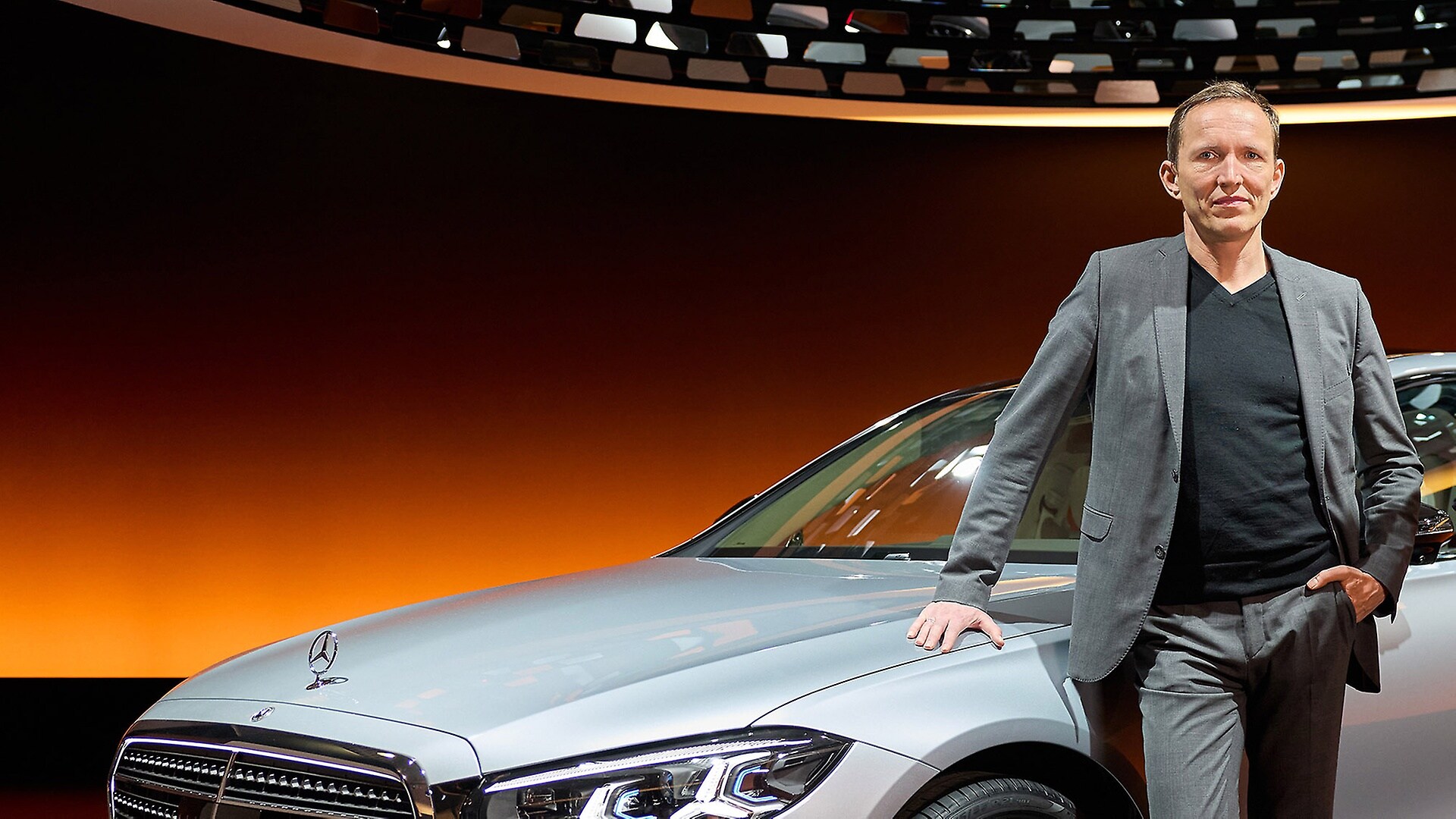
Dr. Martin von Broock; Head of the Wittenberg Center for Global Ethics (WZGE).

What does that mean in concrete terms for Mercedes-Benz?

Martin von Broock: The fundamental question of ethics is “What should I do?” This becomes particularly relevant when rules are missing or contradict each other, or in the case of conflicting values — for example, with new technologies like artificial intelligence where practical benefits and data protection may collide. My goal is to provide Mercedes-Benz and its leaders with guidance in such situations. One crucial point is that values cannot be imposed in a top-down way but must emerge from within the organization. We all shape them through the way we interact with one another. In that way, companies like Mercedes-Benz can actively shape what we mean by decency, responsibility and integrity— in both major or minor decisions.

When people think of morality, they often think of climate protection—and the supposed conflict between self-interest and global responsibility. Do you see it that way?

Martin von Broock: I think that view often falls short. Climate protection is not just about our planet’s survival but also concerns competitiveness and jobs. Competitiveness and climate protection are not mutually exclusive. When Mercedes-Benz makes sustainable decisions, it also aims to ensure long-term business success to secure jobs and growth. The same is true of integrity, where there is also an economic dimension — there can be no business without trust.

Can you give an example where a recommendation from the Board had a concrete impact on the company’s decisions?

Martin von Broock: Attributing individual decisions directly to the Advisory Board would be presumptuous. We see ourselves more as a compass than a navigation system. We provide impulses for many strategic issues and programs as well as engaging in passionate, sometimes controversial, but always constructive discussions on a wide range of topics. Our guiding question is always: how can the company reconcile economic viability with its values — even in the face of harsh realities? How can it remain attractive to customers and capital markets without neglecting employees, human rights, or the environment?

My particular focus is on integrity management, especially as Mercedes-Benz increasingly has to make decisions under conditions of uncertainty and unclear regulatory frameworks — for example, when the regulatory and ethical guardrails for new technologies have not yet been fully defined. In this context, we engage in dialogue with a wide variety of teams and departments. Recently, I had an in-depth exchange on artificial intelligence and digital ethics. Other Board members contribute to different fields. These discussions and collaborating with teams are at least as important as what we formally present to the Board of Management.

Mercedes-Benz has set ambitious sustainability goals in economically challenging times. What strategies are helping to achieve them?

Martin von Broock: It’s crucial that Mercedes-Benz sticks to its sustainability ambitions, despite the current headwinds. This works best if sustainability is understood as a principle of success and survival, and not as a moral obligation or regulatory burden. We don’t act sustainably because we have to or because someone forces us to, but because the scientific evidence is clear — and only sustainable business models will survive in the long run. You can see this in fast-growing economies such as China, which have already aligned their growth strategies accordingly. At the same time, I believe it is important for Mercedes-Benz to clearly communicate externally that it remains committed to the goal of a CO₂-neutral fleet. In the medium term, this can become a genuine factor in differentiating Mercedes-Benz from its competitors. The path may change — but the goal remains.

What have you personally learned in nearly ten years as an Advisory Board member?

Martin von Broock: Two major insights. First, everything can always be seen from a different perspective — and others will indeed see things differently. That makes you more open to new perspectives. Second, you learn that it is simply impossible for large corporations like Mercedes-Benz to simultaneously meet everyone’s expectations. That makes me appreciate even more the willingness to still engage with these challenges and face up to uncomfortable discussions.

How can a body like the Advisory Board itself act with integrity?

Martin von Broock: By arguing — constructively, of course; by exchanging and discussing our perspectives and positions; and by not doing certain things — for example, we do not issue joint public statements or take public positions on behalf of Mercedes-Benz.

We’ve talked a lot about the big picture. But what do integrity and ethical actions look like for each one of us?

Martin von Broock: There’s a very simple maxim: Always act in a way you won’t regret later. After all, you’re the person you’ll spend the rest of your life with. In practical terms, this means that especially when facing difficult decisions, we should take time for reflection rather than acting impulsively. That isn’t easy in an age of media that constantly provoke and trigger us. Most of us have a fairly reliable inner compass — we just need to pay attention to it.

Biography Close

Martin von Broock has headed the Wittenberg Center for Global Ethics (WZGE)  since 2014 and is involved in the development of national and international dialogue processes. Prior to his work at the WZGE, he worked for several years at an international communications and public policy consultancy advising companies and trade associations from the finance, real estate, and energy sectors, as well as various federal and state ministries. Martin von Broock was a member of the German government’s CSR Forum and has been a member of the Mercedes-Benz Advisory Board for Integrity and Sustainability at since 2018.

Mercedes-Benz CLA.

Sustainability Report 2024.

For the 2024 financial year, the sustainability reporting is fully integrated into the annual report for the first time.

Integrity Council.

Advisory Board for Integrity and Sustainability.

The Advisory Board for Integrity and Sustainability has been an important source of input for our company since 2012.

Mercedes-Benz generisch_20_02

Sustainability questions.

Any suggestions, compliments or criticism? Please feel free to contact us.