Header.

Environmental Check

The all-new electric C-Class.

July 08, 2026 – The verified 360° Environmental Check for the new electric C-Class is available and documents a reduction in the CO₂ footprint over the entire lifecycle.

The all-new electric C-Class has been designed from scratch as a battery-electric vehicle, marking the next consistent step in Mercedes-Benz's electrification strategy in the midsize segment. Numerous sustainability measures, first introduced with the all-new electric GLC, are now also being applied to the all-new electric C-Class. As a result, the C-Class achieves a two-thirds reduction in carbon footprint across its entire lifecycle compared to the current combustion-powered C-Class. This is documented in the 360° Environmental Check, which is verified by independent auditors.

Resource efficiency, CO₂ reduction, and the circular economy are already a key focus during the development phase. Together with its suppliers, Mercedes-Benz specifically relies on CO₂-reduced materials such as aluminium, steel, plastics, and battery cells. As a result, CO₂ emissions in the supply chain can be reduced by approximately 23 percent.

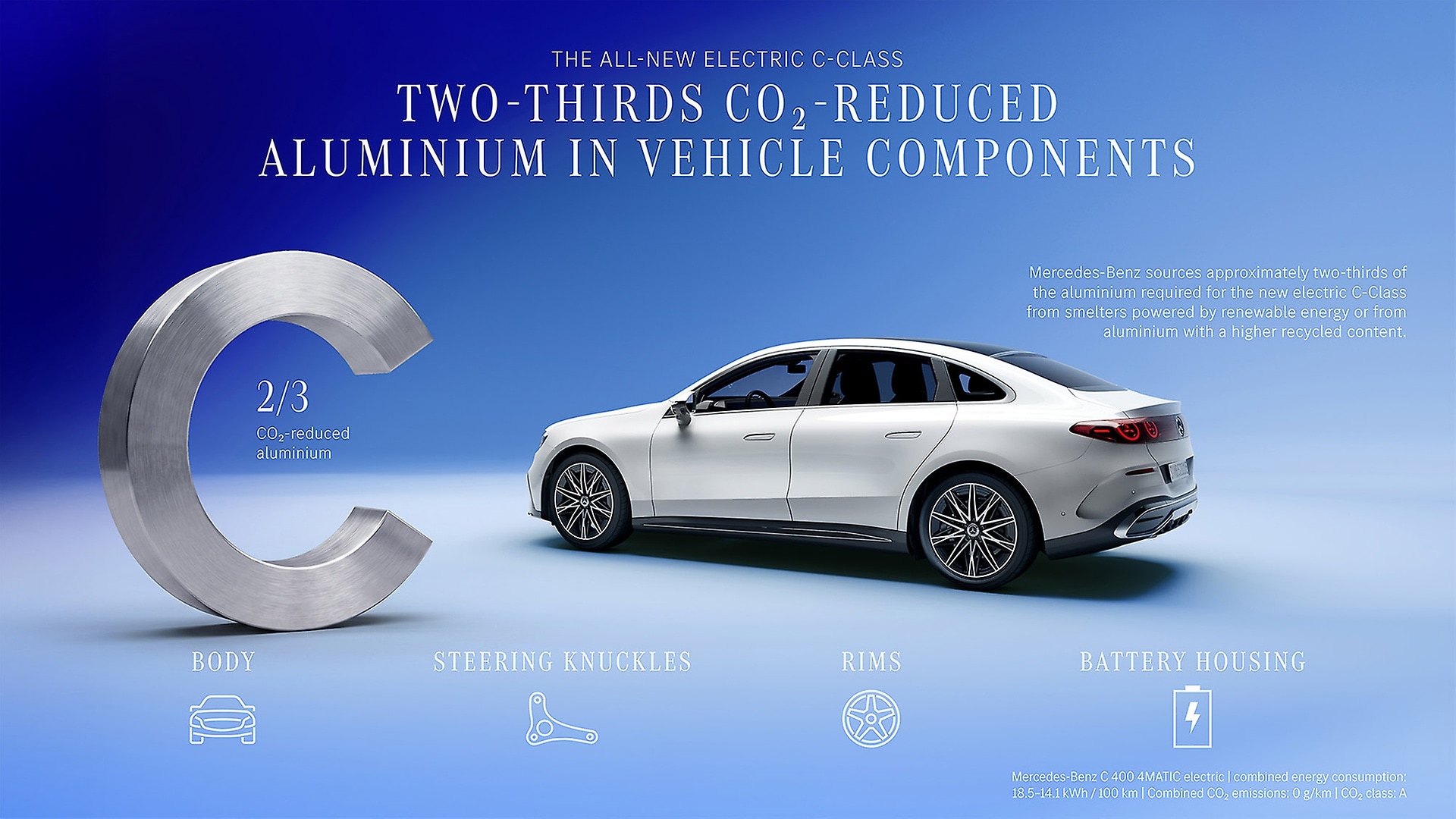
Two Thirds CO₂-reduced aluminium in vehicle components.

• Design for Environment: Resource conservation measures are firmly embedded in the development process of the all-new electric C-Class. The "Design for Environment" approach considers material efficiency, recyclability, and the increased use of secondary raw materials already in the early stages of development.

• Carbon-reduced aluminium: Mercedes-Benz sources approximately two-thirds of the vehicle’s aluminium requirements from electrolysis plants powered by renewable energy or with an increased share of recycled material. In addition to the body and steering knuckles, components such as the wheels and battery housing are made of aluminium with a reduced carbon footprint.

• Carbon-reduced steel: Around 45 kilograms of steel from electric arc furnaces powered by renewable energy are used for the steel components manufactured in-house.

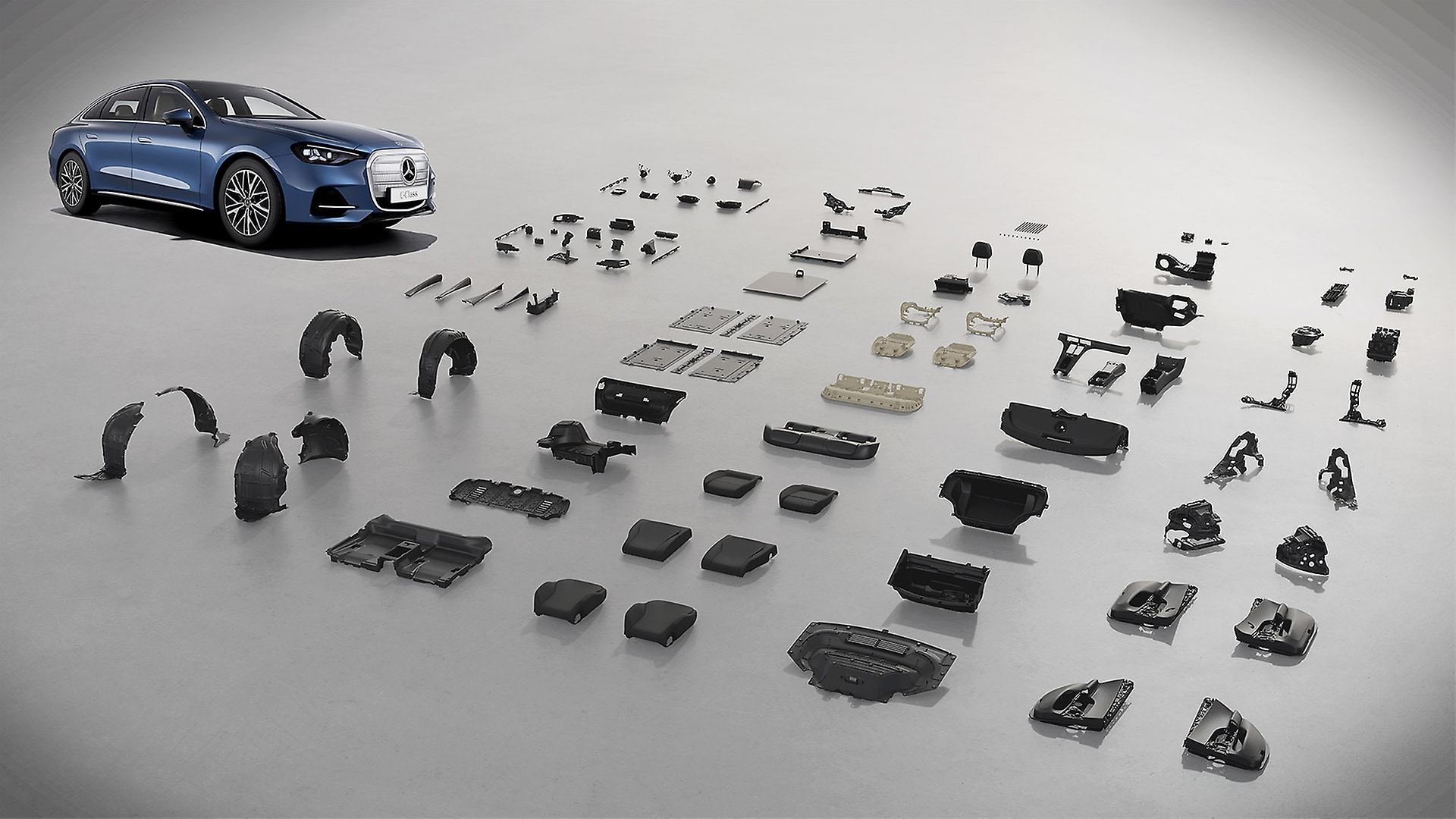
• Use of secondary materials: Compared to the C-Class currently in series production, the share of secondary materials in thermoplastics has increased by more than a factor of four. In total, around 49 kilograms of thermoplastic recycled plastic are used. Numerous components are partially made from recycled materials, including:

- Frunk tub with 50 percent post-consumer-recyclate
- Wheel arch liners with 93 percent recycled content
- Jack mounts made from 100 percent recycled bumpers from end-of-life vehicles
- Bumper carriers with 83 percent recycled content
- Nonwoven fabric and yarn in seat covers with 34 and 50 percent recycled content, respectively

Around 300 components with recycled material content.
Environmental Check at Mercedes-Benz.

Mercedes-Benz models with 360° Environmental Check.

The environmental performance of our Mercedes-Benz models is documented in the externally audited 360° Environmental Check brochures.

Corporate environmental protection.

Our measure for a net-carbon neutral and environmental production.