Brand ambassadors on wheels

Vehicle Icons from 140 years.

January 29, 2026 – Since the invention of the automobile, outstanding vehicles have shaped the perception of Mercedes-Benz and its predecessor brands. Every single model since 1886 represents the strengths of the brand in its own way. Time and again, individual models and model series stand out. They become automotive icons and represent in a special way what defines the brand – the innovative strength of Mercedes-Benz.

Benz Patent Motor Car, 1886 Daimler motor carriage, 1886 Mercedes 35 hp, 1900 Mercedes-Benz SSK, 1928 (W 06) Mercedes-Benz 500 K, 1934 (W 29) Mercedes-Benz 300 SL “Gullwing”, 1954 (W 198) Mercedes-Benz Silver Arrows of the 1950s Mercedes-Benz “Fintail” saloon, 1959 (W 111) Mercedes-Benz 600 “Grand Mercedes”, 1963 (W 100) Mercedes-Benz C 111, 1969 Mercedes-Benz S-Class, 1972 (116 series) Mercedes-Benz G-Class, 1979 (460 series) Mercedes-Benz S-Class, 1979 (126 series) Mercedes-Benz 190/190 E, 1982 (W 201) Mercedes-Benz SL, 1989 (R 129) Mercedes-Benz S-Class, 1991 (140 series) Mercedes-Benz A-Class, 1997 (168 series) Mercedes-Benz CLS, 2004 (C 219) Mercedes-Benz SLS AMG, 2010 (C 197) CONCEPT AMG GT XX, 2025

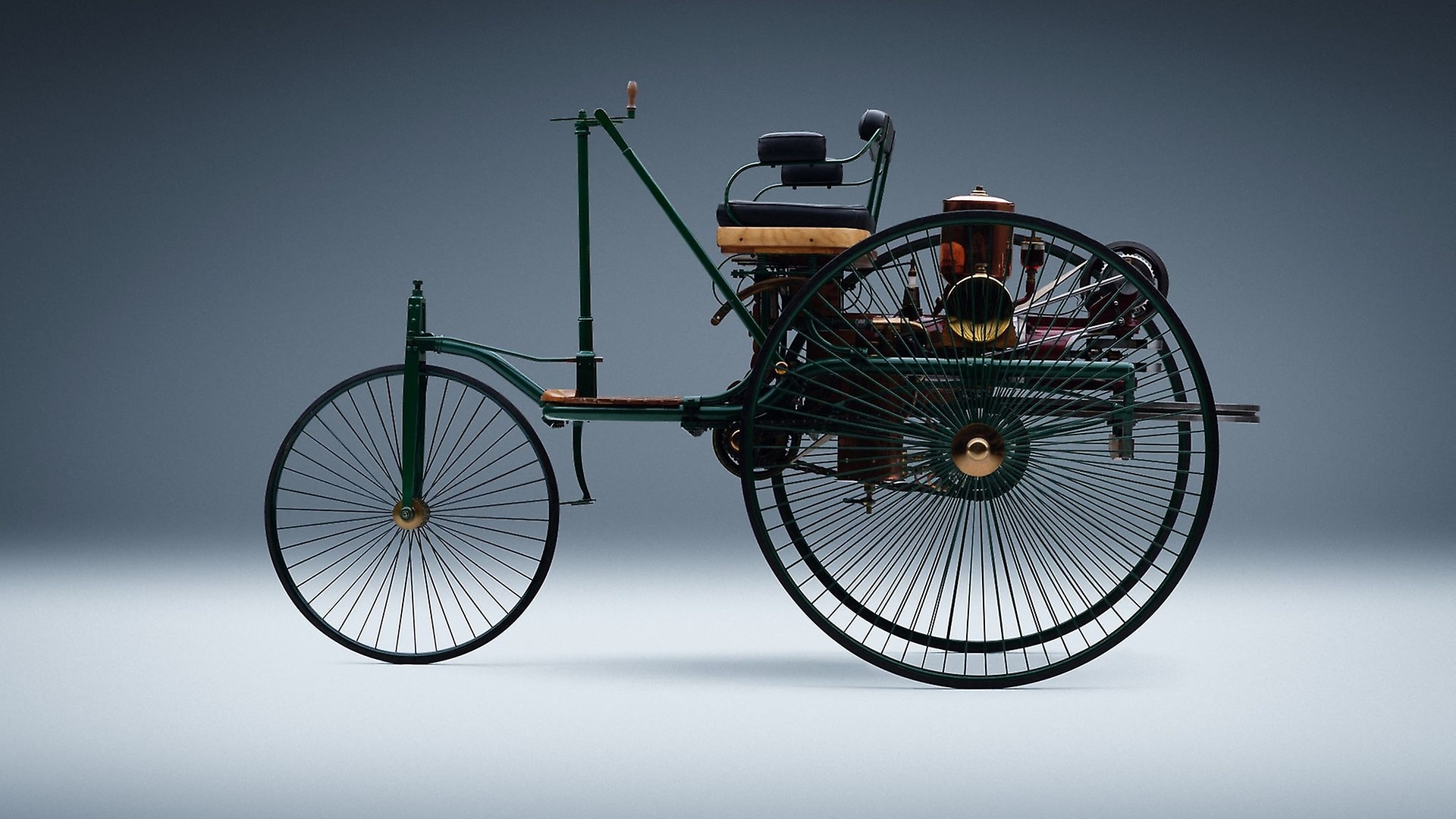
Mannheim engineer Carl Benz achieves a revolutionary invention with this three-wheeled vehicle. His automobile is the first to combine the combustion engine (0.55 kW/0.75 hp) with a lightweight, modern chassis in a coherent overall concept.

Benz Patent Motor Car. Authentic replica of the world’s first automobile from 1886. Studio shot from the left, taken in 2025.

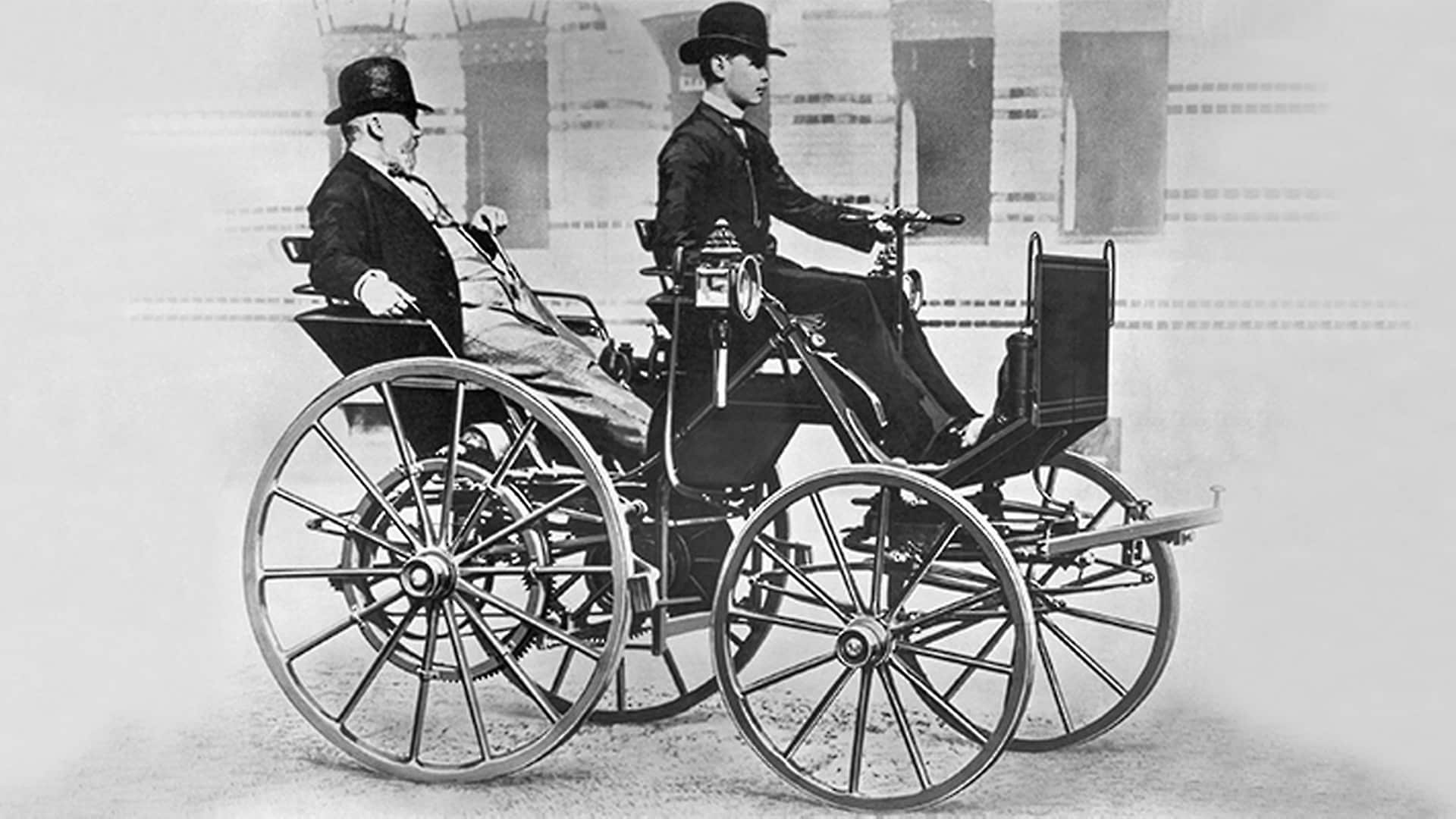
In the early 1880s, Gottlieb Daimler and Wilhelm Maybach develop the high-speed combustion engine as a universal drive unit. Daimler dreams of using it for mobility “on land, on water and in the air”. His vision comes true: in 1886, the motor carriage is created as the first four-wheeled automobile in history. The engine is also used in the Daimler motorboat in 1886 and in airship propulsion for the first time in 1888.

Gottlieb Daimler and his son Adolf on the motor car (motor carriage), 1886.

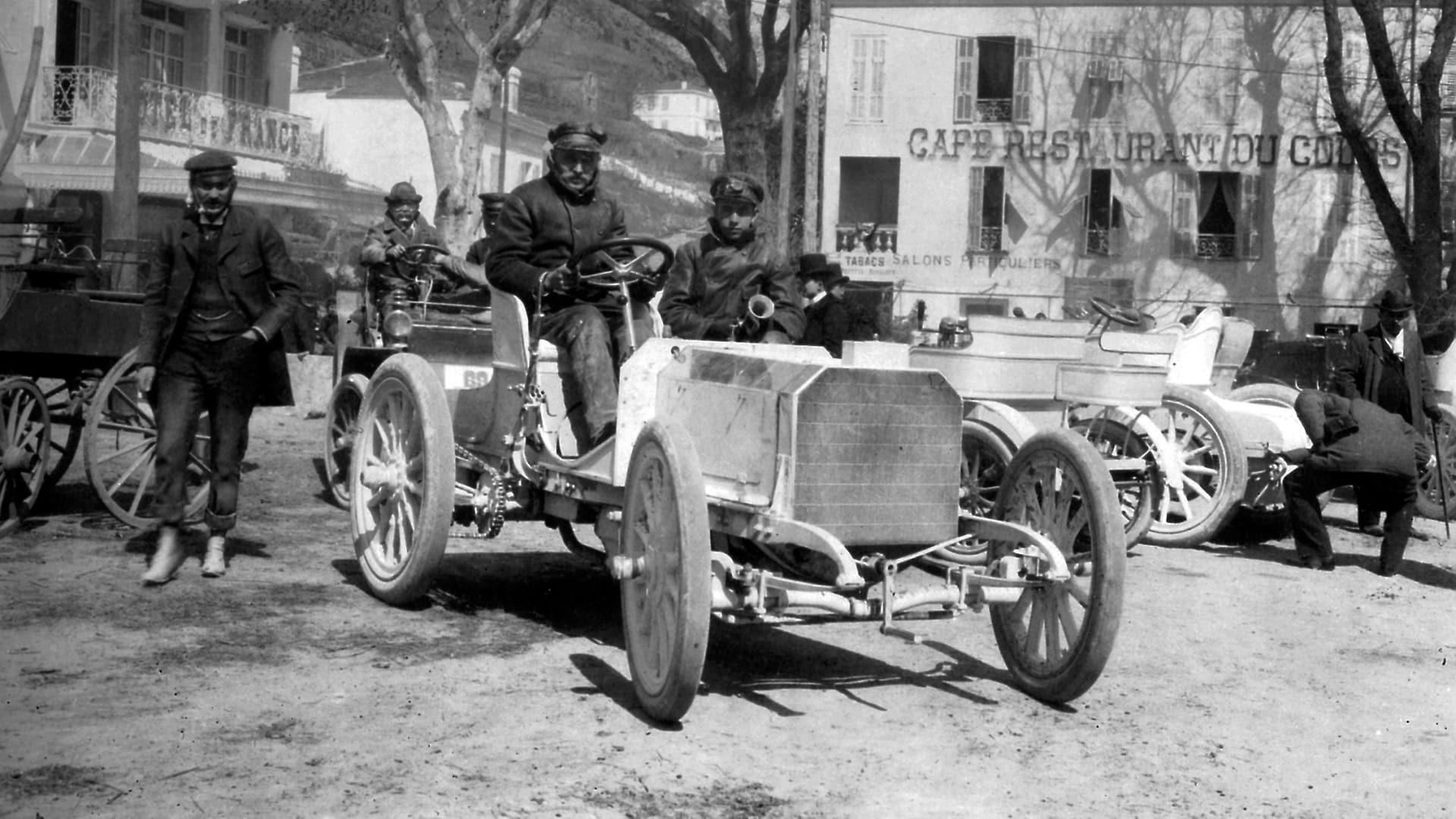
This luxurious sports and prestige vehicle is the first modern automobile ever built. It is created at the request of DMG’s business partner Emil Jellinek. Wilhelm Maybach develops the Mercedes 35 hp with a high-performance drive, long wheelbase and low centre of gravity. This first Mercedes dominates the competitions at the 1901 Racing Week in Nice. The Mercedes-Simplex models built on this design from 1902 onwards set new standards in terms of comfortable operation and high performance.

Emil Jellinek at the presentation of the Mercedes 35 hp at the 1901 Nice race week.

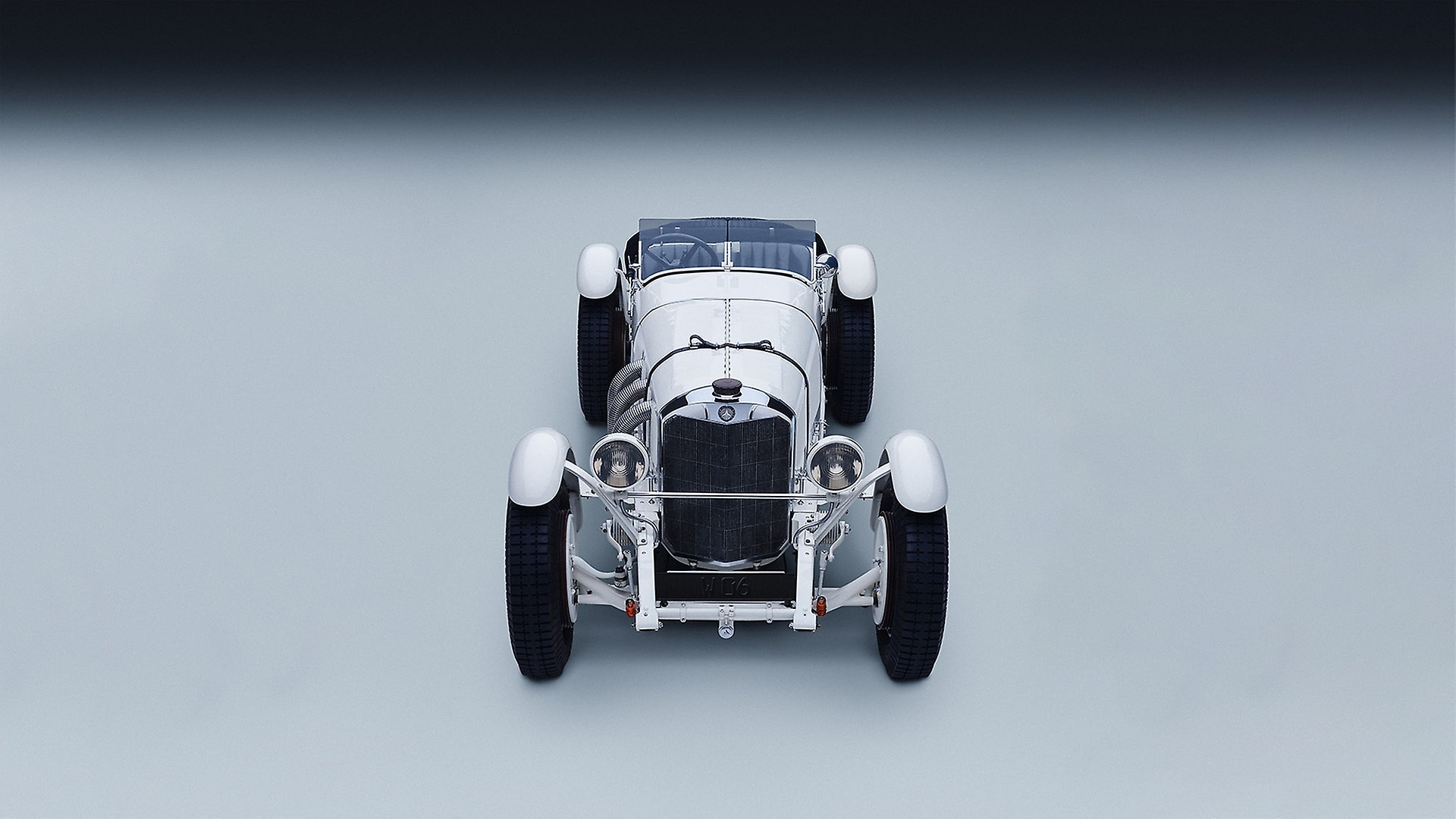
To increase engine power and efficiency, Paul Daimler, son of company founder Gottlieb Daimler and then chief engineer, introduces supercharging at Mercedes. In the Mercedes-Benz S-series of sports touring cars, this technology becomes the hallmark of luxurious high-performance vehicles for discerning customers at the end of the 1920s. The S, SS, SSK and SSKL models, the latter built exclusively as racing cars, also celebrate outstanding sporting successes – from a one-two victory in the opening race at the Nürburgring in 1927 to Rudolf Caracciola’s victory in the 1931 Mille Miglia.

Mercedes-Benz SSK (W 06), production period 1928 to 1932. Vehicle from 1928. Studio shot from the front, taken in 2025.

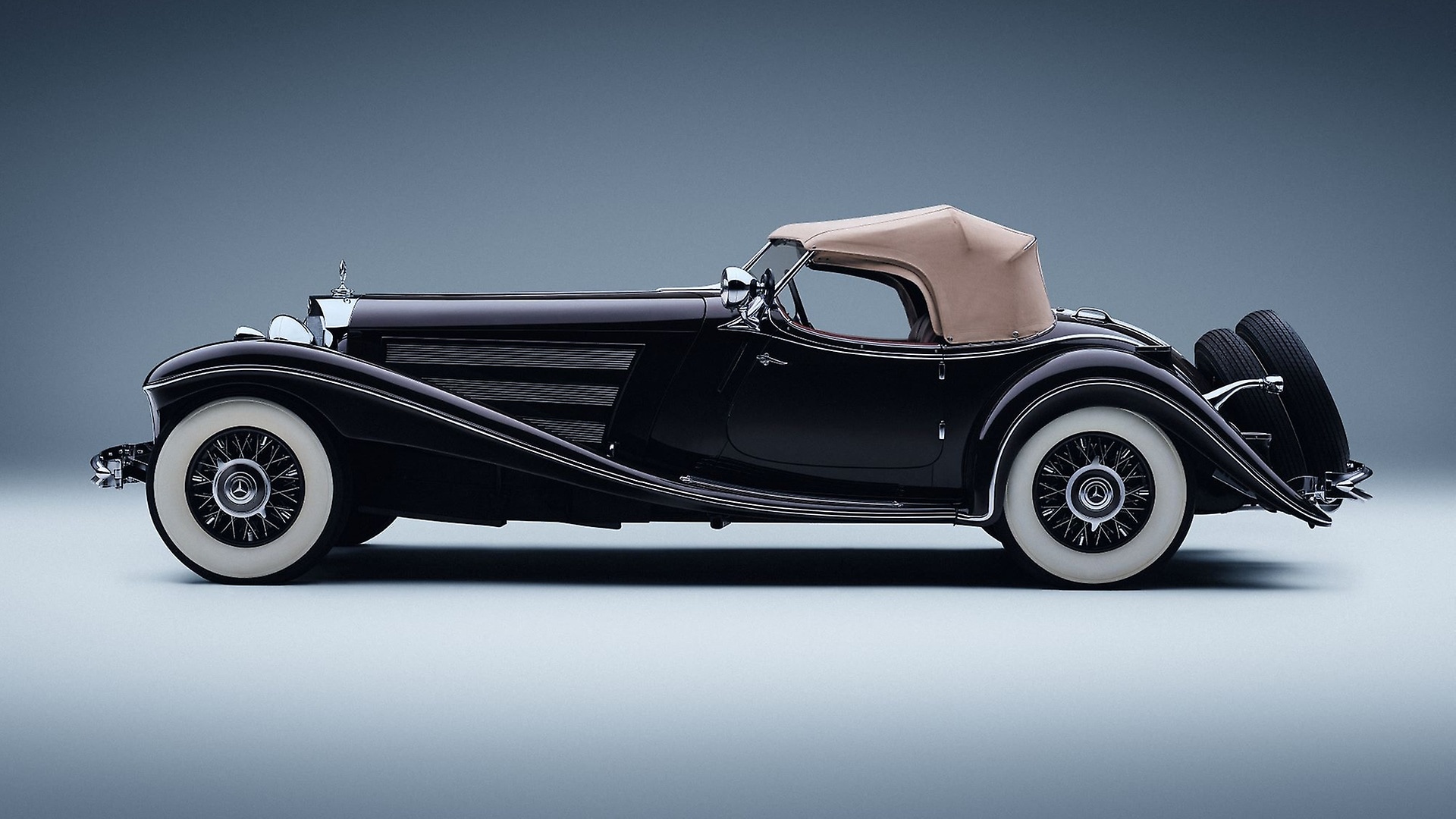
This dream car of the 1930s epitomises the perfect combination of performance, design and craftsmanship. As the ideal masterpiece on wheels, most customers order their 500 K and 540 K with a factory-built Sindelfingen body. At the pinnacle of design and technology, this body is an expression of the high quality of Mercedes-Benz.

Mercedes-Benz 500 K Special Roadster (W 29), production period 1934 to 1936. Vehicle from 1934. Studio shot from the left with closed hood, taken in 2025.

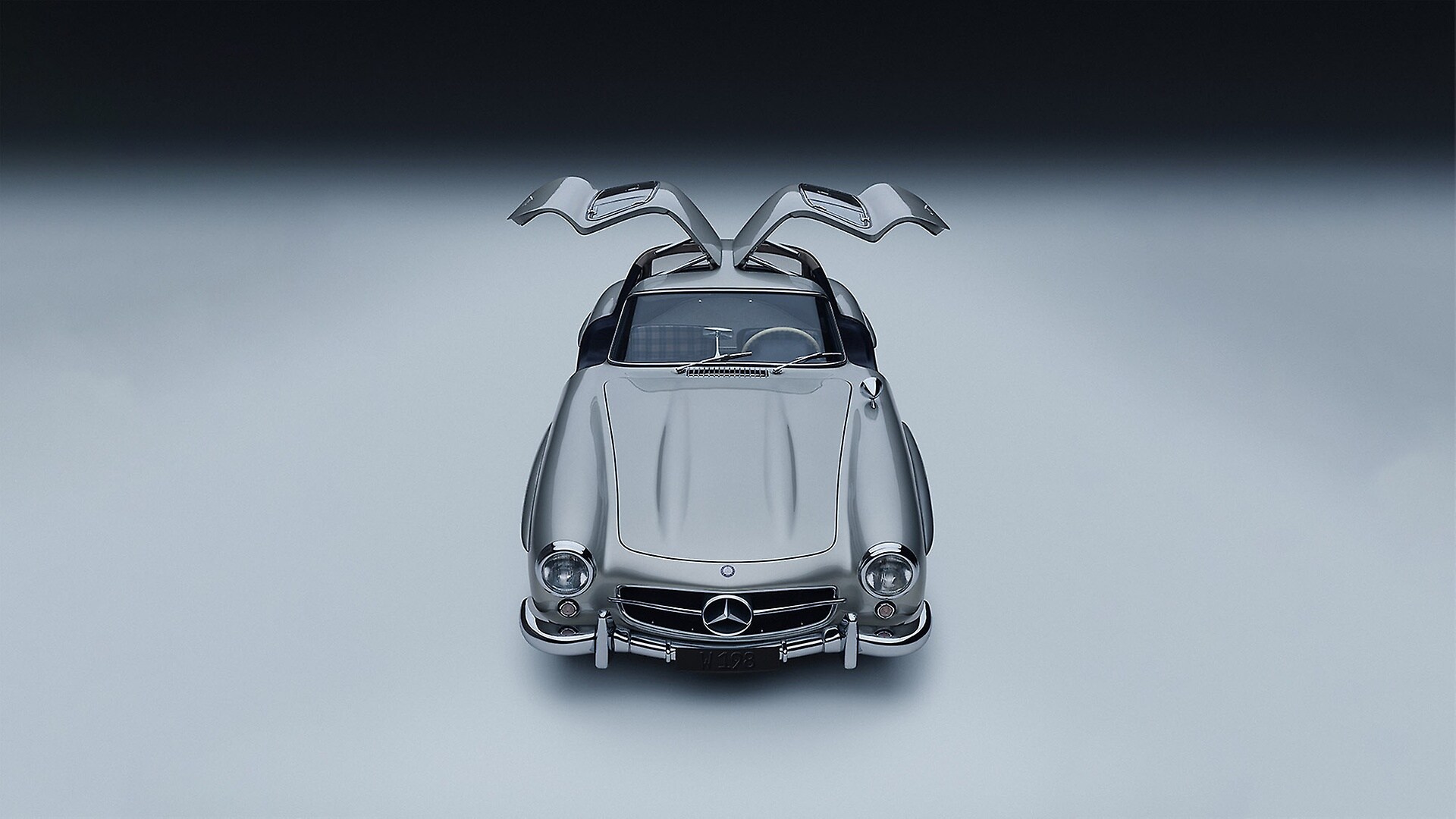
The “Sports Car of the Century” is based on the racing car of the same model designation (W 194), with which Mercedes-Benz makes a highly successful return to motor racing in 1952. With racing genes, the “Gullwing” is defined technically by the first four-stroke direct injection in a production car, and its lightweight construction with innovative tubular space frame also originates from the racing car.

Mercedes-Benz 300 SL “Gullwing” (W 198), production period 1954 to 1957. Vehicle from 1955. Studio shot from the front with gullwing doors open, taken in 2025.

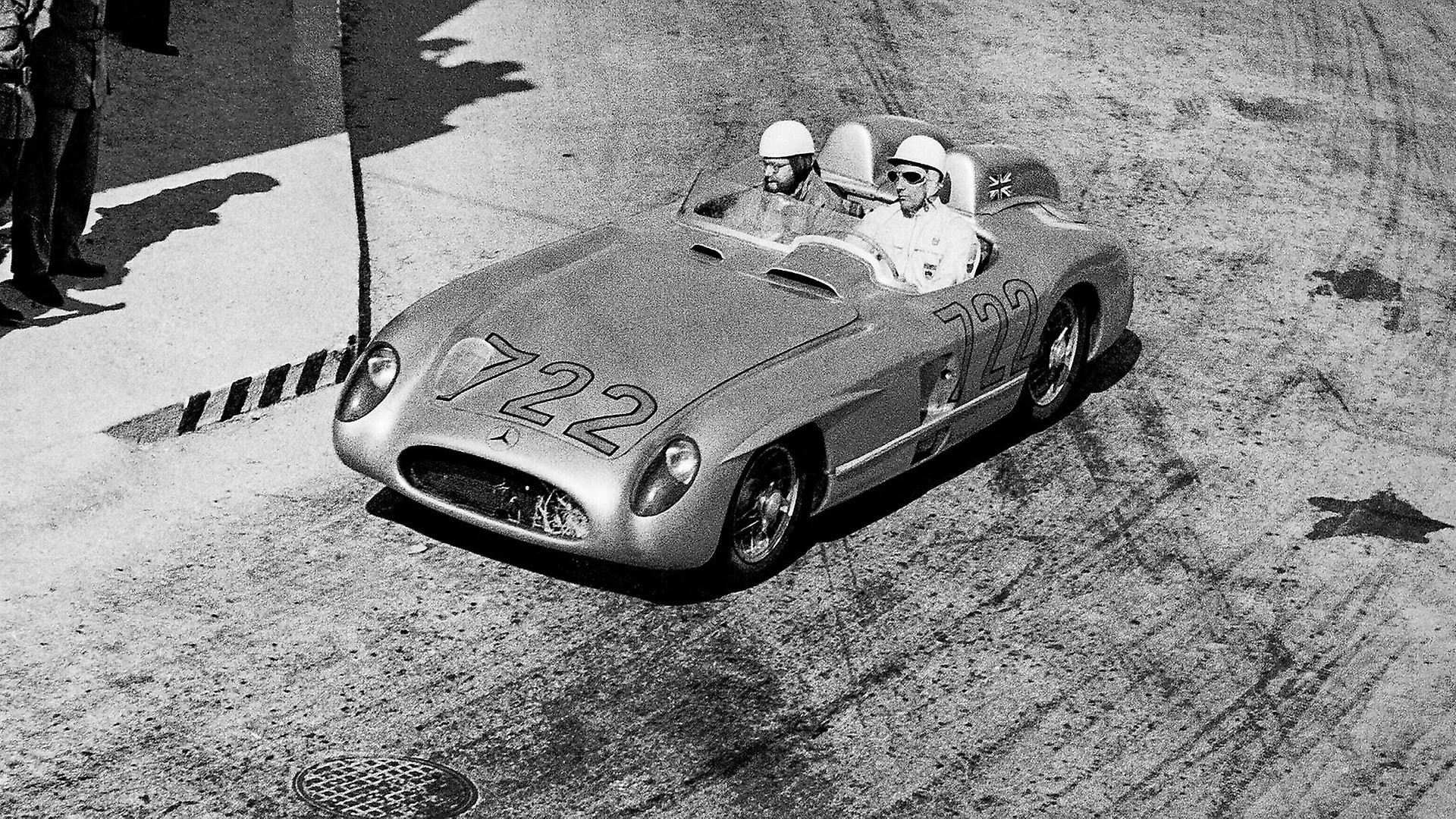
More than 70 years ago, Mercedes-Benz celebrates a string of overwhelming successes with the W 196 R Formula 1 racing car and the 300 SLR racing sports car (W 196 S). With this second generation of the Silver Arrows, the brand returns to top-flight motorsport. The W 196 R is built in two versions: with streamlined bodywork and with an open-wheeled body. In 1954 and 1955, Juan Manuel Fangio wins the Formula 1 World Championship in this legendary car. Closely related to it is the 300 SLR racing sports car (W 196 S), with its three-litre engine and two-seater body. With it, Mercedes-Benz wins the 1955 Sports Car World Championship – in a season for eternity.

Eventual winners Stirling Moss and Denis Jenkinson in the Mercedes-Benz 300 SLR racing car (W 196 S) with number 722 out on the road.

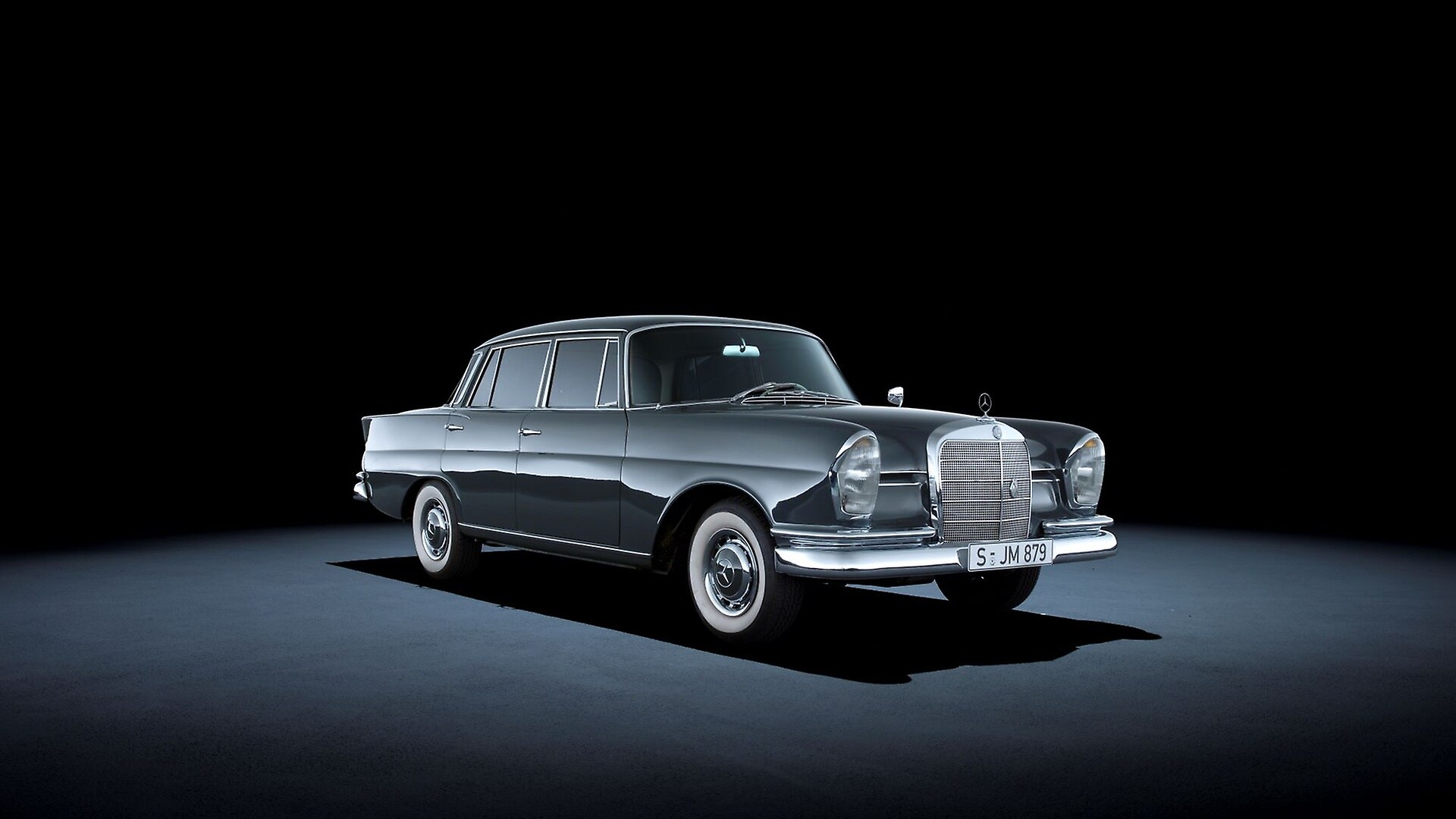
For the first time, Mercedes-Benz implements the pioneering principle of a safety body with energy-absorbing crumple zones in these luxury-class saloons. This marks a decisive departure from the classic concept of “as rigid as possible” for car bodies. At the same time as the premiere of the “Fintail” saloons, Mercedes-Benz begins scientifically based accident research with systematic crash tests.

The luxury-class W 111 model series introduced in 1959 is the first passenger vehicle in the world with a safety body, made up of a rigid occupant compartment and energy-absorbing crumple zones at the front and rear.

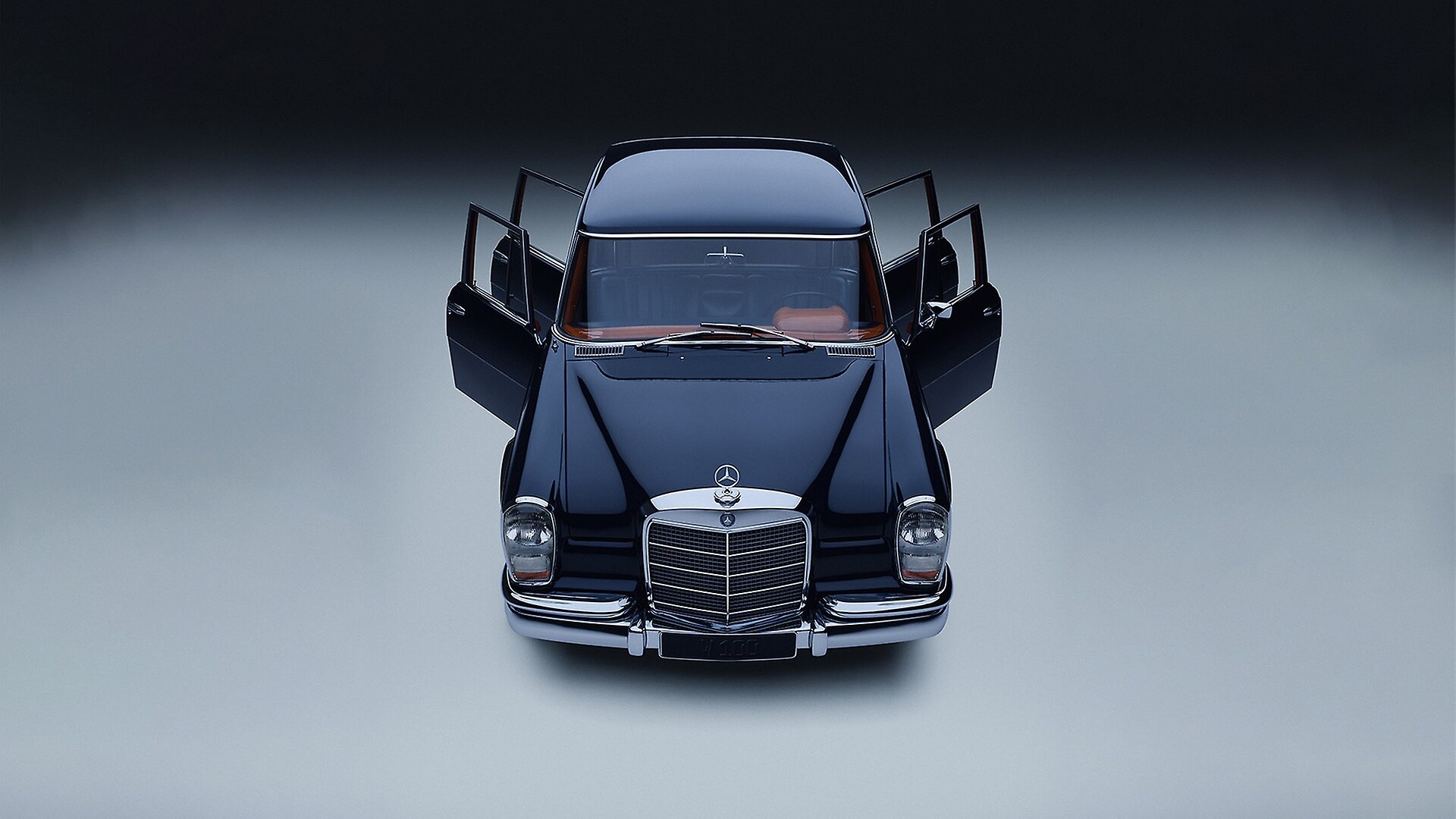
The representative vehicle with the first V8 engine in a passenger car of the brand marks the technical possibilities in automotive engineering of its time and sets benchmarks for supreme comfort. Its systems include, among other things, a sophisticated and high-precision comfort hydraulics that controls numerous functions. Like other Mercedes-Benz prestige vehicles before it, the 600 becomes the vehicle of choice for heads of state, dignitaries and stars around the world.

Mercedes-Benz 600 “Grand Mercedes” from the 100 series, produced from 1963 to 1981. Saloon with short wheelbase from 1963. Studio shot from the front with open doors, taken in 2025.

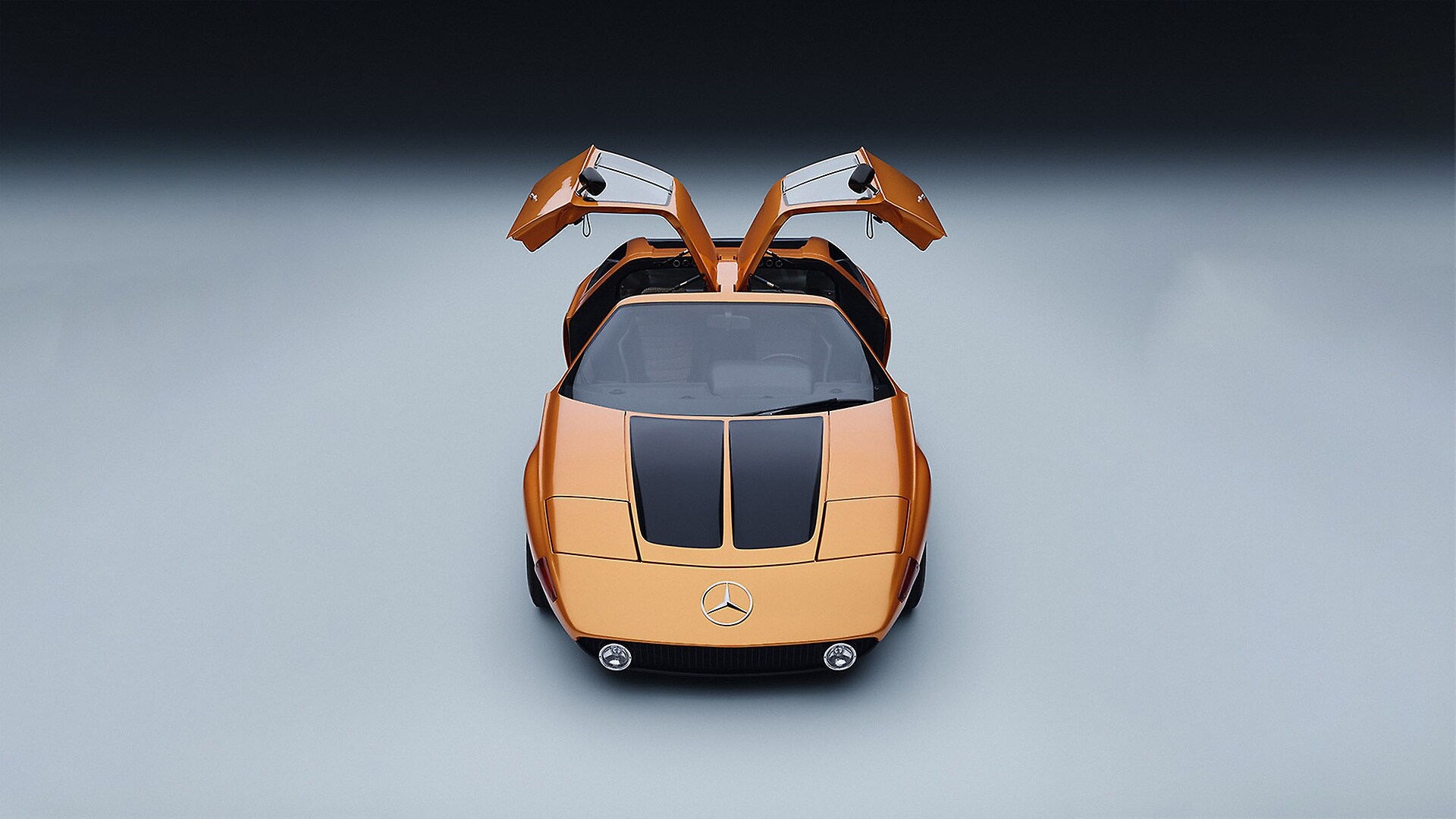
The sports car with a Wankel rotary engine and high-tech bodywork fascinates experts and the public alike at its premiere. Generous purchase offers made by enthusiasts of the brand’s super sports cars are legendary. But the “laboratory on wheels” was not for sale and is never put into series production. Both the C 111-I from 1969 and the C 111-II from 1970 mark the beginning of Mercedes-Benz research vehicles. Later, a series of outstanding record-breaking cars is developed on their basis.

Mercedes-Benz C 111-II. Experimental vehicle from 1970. Studio shot from the front with gullwing doors open, taken in 2025.

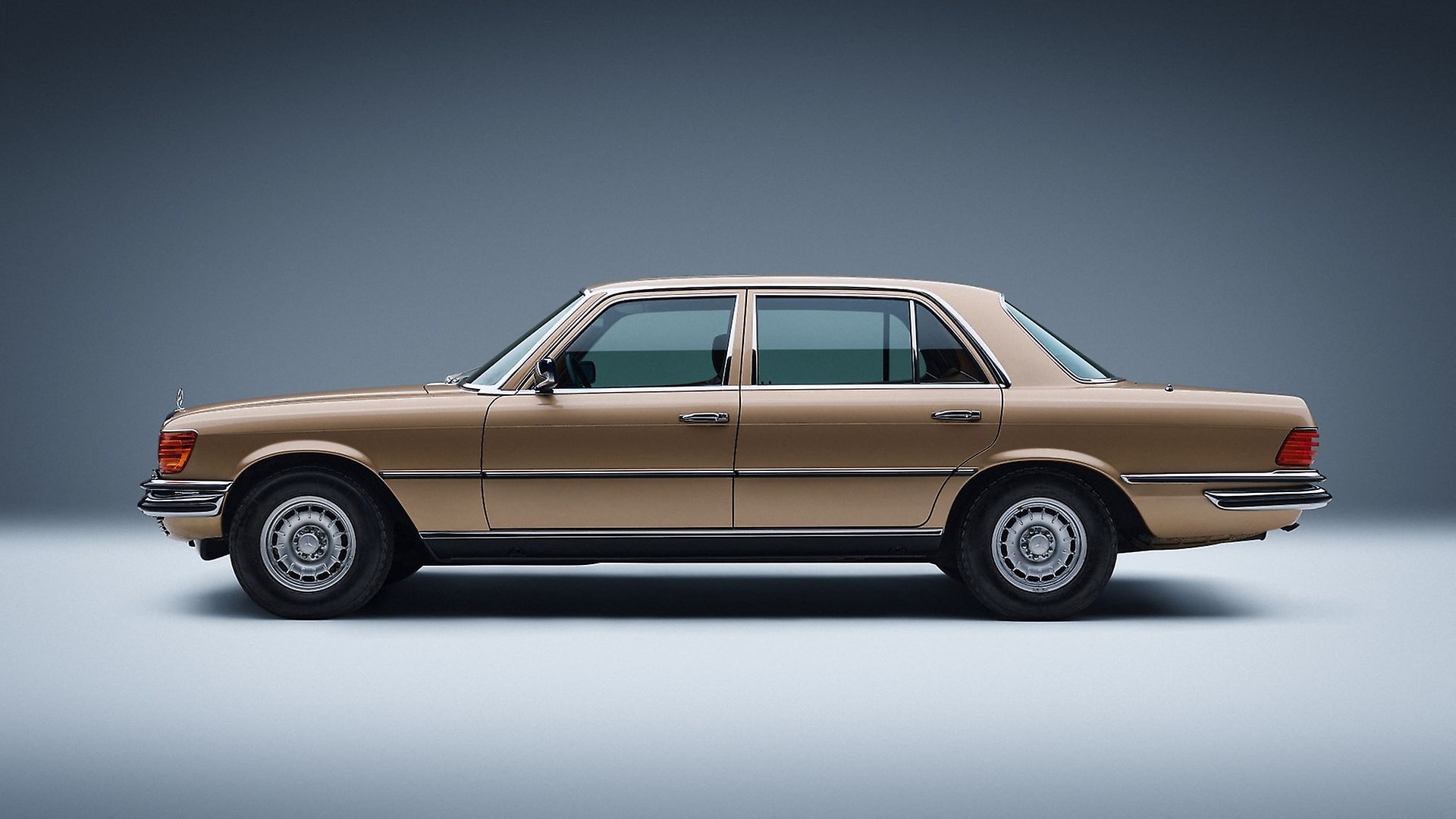
This technically pioneering generation of Mercedes-Benz luxury-class vehicles is the first to bear the name S-Class. The flagship model 450 SEL 6.9 is hailed as “the best car in the world” by “auto motor und sport” magazine, for example. Mercedes-Benz rises to this challenge with every new generation of the S-Class. The saloons continue a tradition that begins as early as 1903 with Emil Jellinek’s luxurious Mercedes-Simplex 60 hp touring car. A technical milestone of the 116 series is the series premiere of the Anti-lock Braking System ABS, jointly developed with Bosch in 1978.

Mercedes-Benz 450 SEL 6.9 from 1980 (116 series, production period 1972 to 1980). Studio shot from the left, taken in 2025.

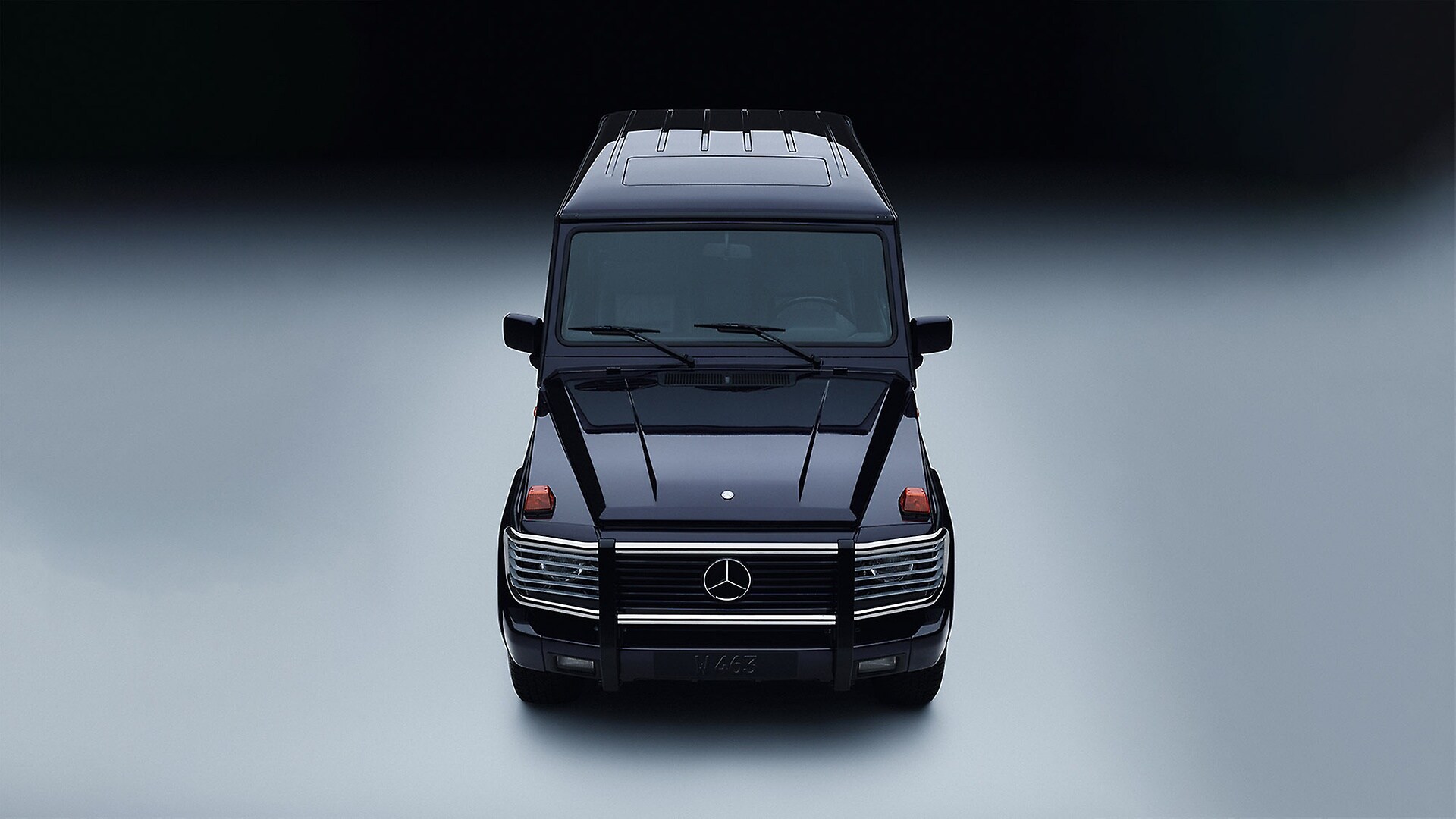
Mercedes-Benz develops the G-model jointly with Steyr-Daimler-Puch as an off-road vehicle with excellent off-road capabilities that can also be driven comfortably on the road. The G captivates demanding professional users right from the start, but its authentic DNA also appeals to a broader audience. The brand continues to develop the G-Class, with its top models fascinating as sporty, luxurious off-road vehicles. The launch is marked by the 500 GE V8 from the 463 series, the first G with a V8 engine. The G always remains true to its genes – in keeping with the motto “Stronger than Time”.

Mercedes-Benz 500 GE V8 from 1993 (463 series). The G-Class is being produced since 1979. Studio shot from the front, taken in 2025.

This generation of Mercedes-Benz luxury-class saloons once again represent a milestone in passive safety. The 126 model series is designed according to the latest findings in safety research at the time and is also optimised for offset crashes. In 1981, the driver airbag and seat belt tensioner celebrate their groundbreaking world premiere in the S-Class series production car. Once again, Mercedes-Benz sets a global industry standard.

Mercedes-Benz S-Class of the 126 model series.

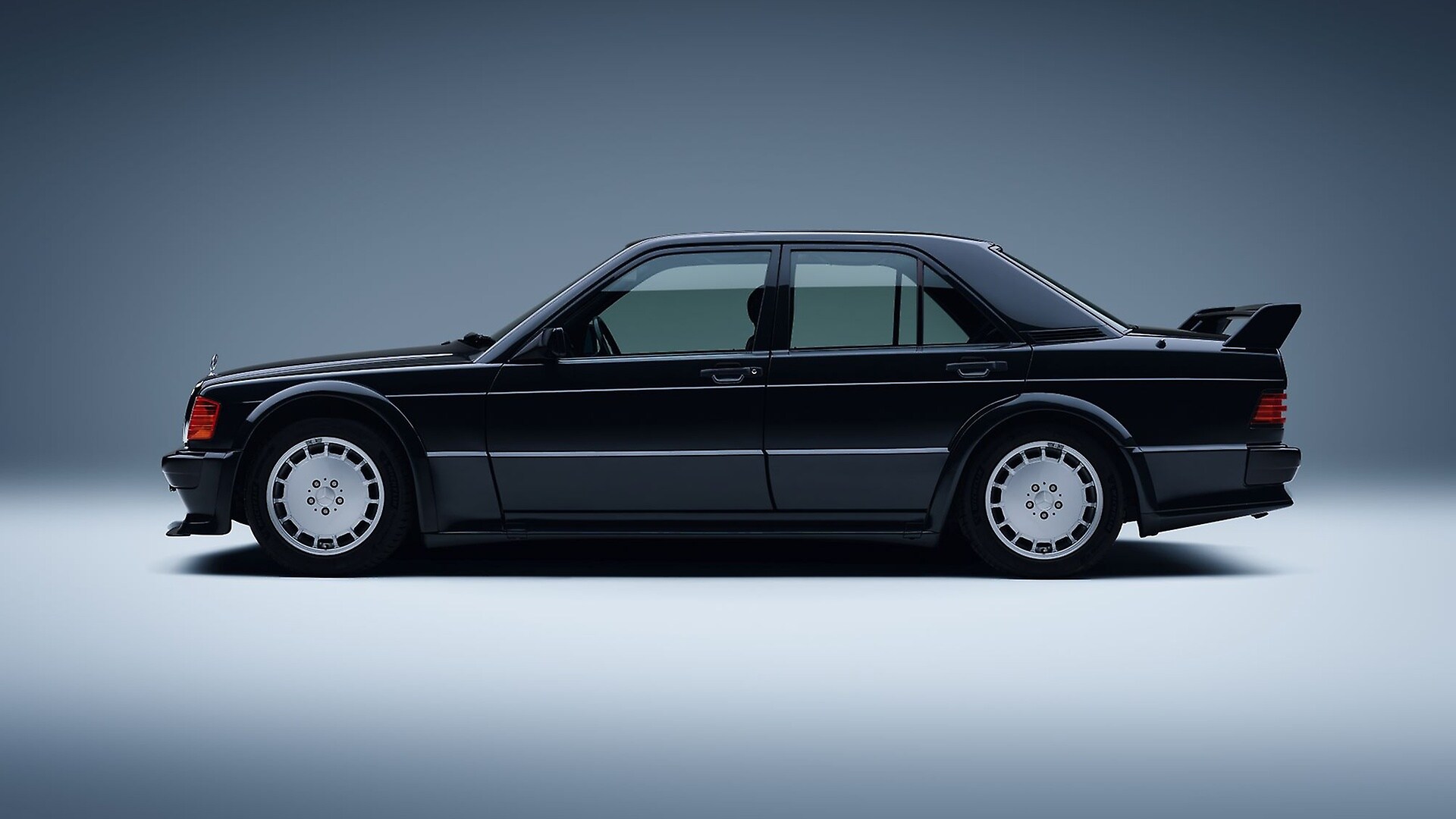
The compact Mercedes-Benz establishes a third model series family below the upper mid-range and luxury classes. The modern design impresses with Mercedes-Benz level safety and efficiency in a smaller format. A family of models with four-valve technology demonstrates the sporting potential of the “Baby Benz”. Above all, the high-performance saloons 190 E 2.5-16 EVO (1989) and EVO II (1990) are developed into successful DTM racing touring cars.

Mercedes-Benz 190 E 2.5-16 Evolution from 1989 (201 series, production period 1982 to 1993). Studio shot from the left, taken in 2025.

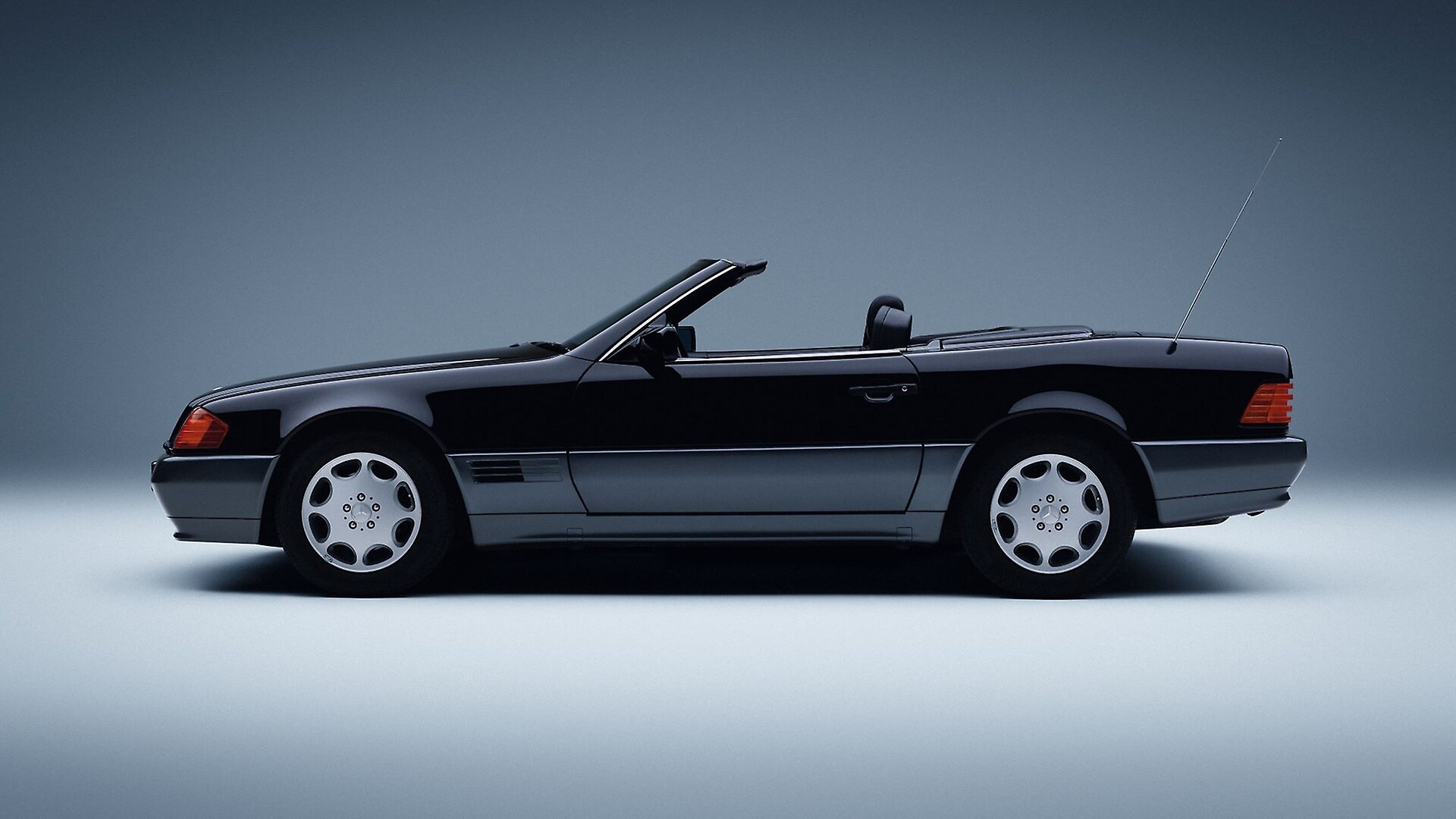
The SL roadster of the 129 series is launched in 1989 with numerous innovations. A milestone in passive safety is the roll bar, which automatically extends in just 0.3 seconds in the event of an impending rollover. Together with the A-pillars made of high-strength steel, a double-shell front roof frame and the windscreen bonded to the body, this results in an extremely stable structural system. The R 129 continues to delight as a classic favourite thanks to its harmonious, elegant design and the combination of comfort and sportiness.

Mercedes-Benz 300 SL from 1992 (129 series, production period 1989 to 2001). Studio shot from the left, taken in 2025.

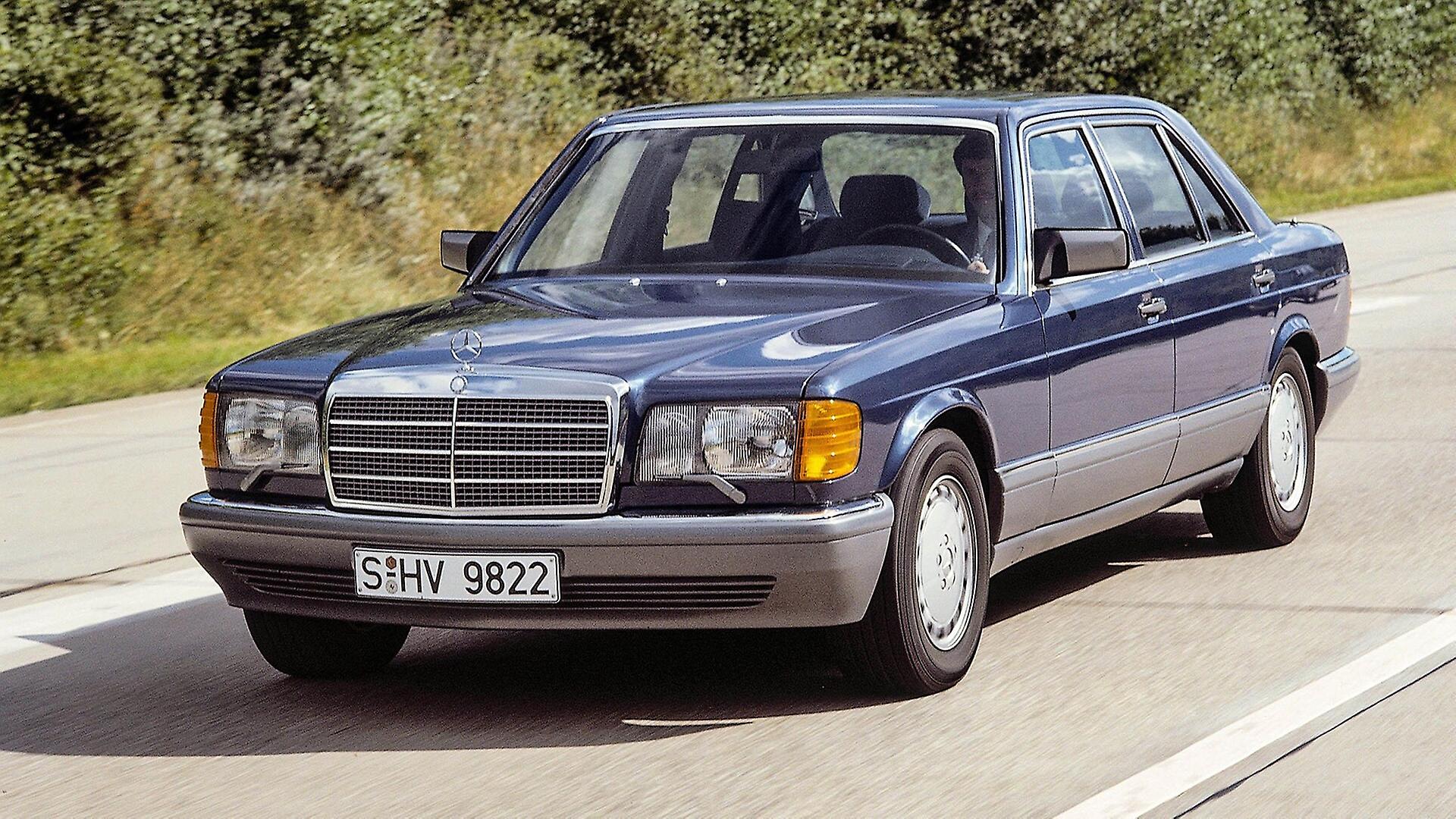
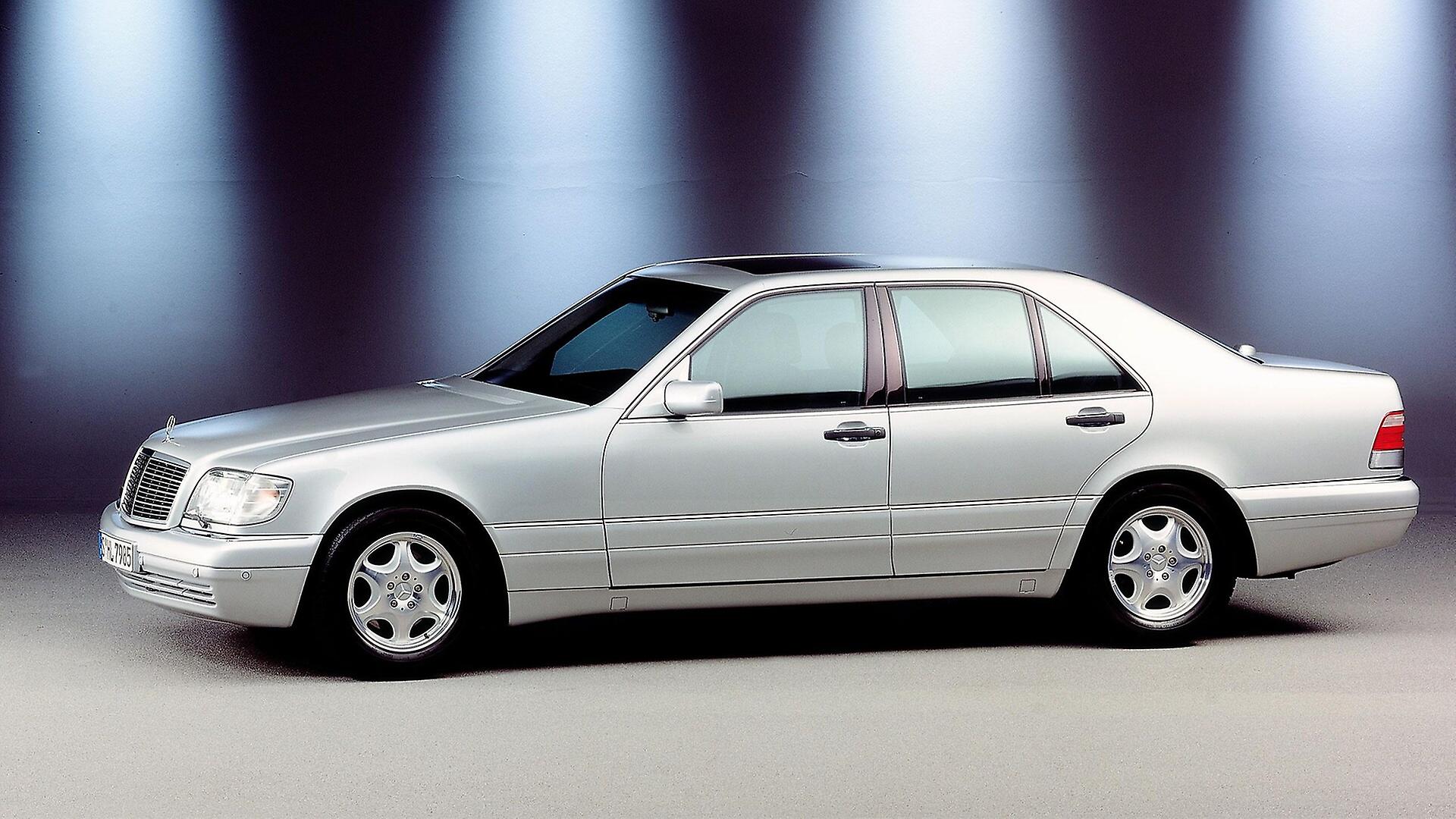
The saloons and coupés of the 140 series once again define the pinnacle of the upper and luxury classes. For the first time, Mercedes-Benz offers a twelve-cylinder engine in series production, which is used in the top models 600 SE, 600 SEL and 600 SEC. With Pullman saloons (from 1996) and special protection versions, Mercedes-Benz continues the brand’s great tradition of representative vehicles in the 140 series. A technical highlight in 1995 is the world premiere of the Electronic Stability Programme ESP® in the S 600 Coupé.

Mercedes-Benz S-Class of the 140 model series, here an S 300 Turbodiesel.

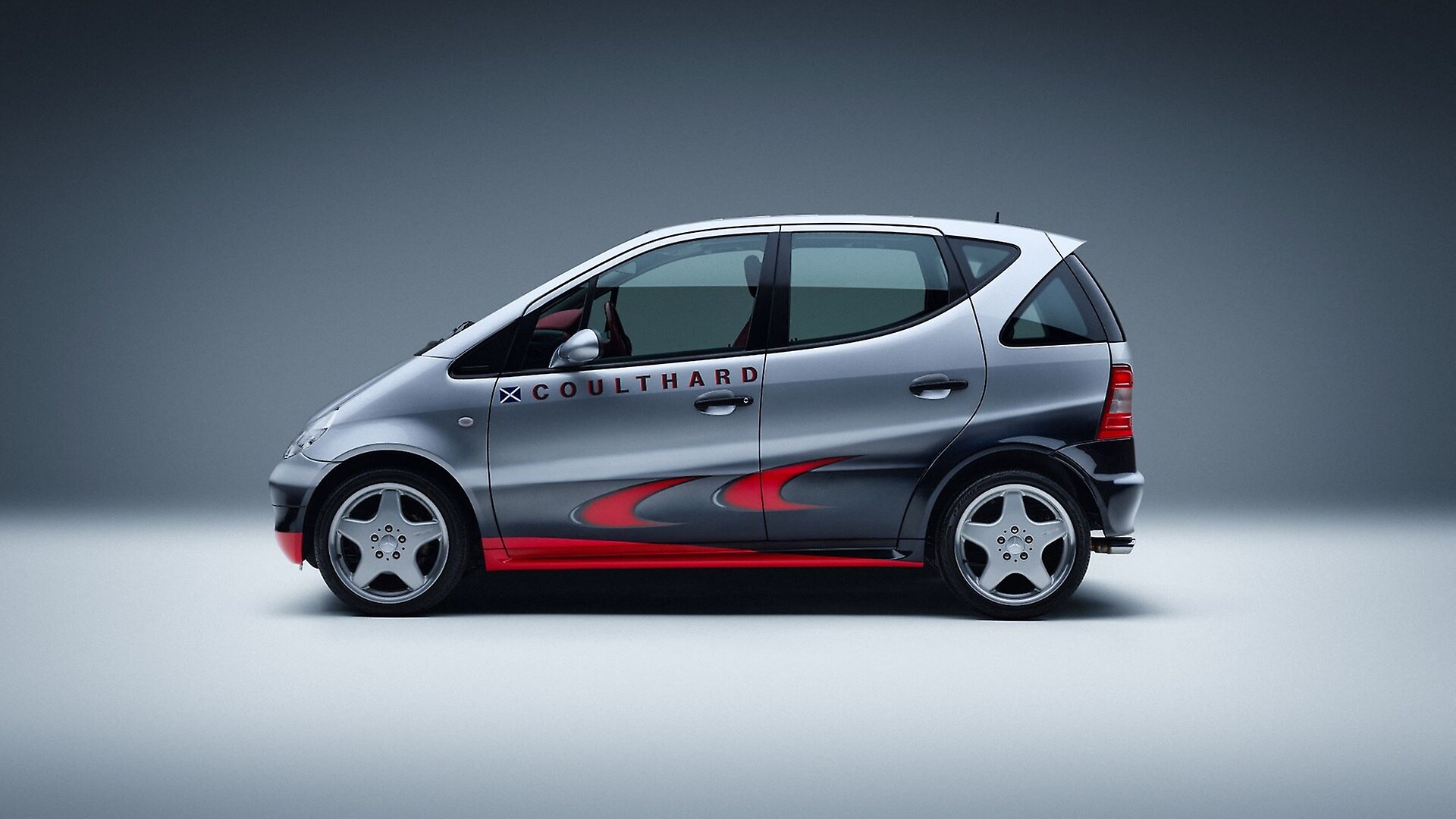
The innovative design of the first A-Class with sandwich floor combines compact vehicle dimensions with a spacious and variable interior and excellent crash performance. This is made possible by arranging the drive system partly under the passenger compartment. From November 1997, Mercedes-Benz equips the A-Class as standard with the pioneering ESP® driver assistance system, which has made its debut just two years earlier as an optional extra in the S-Class. This sets new benchmarks for driving safety in the compact car segment. A few years later, it becomes standard in most cars from all manufacturers.

Mercedes-Benz A 160 F1 Edition “Coulthard” from the 168 series. Limited special edition model from 1998. Studio shot from the left, taken in 2025.

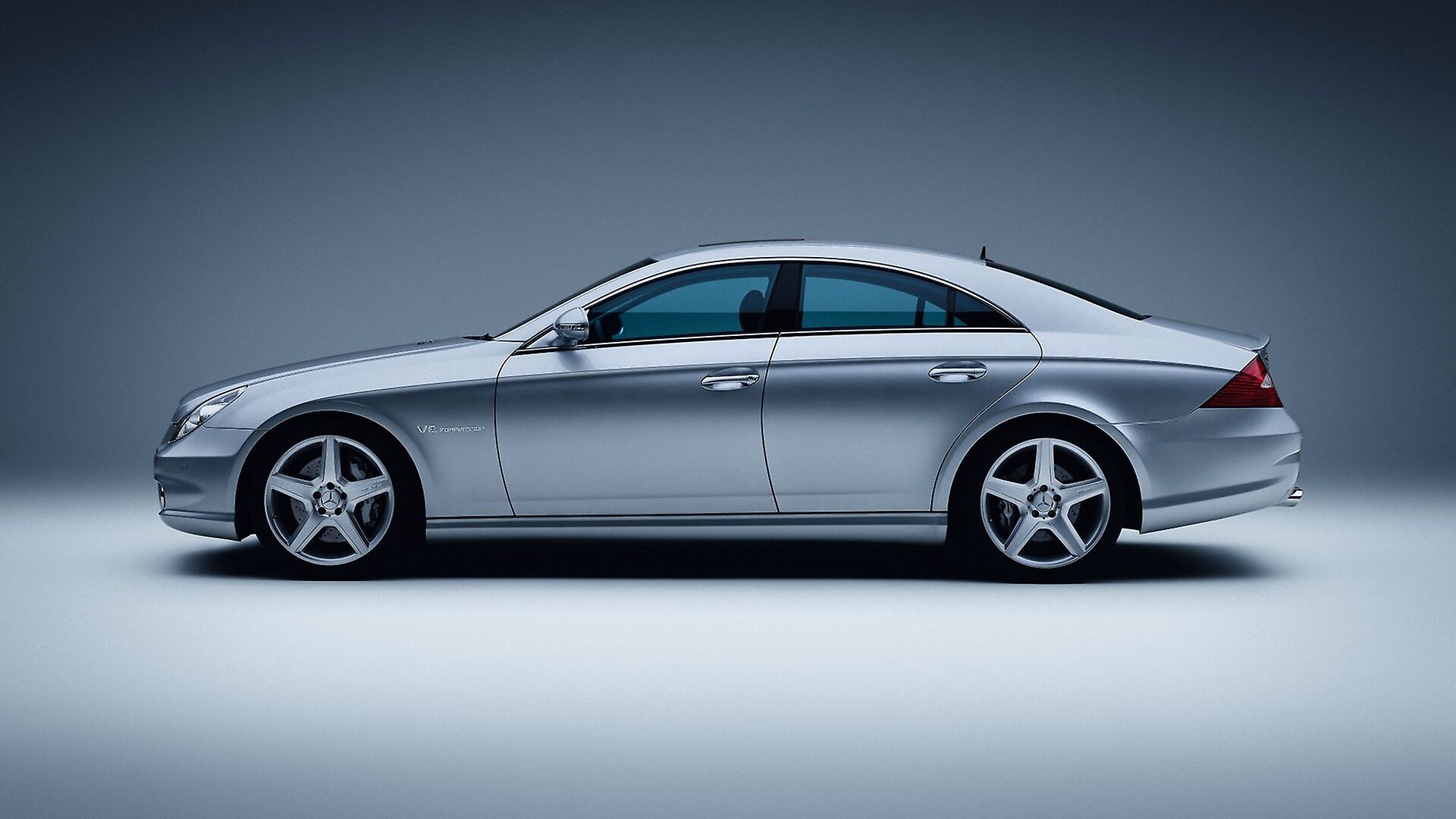
The four-door Mercedes-Benz CLS coupé of the 219 series, with its passionate design, establishes a new body shape in the brand's portfolio in 2004. Dynamic elegance meets a level of functionality and comfort usually associated with saloons. The designers continue the fascinating exterior design in the luxurious interior. The CLS provides important impetus for the development of four-door coupés throughout the industry.

Mercedes-Benz CLS 55 AMG from 2005 (219 series, production period 2004 to 2010). Studio shot from the left, taken in 2025.

Mercedes-Benz SLS AMG, 2010 (C 197)

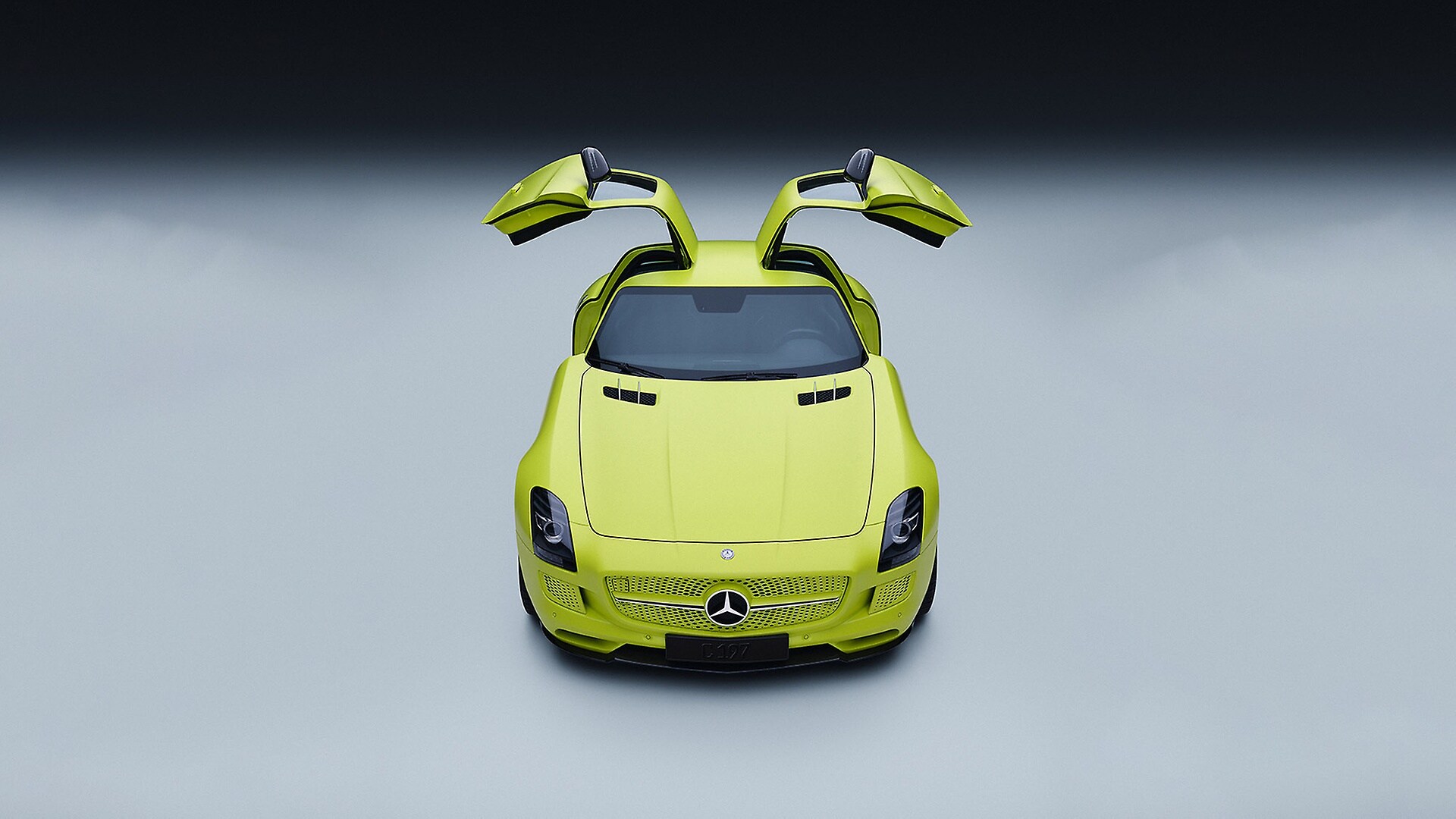
The SLS AMG is a super sports car featuring high-performance technology derived from motorsport and the performance sector. For the first time, AMG develops a vehicle entirely in-house. The coupé and roadster of the 197 series are distinguished by an aluminium spaceframe construction and high-performance drivetrain. This also includes the drive system of the SLS AMG Coupé Electric Drive from 2012 with four permanent magnet synchronous motors, which together deliver 552 kW (751 hp) and 1,000 newton-metres of torque.

Mercedes-Benz SLS AMG Coupé from 2013 (197 series, production period from 2010 to 2014). Studio shot from the front with gullwing doors open, taken in 2025.

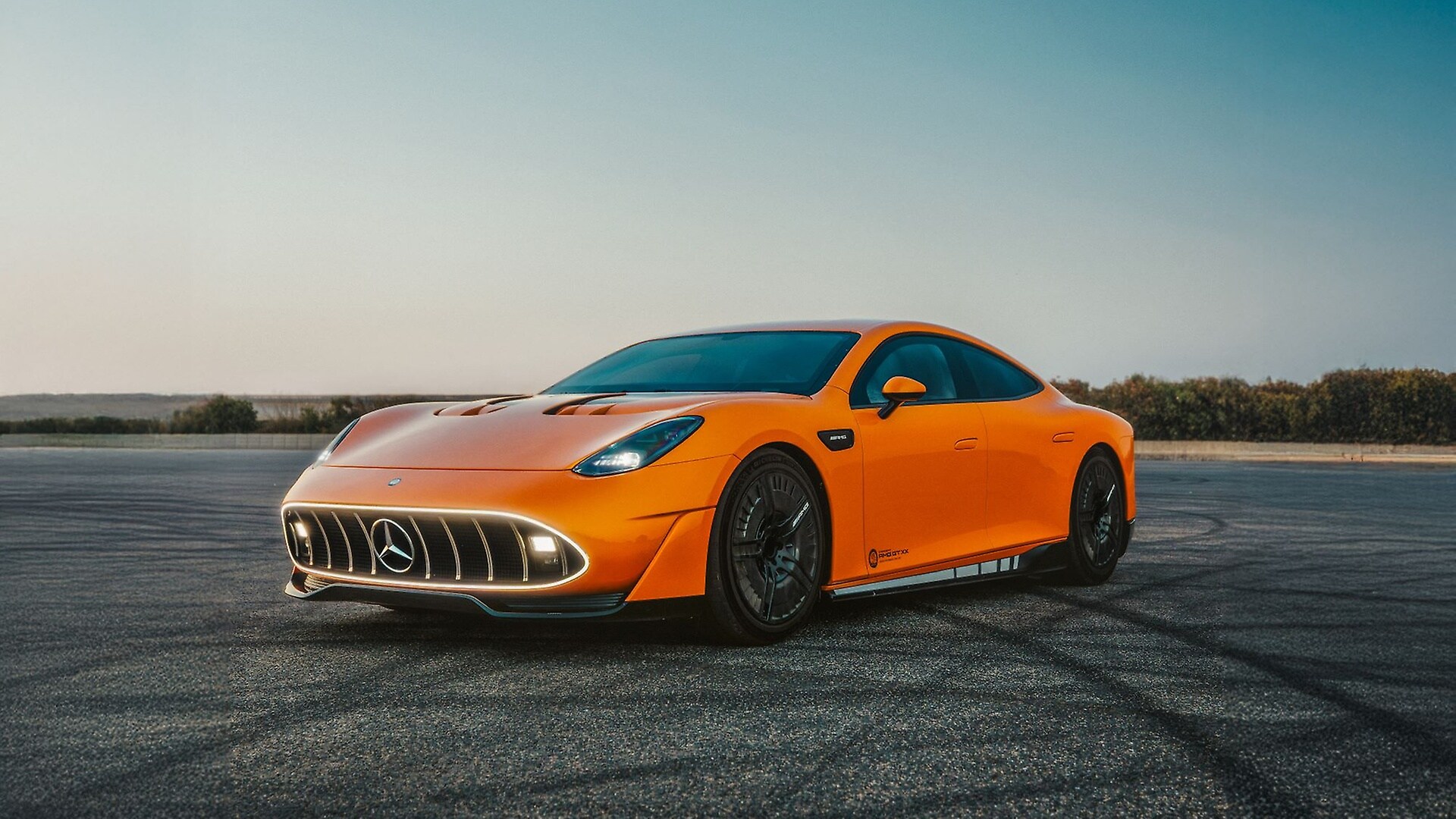
The technology study for future performance provides a preview of an upcoming four-door sports car from Mercedes-AMG. The CONCEPT AMG GT XX, with its emotive design, features an innovative drive system with axial-flow motors that together deliver more than 1,000 kW (1,360 hp). The electric vehicle has a top speed of more than 360 km/h. It proved its performance in 2025 with world record drives on the high-speed track in Nardò, Italy. The brand has already set many other records there in the past.

The CONCEPT AMG GT XX has record-breaking innovations for relentless performance.
140 Years of Innovation.

140 Years of Innovation.

Since Carl Benz registered his patent for the motor car (Motorwagen) in 1886 and Gottlieb Daimler built his motorised carriage (Motorkutsche) shortly afterwards, the history of Mercedes-Benz has for 140 years known only one direction: forward.

Chronicle.

From the first automobile to electric cars: The company's history.