Visions of the future

Hyper-personalised customer experience through AR and MR.

Mercedes-Benz is working on the hyper-personalised customer experience of the future. The company presented the first step – the MBUX Virtual Assistant – at the 2024 Consumer Electronics Show (CES) in Las Vegas. The system uses advanced technologies such as generative artificial intelligence (AI) to make interactions between human and machine more intuitive and personalised.

However, the vision for the future goes far beyond this: Mercedes-Benz wants to offer its customers a holistic and seamless digital experience across all their touchpoints with the brand to make their lives easier and more convenient – including beyond the vehicle. The Mercedes-Benz of the future will get to know its driver and their habits even better. It would be able to recognise moods and needs, and act as a supportive companion throughout the day.

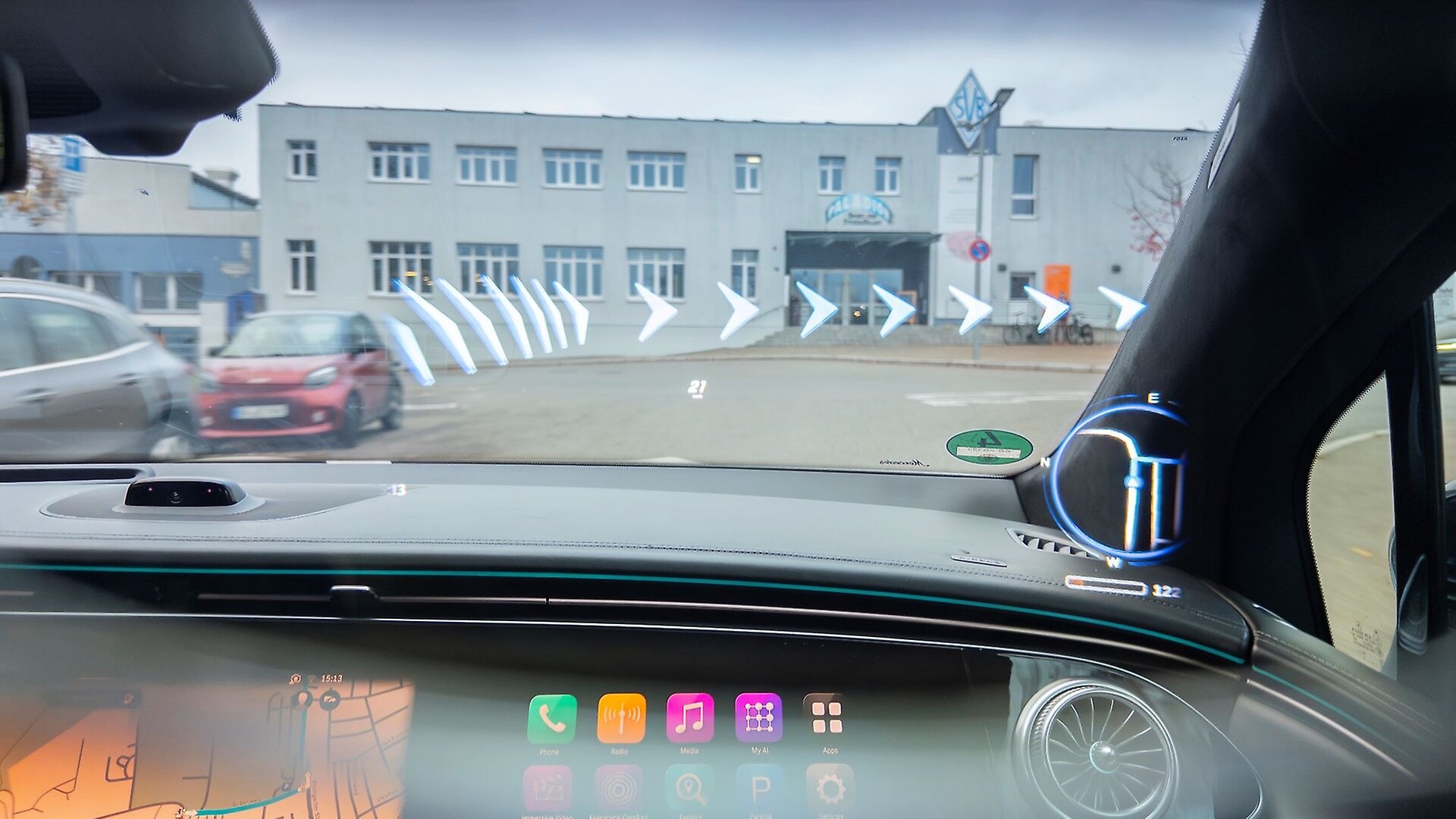
One example of the hyper-personalised customer experience of the future could be the following: the customer has a coffee first thing in the morning and prepares for work using a mixed-reality headset. This includes looking through diary appointments. On cue, their Mercedes-Benz drives out of the garage autonomously. The interior is already precisely configured according to current requirements such as temperature, radio station or volume. The customer gets in and drives off. The MBUX Virtual Assistant suggests a navigation destination based on individual preferences. It leads straight to the office and not to their favourite drive-through coffee shop, as they already had coffee at home. Through a pair of AR glasses, the driver sees the navigation as virtual signposts in the outside world – precisely located at important waypoints and turns.

The view through AR glasses during navigation.

If the person at the wheel would rather focus on other activities, they simply switch to autonomous driving mode. The vehicle then makes suggestions for further tasks and experiences according to known individual preferences. These include, for example, adopting a relaxed sitting posture or continuing tasks started at home but not yet completed. If they so wish, the customer can interact with the vehicle at any time by voice or via the controls. During autonomous driving, the latter are also within easy reach of a relaxed sitting posture.

Working to integrate AR glasses into Mercedes-Benz vehicles

The company’s long-term vision is therefore to use AR glasses to offer a completely new experience for all passengers in the vehicle. Applying the “Bring Your Own Device” (BYOD) approach, customers should be able in future to bring their own AR glasses, adapted to their eyesight and ecosystem, into the vehicle. Mercedes‑Benz is researching technical solutions to enable simple integration of different AR glasses.

The company sees great potential in being able to offer all passengers a wide range of benefits with AR glasses. It would allow optimum integration of the customer’s personal ecosystem alongside Mercedes‑Benz specific content. In addition, linking with vehicle sensors and actuators could present new opportunities for taking entertainment, wellness and comfort experiences to a new, even more immersive level. In further development stages, AR glasses could provide drivers with even better support at the wheel. For example, precise and intuitive route guidance could make navigation considerably easier. Advanced driving assistance systems could provide additional support and ensure an even higher level of safety. The focus here is on minimising driver distraction and providing real support.

Making vehicle configuration a mixed-reality experience

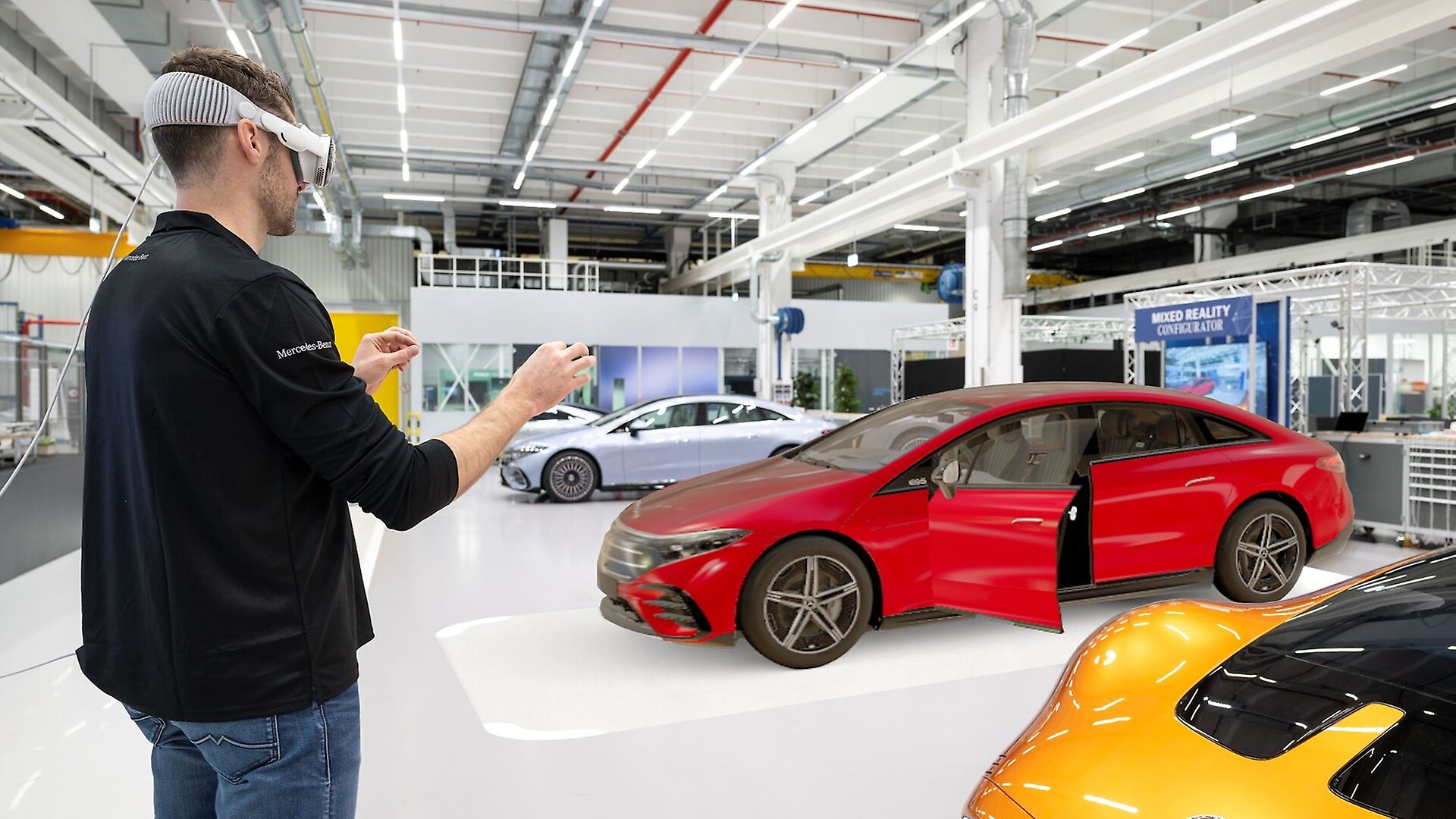
Mercedes-Benz is working intensively with mixed reality (MR). This revolutionary technology offers multi-faceted options for use throughout the Mercedes‑Benz world – from research to development all the way to customers themselves. One example is an MR configurator developed by Mercedes‑Benz. With the help of MR glasses, it could be used in design and development processes in the future. It could create new opportunities for efficient forms of collaboration. Developers and designers can use MR glasses to work simultaneously on the same virtual vehicles across national borders and time zones. For instance, looking through MR glasses would be a fast and cost-effective way to compare different types of vehicles with actual vehicle dimensions. It would also make it quicker to visualise and interact with new ideas as well as carry out virtual testing. Furthermore, the use of MR glasses in the development process also has the potential to significantly reduce the consumption of components and raw materials. Since this would require fewer physical prototypes, valuable resources could be saved.

The use of mixed reality glasses could improve international cooperation in the design and development processes and save resources.

Mercedes-Benz envisages another application in the form of new immersive virtual brand experiences for customers. Using appropriate glasses, the integration of mixed reality could allow real-time interactive engagement with virtual vehicles, including individualisation. This would facilitate a personalised virtual brand interface to complement the customer’s physical retail experience. The Mercedes Benz MR configurator uses real-time game engines and Apple Vision Pro, the latest state-of-the-art MR technologies, to rethink vehicle configuration. These advanced technologies could benefit Mercedes-Benz customers from start to finish – from helping them visualise and personalise their perfect vehicle to delivering innovative driving experiences.

This article was last updated in December 2025.

Mercedes-Benz Vision EQXX.

Technology.

As a company founded by engineers, we believe technology can also help to engineer a better future. Our way to sustainable mobility is innovation – in a holistic approach along the entire value chain.