The new all-electric CLA.

The upcoming vehicle architecture

Efficiency is the key to everything.

Mercedes-Benz is emphasising its claim to leadership in drive systems, including those planned for the future. Customers will be able to choose between two innovative powertrains in the upcoming vehicle architecture. The CLA is available as a highly efficient electric car and as an economical hybrid.

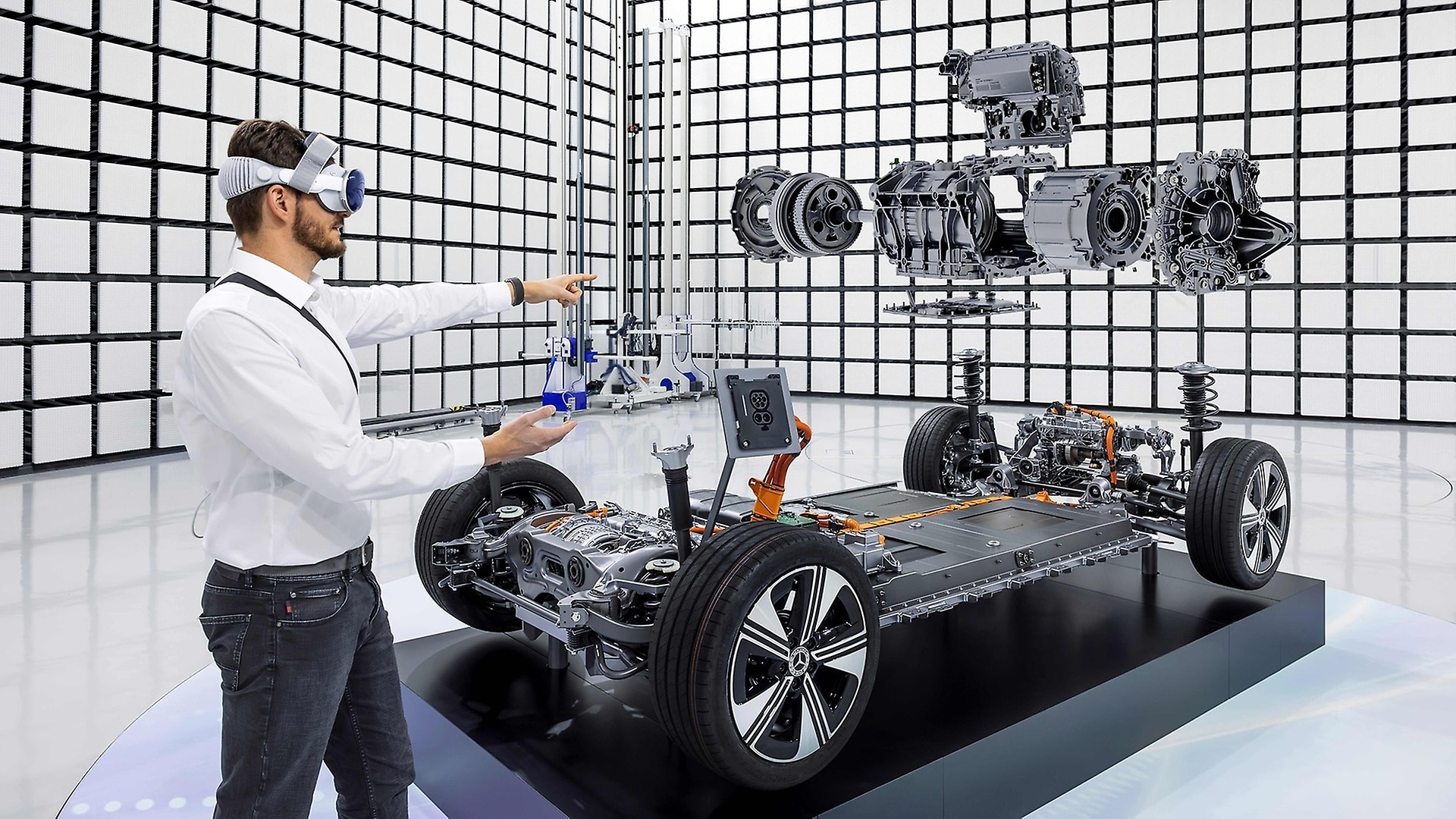
Mercedes-Benz has set new standards in terms of efficiency with the VISION EQXX technology platform. The company is now incorporating the findings from this project into its series-production vehicles. Leading the way is the new all-electric CLA, as the first model to be based on the Mercedes-Benz Modular Architecture (MMA). The centrepiece of this versatile and flexible vehicle architecture is the so-called skateboard chassis, a floor assembly designed primarily for electric cars, including the corresponding drive and chassis components. The body design varies, however: in the newly defined entry-level segment, Mercedes-Benz is planning a family of four models in total. In addition to the CLA as a four-door saloon, these include a shooting brake and two SUVs.

The development of "Mercedes-Benz DNA"

The company will also rely on intelligent modularity with a scalable skateboard design for future model families in other segments. Because Mercedes-Benz is striving for a leading role in both electric driving and vehicle software, the company has massively increased its development activities in these areas. This includes the recent opening of the eCampus in Stuttgart-Untertürkheim as a competence centre for the development of cells and batteries for the future electric vehicles of the brand with the three-pointed star. The aim is to develop innovative chemical combinations and optimised production processes for high-performance cells with "Mercedes-Benz DNA" and thus reduce battery costs by more than 30 percent in the coming years.

Parts of the development and testing of the new MMA models have taken place in the Electric Software Hub (ESH). This building in the Mercedes-Benz Technology Centre (MTC) in Sindelfingen brings together numerous software, hardware, system integration and testing functions under one roof. The entire electrical/electronic integration process of vehicle development is reflected within the ESH. This ensures that all new hardware and software components interact smoothly.

The first MMA model

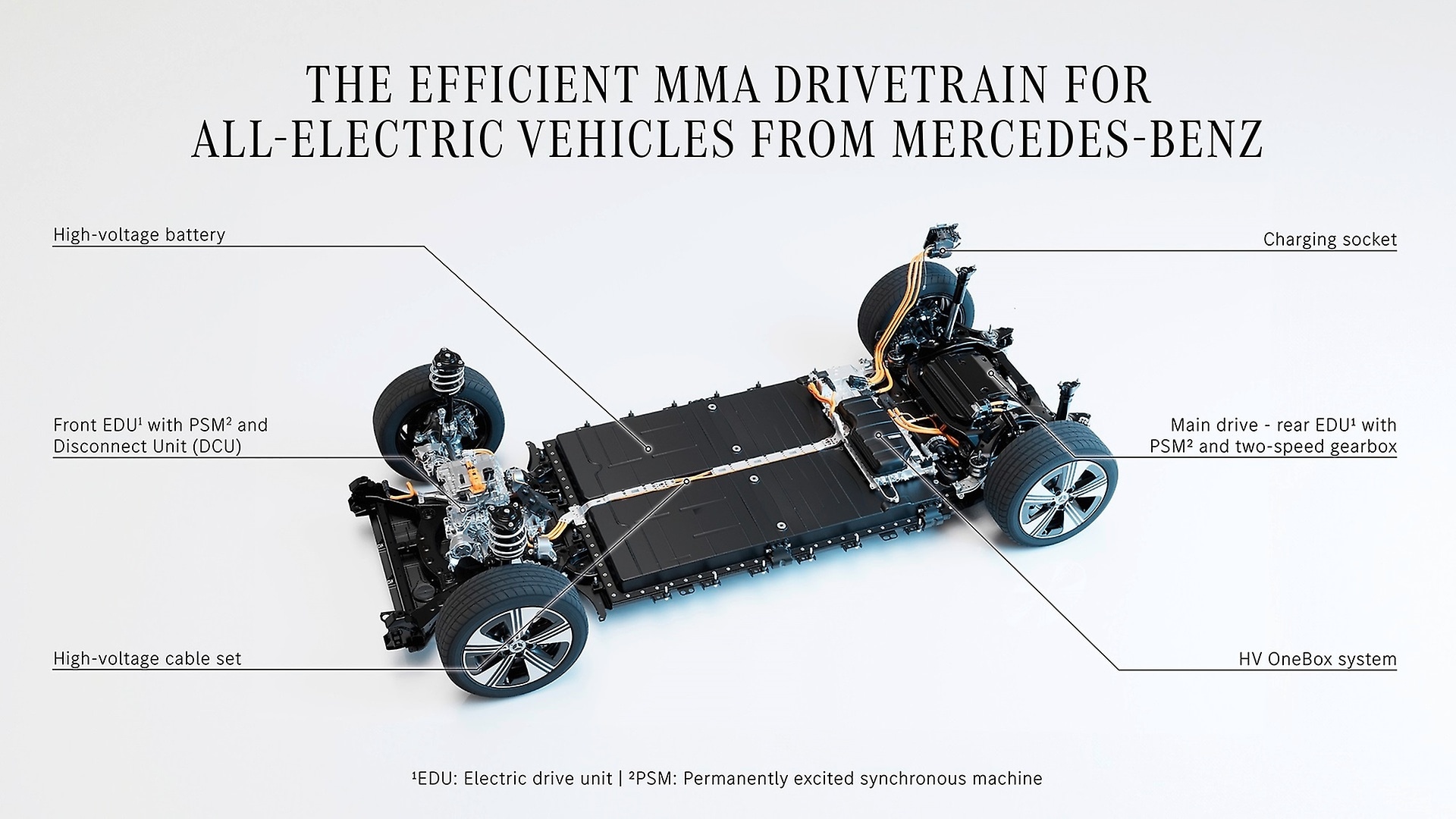
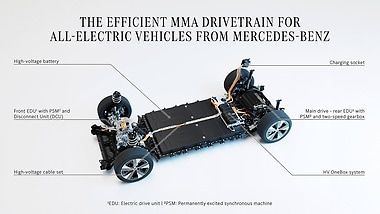
With its outstanding energy efficiency, the highly flexible MMA architecture marks the next step into the electric future of Mercedes-Benz. The new powertrain incorporates the many years of engineering excellence of the brand with the three-pointed star. This applies equally to the high-voltage components and to mechanical components such as transmissions. The Electric Drive Unit (EDU 2.0) is the first of a new generation of electric drive units from Mercedes-Benz. The highly integrated units form an intelligent modular system.

With the main drive on the rear axle for optimum traction and driving characteristics, Mercedes-Benz is now introducing a drive layout familiar from the mid-size and luxury classes to the entry-level segment. The 200-kW electric drive unit with a permanently excited synchronous machine (PSM) on the rear axle was developed entirely in-house by Mercedes-Benz engineers. The high-performance power electronics are equipped with a silicon carbide (SiC) inverter for particularly efficient energy utilisation. Transmission control and inverter are highly integrated in a single component. The drive unit is built in Untertürkheim, where Mercedes-Benz has developed many innovative drives over the years.

EDU 2.0 and 4MATIC: Enhanced performance, efficiency, and compact design

The EDU 2.0 reconciles the conflicting goals of maximum torque, top speed and exemplary efficiency, especially in real driving conditions. This is because the high torque ensures dynamic driving performance. It is also helpful when negotiating mountain passes or towing trailers. Another strength is the extraordinary compactness of the EDU 2.0, which benefits the interior dimensions and the volume of the rear boot.

The 4MATIC models also have an 80-kW drive unit on the front axle. In the interests of efficiency, this is also equipped with a next-generation inverter with silicon carbide (SiC) and designed as a permanently excited synchronous machine (PSM). The front electric motor acts as a “boost” drive. Depending on the driving situation or driving programme, it is only switched on when the corresponding power or traction is required. This task is performed by the Disconnect Unit (DCU), which Mercedes-Benz is now using for the first time in the entry-level segment.

The new hybrid is capable of all-electric driving

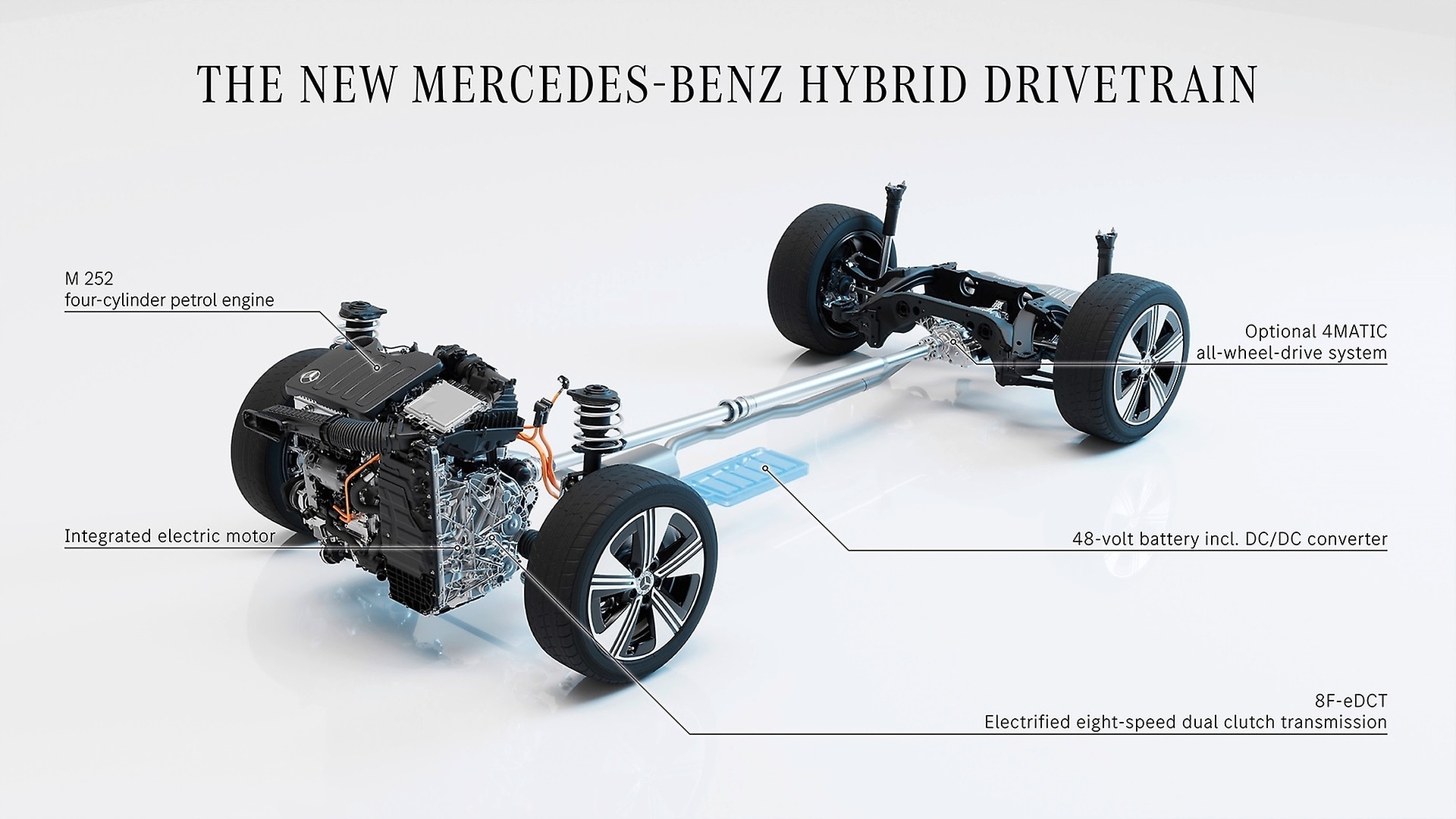
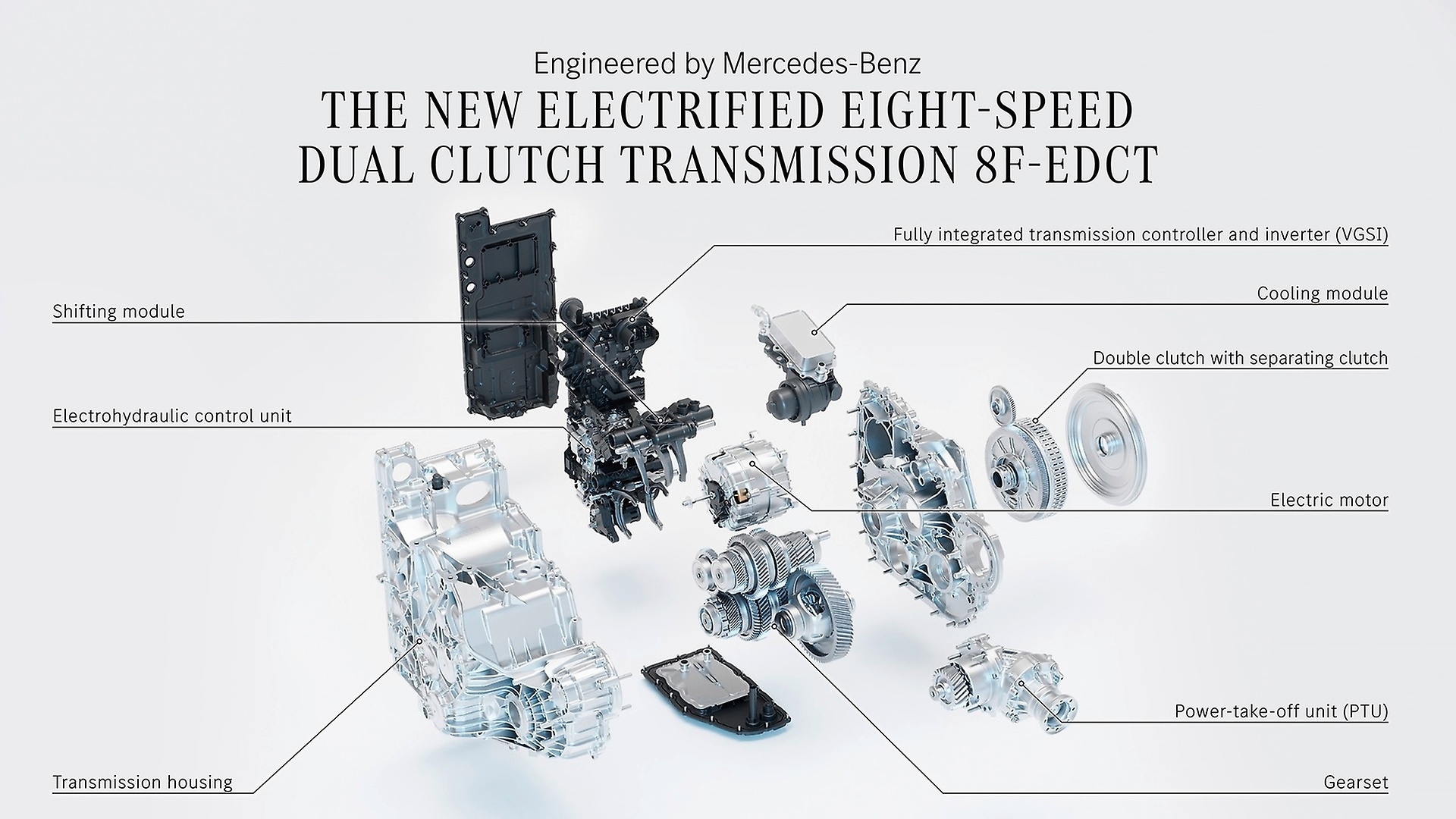
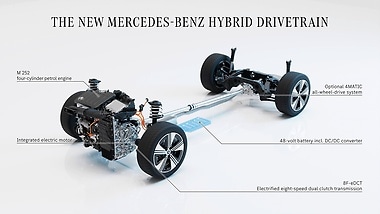
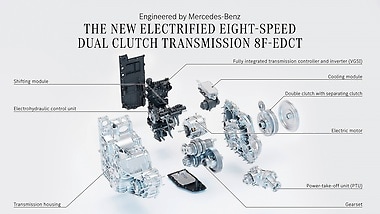
Mercedes-Benz is emphasising its claim to leadership in drive systems – whether electric or hybrid. Efficiency is also the key to the development of modern hybrid drive systems. The MMA architecture vehicles will also be available as a hybrid with 48-volt technology. The electric motor with 20 kW drive power¹ has been integrated into a new electrified eight-speed dual-clutch transmission (8F-eDCT) together with an inverter. The electrical energy of up to 1.3 kWh is provided by a new 48-volt battery with lithium-ion technology and a flat-pack design.

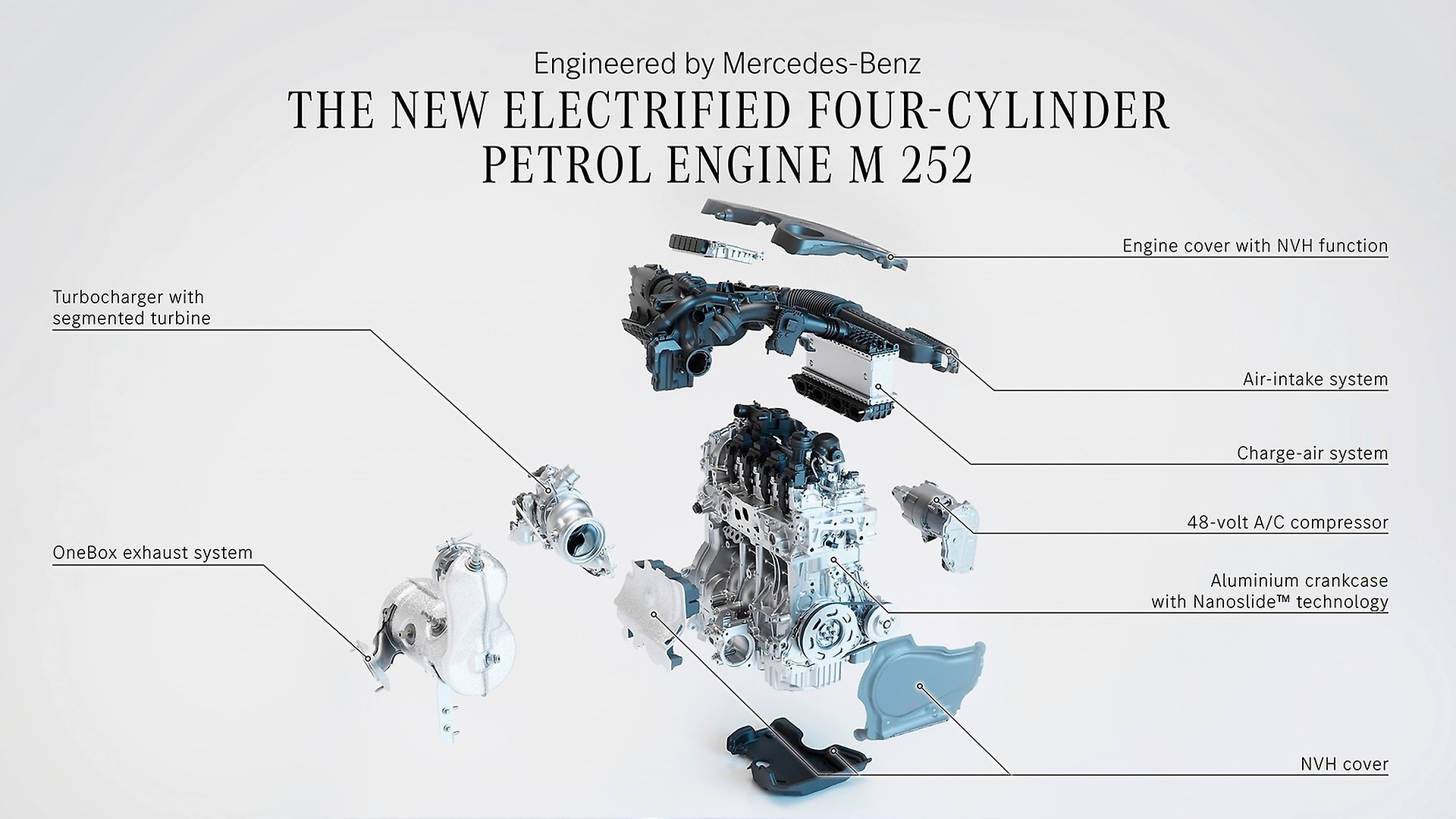
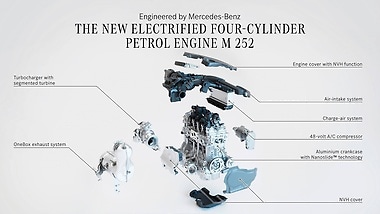
Thanks to energy recuperation and all-electric driving capability at urban speeds, this drivetrain is particularly efficient. This is enhanced by electric coasting at a speed of up to around 100 km/h. The combustion engine is a new FAME (Family of Modular Engines) four-cylinder petrol engine.

Mercedes-Benz Modular Architecture (MMA).

This article was last updated in December 2025.

Mercedes-Benz Vision EQXX.

Technology.

As a company founded by engineers, we believe technology can also help to engineer a better future. Our way to sustainable mobility is innovation – in a holistic approach along the entire value chain.