"MB4Rescue" safety initiative.

Unique Partnership

Mercedes-Benz and European fire departments train together.

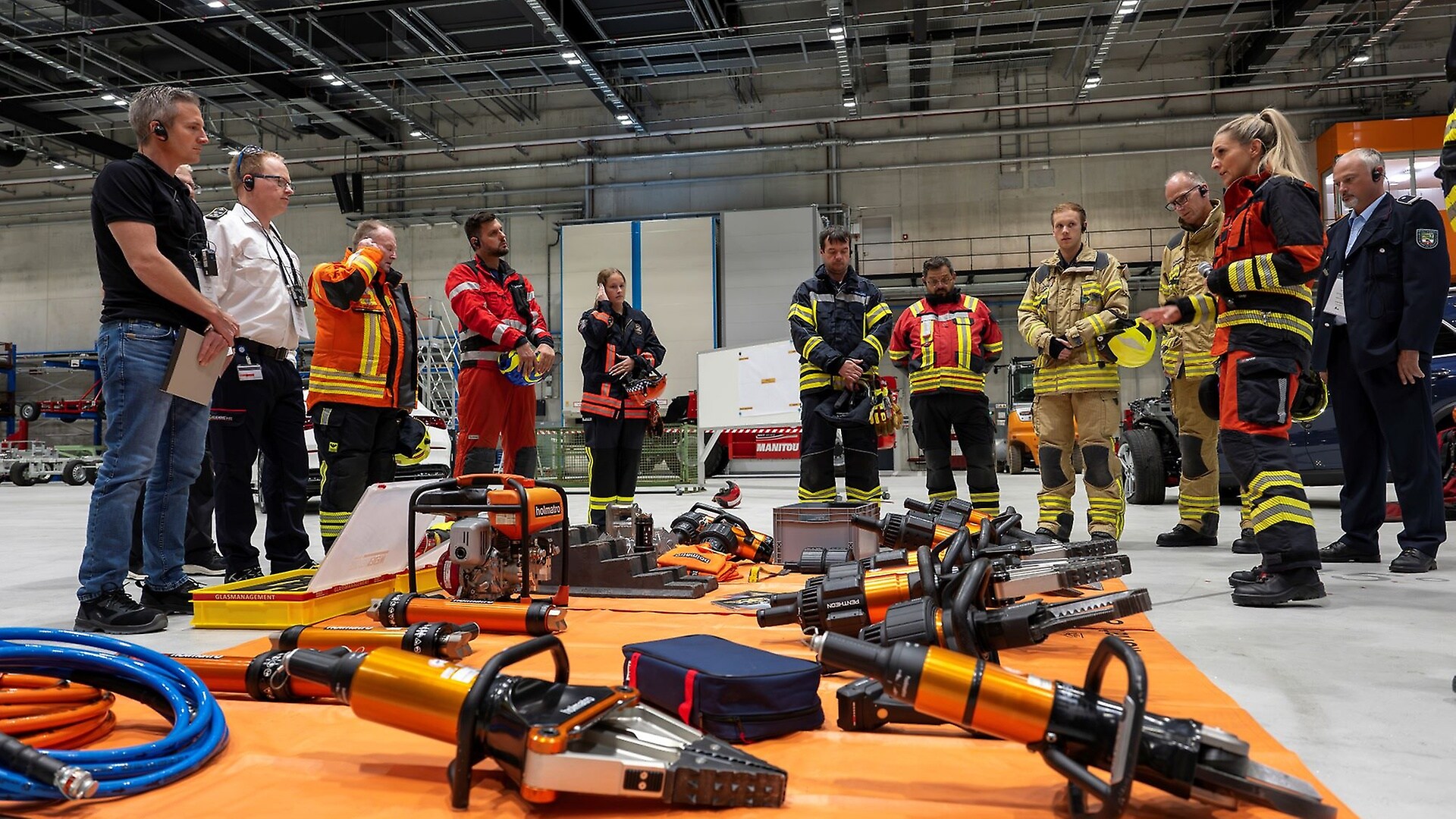
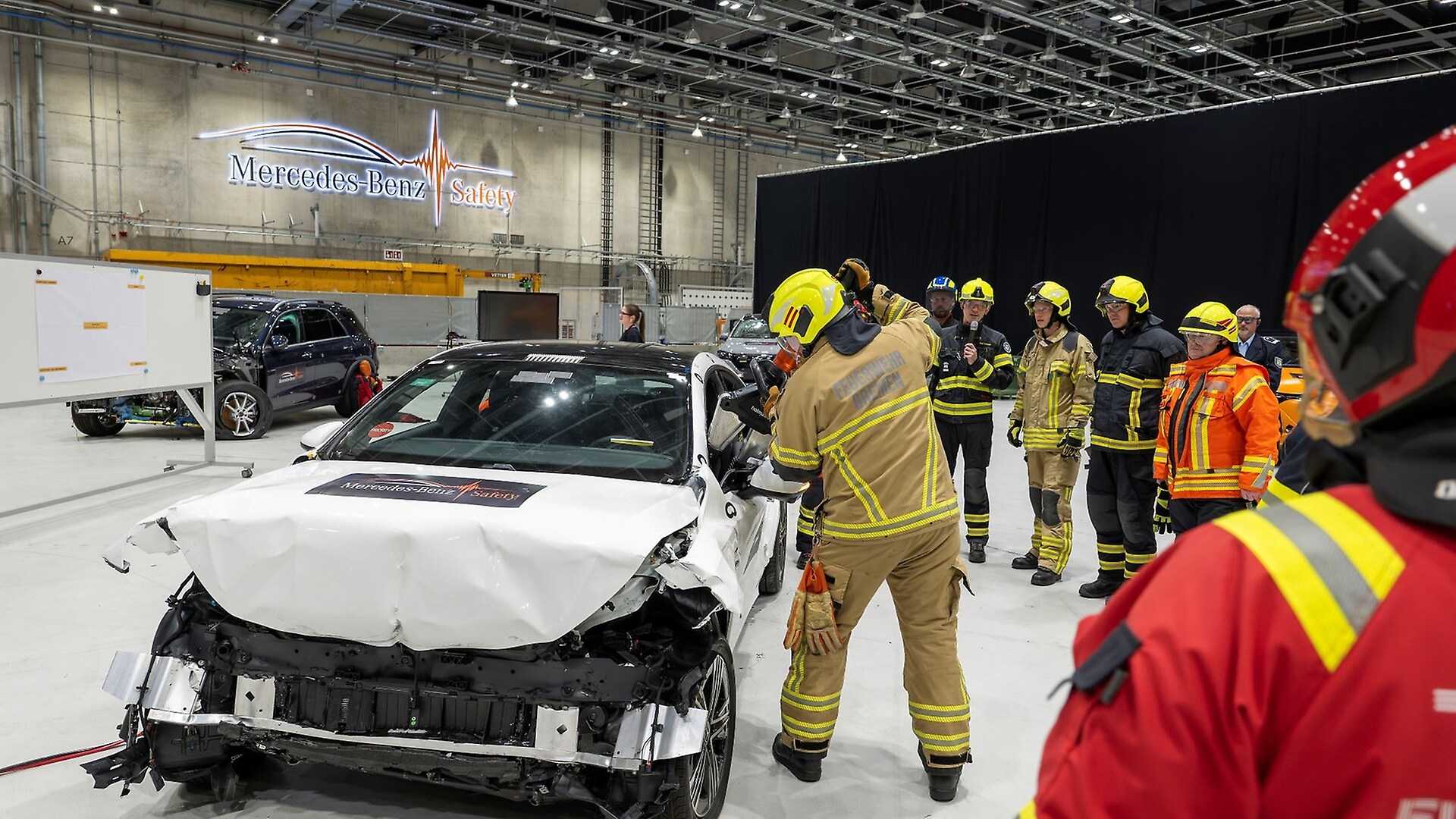
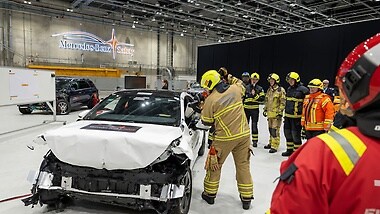
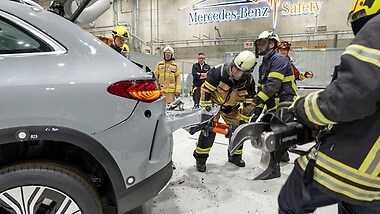
January 26, 2026 – Rescue workers in protective gear gather around a Mercedes-Benz EQS, debating where to place the hydraulic rescue tools. They come to a decision. Noise starts. Then there’s a loud crack. The driver’s door is forced open with a spreader. “It’s open!” a voice calls out.

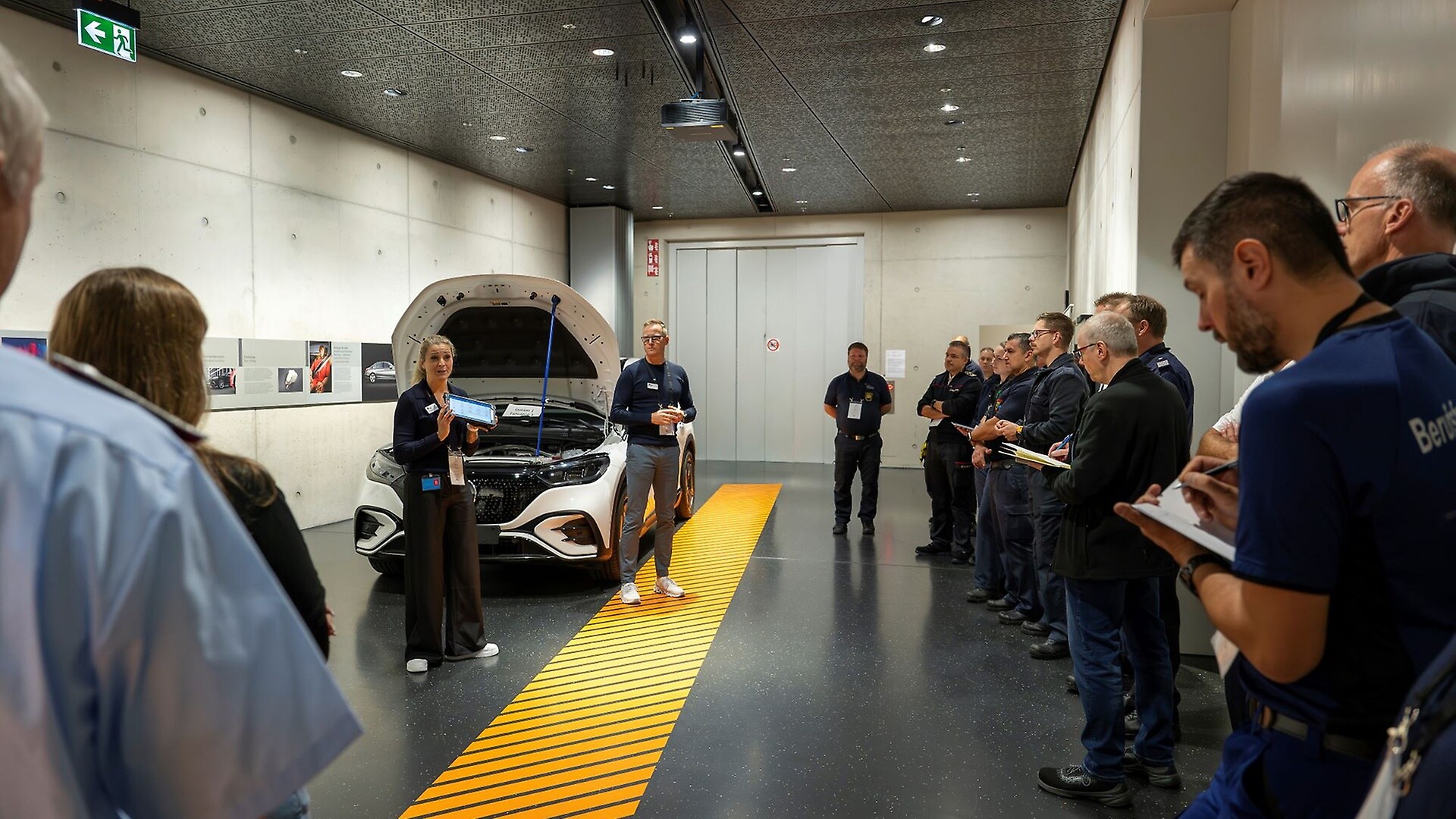
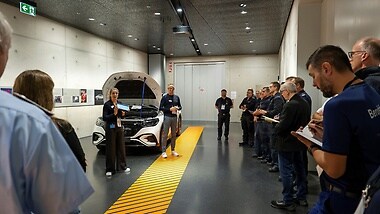
No accident had occurred at the Mercedes-Benz plant in Sindelfingen. This was the scene of a very special premiere at the end of 2025: more than 30 firefighters from training academies across Germany, Austria, Switzerland, and the Netherlands, and from nearly all German Mercedes-Benz AG sites in Germany, trained with modern Mercedes-Benz models. The goal was to ensure that in an emergency they can work safely and provide the best possible assistance to vehicle occupants. The name of the project: MB4Rescue.

Mercedes-Benz is cooperating with the vfdb Academy (Academy of the Association for the Promotion of German Fire Protection), which was set up in 2025. The rescue workers trained by Mercedes-Benz in Sindelfingen will act as multipliers and spread their know-how throughout Europe.

The new "MB4Rescue" safety initiative aims to optimize rescue operations and thus save lives. To this end, Firefighter from Europe trained in a practical setting with current Mercedes-Benz models in the Mercedes-Benz crash facility in Sindelfingen.

Vision Zero and Mercedes-Benz’s contribution to road safety

According to estimates from the World Health Organization (WHO), around 1.2 million people lose their lives in road traffic accidents worldwide each year. Such accidents are the leading cause of death among 5- to 29-year-olds. Reducing both the number and severity of crashes would prevent a lot of human suffering and ease the strain on both society and its healthcare systems. That’s why Traffic Safety is one of Mercedes-Benz’ sustainability focus areas.

“We’re pursuing the vision of accident-free driving,” says Paul Dick, Director Vehicle Safety and Accident Research at Mercedes-Benz AG. “We know that zero accidents is an ideal, but that’s precisely why it serves as our guiding principle in our ongoing vehicle development work and our commitment to safer roads.” Mercedes-Benz supports the European Union’s “Vision Zero” initiative, which aims to eliminate traffic fatalities by 2050.

As an engineer, Paul Dick understands “that traffic accidents result from the dynamic interaction of many different factors, and we need to bear them all in mind.” Around the world, thousands of development, accident research, design, and materials engineering experts are working to make journeys safer for both Mercedes-Benz occupants and all other road users.

Mercedes-Benz is a pioneer in safety development and has invented innovations such as the airbag with belt tensioner, the rigid passenger cell, ABS, and ESP and first launched them on the market in production vehicles. Nowadays, the company also leads in the field of active safety systems, such as lane departure warning and stability control systems. “We’ve defined internal standards for us as Mercedes-Benz that often go beyond legal requirements,” says Paul Dick. “This also helps us in our day-to-day work.” The number of traffic fatalities in Germany has fallen by around 60 percent since 2001. “And of course, there’s potential for further developments,” says safety director Dick. Recently, Mercedes-Benz became the first manufacturer worldwide to perform a complete crash test under continuous X-ray imaging - not a single image like at the doctor’s office, but 1,000 images per minute. The partner in this was the Ernst Mach Institute of the Fraunhofer Society.

Optimizing emergency care in the “golden hour of trauma”

Mercedes-Benz is constantly developing new materials and construction methods to provide the best possible protection for vehicle occupants. “To give you just one example: in recent years, the stability of the passenger cell has been greatly improved through crash tests,” says Paul Dick.

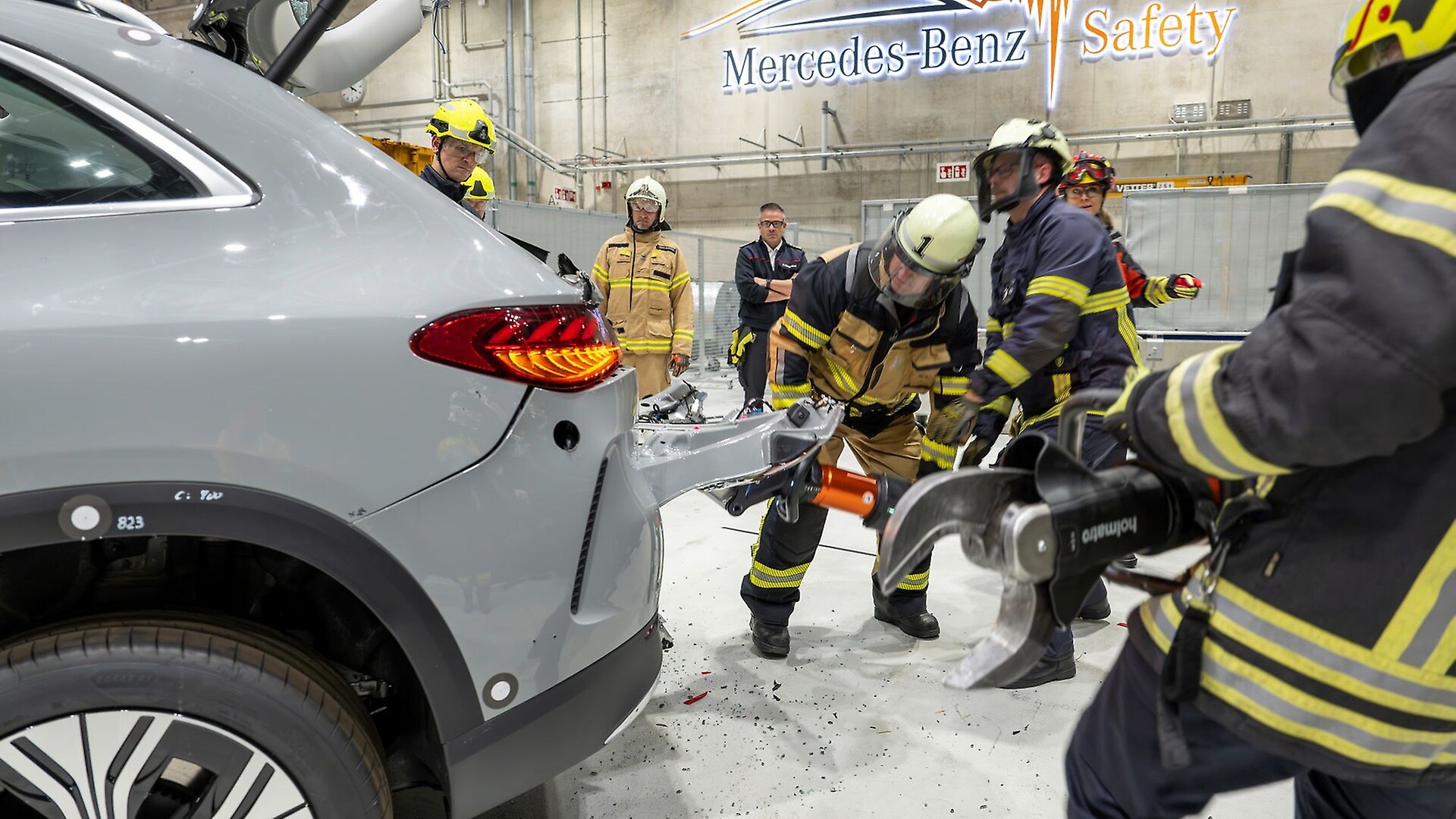
In an emergency, firefighters would apply tactical cutting techniques to the EQS to rescue occupants as quickly as possible.

Rescue workers need to be prepared for these situations - which is why the training at the Vehicle Safety Technology Center at the Mercedes-Benz Sindelfingen plant is so important: here, rescue workers have the optimal opportunity to work on state-of-the-art vehicles with no time pressure. “Most colleagues only train on cars that are 10 to 15 years old,” says Tanja Hellmann as one of the experts from the vfdb Academy. Those vehicles are often built differently, use different materials, and contain far fewer sensors and far less technology. “That’s why it’s so important for us to train on modern cars and materials,” Hellmann adds, who is part of the leadership team of a special unit at the Dortmund Fire Department. “Otherwise, you might encounter situations you’re not prepared for at the scene of an accident - and that can cost precious minutes.” The first hour after a crash - the so-called “golden hour of trauma” - is critical for a crash victim’s chances of survival and achieving the best possible recovery. Optimizing the entire chain of care is exactly what MB4Rescue aims to do.

By enabling emergency services to train in the rescue of accident victims in a practical manner using current Mercedes-Benz models, they are better prepared for real-life accidents.
"MB4Rescue" was developed in collaboration with the vfdb Academy (Association for the Promotion of German Fire Protection) and intensifies the exchange with experts from fire departments.
The firefighters practice together for emergencies in order to save vital minutes in such a situation.
By enabling emergency services to train in the rescue of accident victims in a practical manner using current Mercedes-Benz models, they are better prepared for real-life accidents.
"MB4Rescue" was developed in collaboration with the vfdb Academy (Association for the Promotion of German Fire Protection) and intensifies the exchange with experts from fire departments.
The firefighters practice together for emergencies in order to save vital minutes in such a situation.

Global vehicle safety center

The Vehicle Safety Technology Center (TFS) in Sindelfingen is a kind of safety research and development hub. Mercedes-Benz was the first manufacturer to introduce systematic crash tests in 1959, and since 2016 they’ve been carried out at the state-of-the-art TFS. Here, each new model undergoes around 15,000 computerized accident simulations and around 150 real crash tests. Hundreds of vehicles are deliberately crashed in the service of safety development. On the MB4Rescue training course participants were thus able to gain valuable insights into rescue operations from these crashed vehicles.

“That’s what makes it so realistic for us,” Tanja Hellmann says. “After an accident, a vehicle isn’t brand-new anymore and in the worst-case scenario, is so badly damaged that the doors can’t even be opened.” For the rescue teams, this is the ideal opportunity to test the best possible procedures under real-life conditions.

It’s precisely at this interface of hands-on experience and scientific analysis that the work of Mercedes-Benz Accident Research begins, for which Paul Dick is also responsible. Accident Research daily focus is on a core pillar of traffic safety: investigating real-world accidents. They are continuously analyzing crashes involving modern Mercedes-Benz models and drawing on national and international databases to identify areas for improvement. MB4Rescue is now growing this cycle to intertwine theory and practice. Rescue workers gain firsthand experience with the vehicles and simultaneously feed valuable real-world insights back to the Safety Development experts.

Visual Traffic Safety.

Traffic Safety.

The European Union aims to reduce the number of deaths and serious injuries in road traffic accidents to near zero by 2050. What we do to support this goal and, step by step, implement our vision of accident-free driving.

Mercedes-Benz is the world's first car manufacturer to X-ray a crash test.

X-ray crash test.

Mercedes-Benz uses X-ray technology in its crash tests.