Mercedes-Benz EQE SUV.

Environmental check

Mercedes EQE SUV.

October 25, 2023 – The EQE SUV is another important milestone. When developing a new model, the brand with the three-pointed star focuses on its environmental performance throughout each vehicle’s entire life cycle.
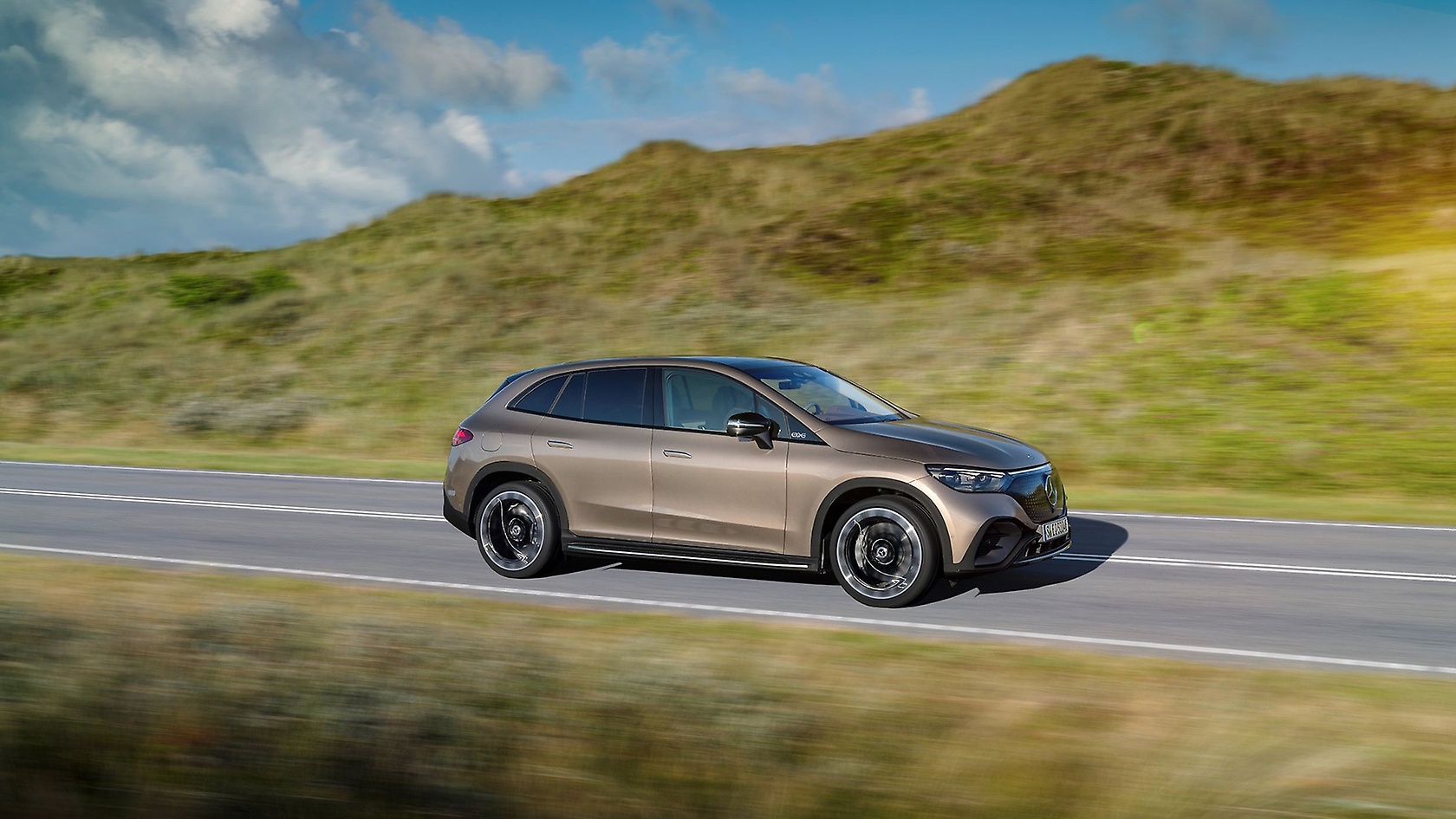
Below are some details on the life cycle assessment of this all-electric SUV:
  • Mercedes-Benz presents two scenarios to show how renewable energy is used, both assuming mileage of 250,000 kilometres. If renewable energy is used for charging the high-voltage battery and manufacturing the battery cells, CO₂ emissions can be almost halved over the entire life cycle of the EQE SUV based on an analysis¹ by Mercedes-Benz in which different energy sources were included. The second approach is based on the conventional electricity mix.
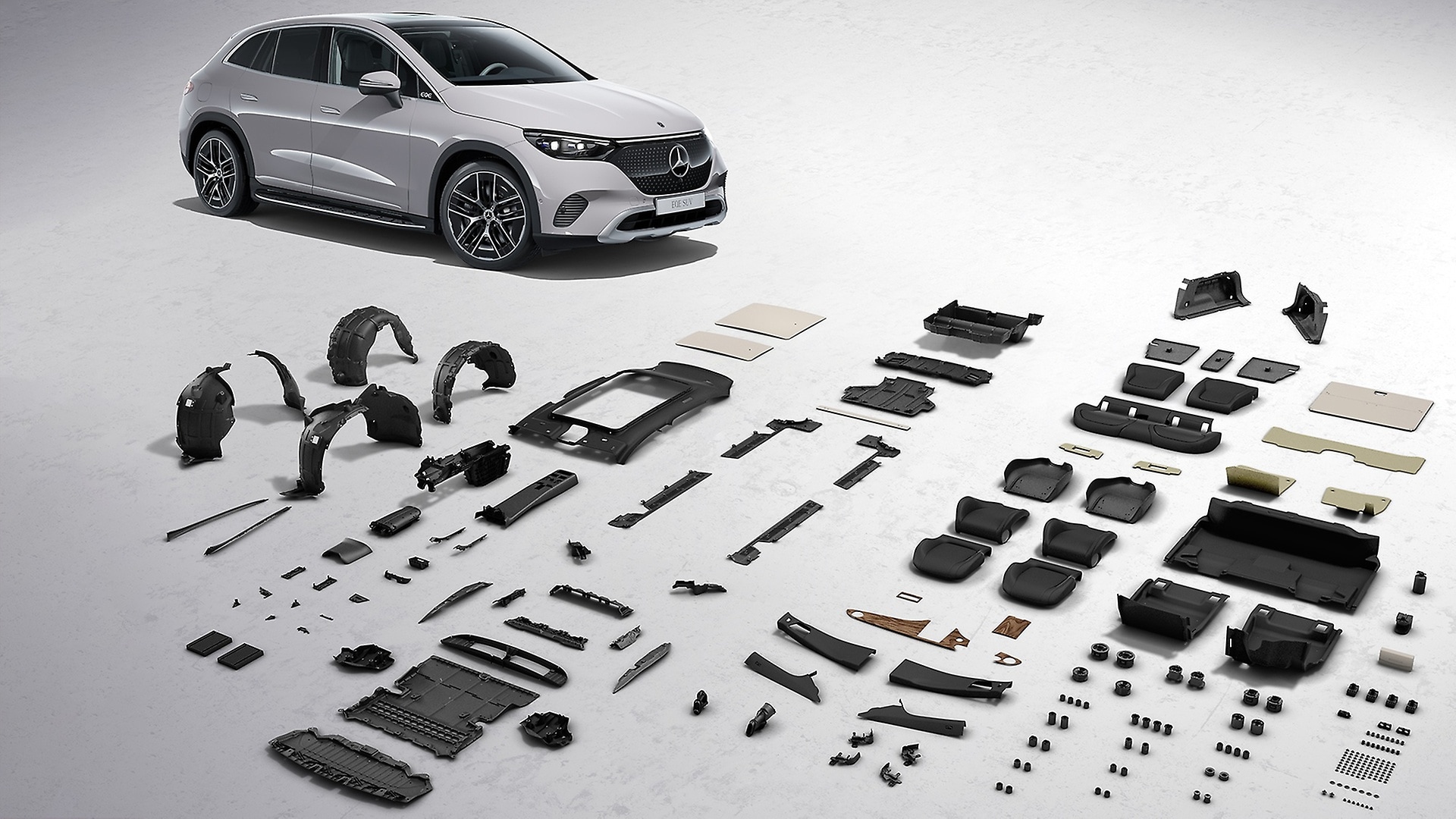
  • Exactly 132 components with a combined weight of 65.1 kilograms can be produced for the EQE 350+ (WLTP: electricity consumption combined: 21.8-17.6 kWh/100 km; CO₂ emissions combined: 0 g/km)* from resource-saving materials including plastic recyclates and renewable raw materials. For example, DINAMICA is a high-quality recycled microfibre material, with a look and feel similar to suede, that is used for seat covers. The materials contained in DINAMICA come from recycled polyester and water-based polyurethane products such as fabrics and PET bottles.
Mercedes-Benz EQE SUV environmental check.
  • A major improvement in the sustainability of battery cell chemistry is an optimised active nickel, cobalt and manganese material ratio of 8:1:1, which reduces the cobalt content to 10%.
  • All Mercedes-Benz passenger car and van factories worldwide have been producing with reduced CO₂ emissions since 2022, as part of our Ambition 2039.[1]The ambition of Mercedes-Benz Group is to reduce its CO₂ emissions by 2039 by 90 % in own production, by 80 % in vehicle use phase – as market conditions allow – and overall by 70 % across all relevant value chain stages compared to 2019. In addition, the Mercedes-Benz Group supports qualified climate change mitigation projects that meet recognized standards.
    By 2049 at the latest, the Mercedes-Benz Group intends to achieve net-zero. Net-zero means that the CO₂ emissions will be reduced by at least 90% compared to 2019. Remaining CO₂ emissions (< 10%) will be neutralized permanently.
    (further information see CTAP).
  • Mercedes-Benz is building its own battery recycling factory based on hydrometallurgy in Germany to improve the circular economy of lithium-ion battery systems from EQ vehicles. This pilot project design is expected to achieve recycling rates of more than 96% and is scheduled to start at the end of 2023.
  • Since 2021, Mercedes-Benz has been ensuring energy offset through green electricity when customers charge at public charging stations in Europe, the U.S. and Canada via Mercedes me Charge². Green electricity certificates ensure that an equivalent amount of electricity from the charging processes is fed into the electricity grid from renewable sources.

¹LCA software and database (version SP2023.01) from Sphera Solutions GmbH were used for the analysis.

²In order to be able to use the "Mercedes me Charge" service of Mercedes me connect, a separate charging contract with a selected third-party provider is required via which payment and invoicing of the charging processes takes place. The use of Mercedes me connect services requires a personal Mercedes me ID as well as agreement to the Terms of Use for Mercedes me connect services.
Environmental Check at Mercedes-Benz.

360° environmental check on Mercedes-Benz models.

The externally audited 360° Environmental Check brochures provide transparent insights into consumption, emissions and the use of recyclates for selected Mercedes-Benz vehicles.